UniFiji proposes reforms to tackle numeracy crisis
University proposes diagnostic test, curriculum review and new teaching model to support national numeracy strategy.
Thursday 12 March 2026 | 11:30
Updated 12 March 2026 | 15:18 FJT

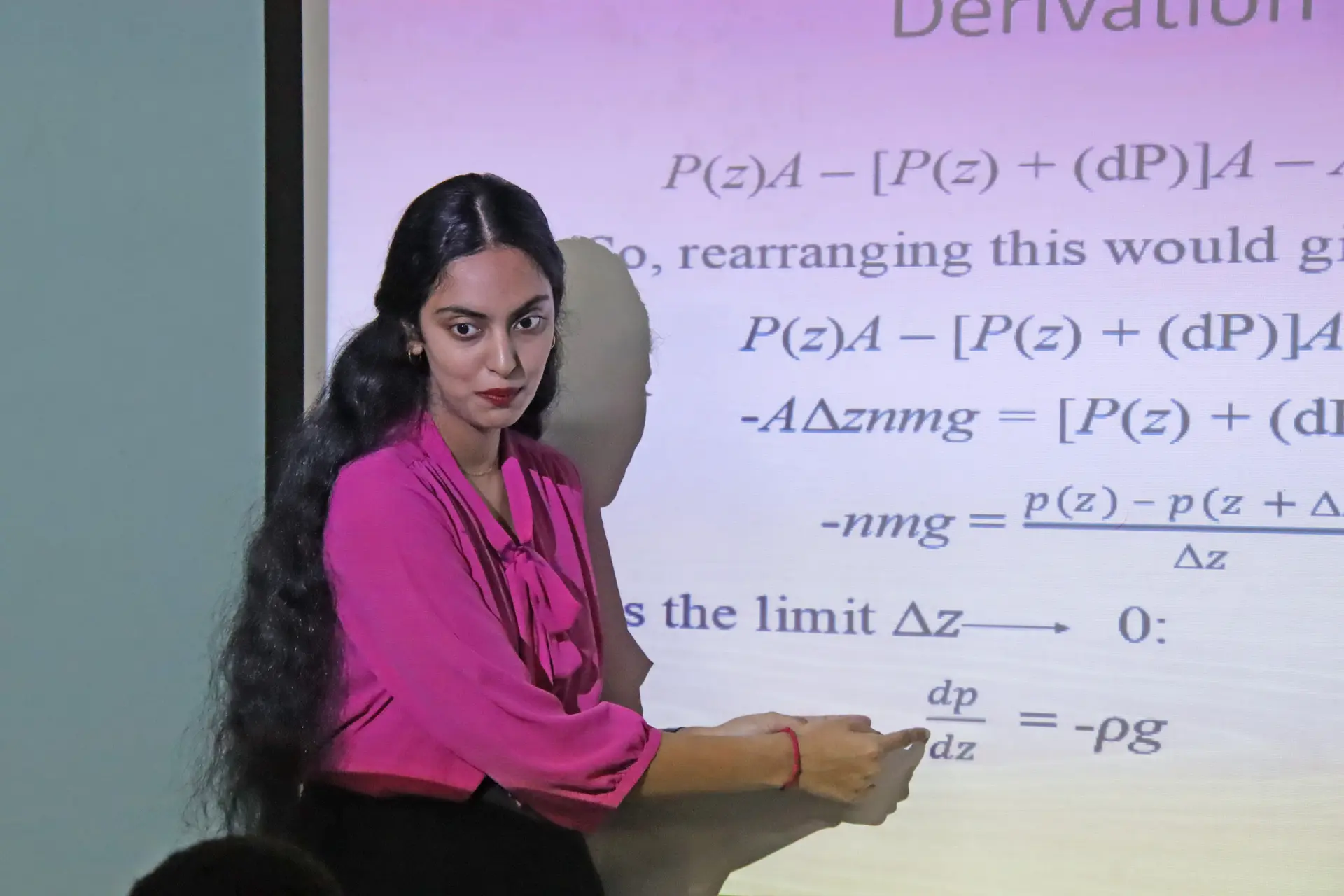
School of Science and Technology and maths adviser to the Vice-Chancellor, Ayesha Reddy.
Photo: Supplied
The University of Fiji says more creative and radical approaches are needed to address Fiji’s numeracy crisis.
To support the Ministry of Education’s National Numeracy Strategy, the university will submit a strategy document outlining recommended reforms.
Academic and mathematics adviser to the Vice-Chancellor, Ms Ayesha Reddy, has developed a resource module as part of these recommendations.
Related stories
She highlighted a gap in mathematical proficiency among Year 4 and Year 5 students and proposed introducing a compulsory Multiplication Verification Assessment (MVA) in Year 5.
“This diagnostic assessment will help gauge students’ competency in multiplication tables and identify intervention and scaffolding methods for those facing difficulties,” she said.
“The MVA will not act as a summative assessment, so no marks will contribute towards the final examination.”
Ms Reddy also recommends that strands and topics in Year 8 and Year 9 mathematics be reviewed by the Curriculum Development Unit to ensure a smoother transition from primary to secondary school.
She said key areas such as algebra and calculus dominate upper secondary mathematics and are crucial for students pursuing mathematics at the tertiary level.
The university has also proposed a 60/40 teaching model for lower-primary mathematics classes, where 60 per cent of learning would be teacher-led and 40 per cent self-directed and inquiry-based.
This approach recognises that many students do not fully develop abstract thinking, reasoning and problem-solving skills by age 12.
The University of Fiji said teacher-led instruction remains essential in primary mathematics, while inquiry-based learning becomes more important in secondary school.
Additional recommendations will also be submitted to the ministry.
Recent statistics released by Education Minister Aseri Radrodro showed the Year 5 literacy rate at 95 per cent, while the numeracy rate stood at 74 per cent.
More than 80 per cent of Fiji’s schools also recorded below-expected levels in Year 4 mathematics performance.
University of Fiji Vice-Chancellor Professor Shaista Shameem said mathematics must be taught well because it builds lifelong innovative and critical thinking.
“In addition, it is a vital subject for explaining not only how our own planet functions but the entire solar system and beyond,” she said.
Professor Shameem added that there is no time to waste in developing effective learning and teaching strategies to address Fiji’s numeracy deficit in schools.