More trashbooms needed to address waste crisis
Trashboom Pacific director Wayne Fuakilau said the barriers had intercepted more than 10,000 kilograms of waste to date, about half of it plastic, and had even captured large items such as washing machines and microwaves.
Wednesday 18 March 2026 | 12:00

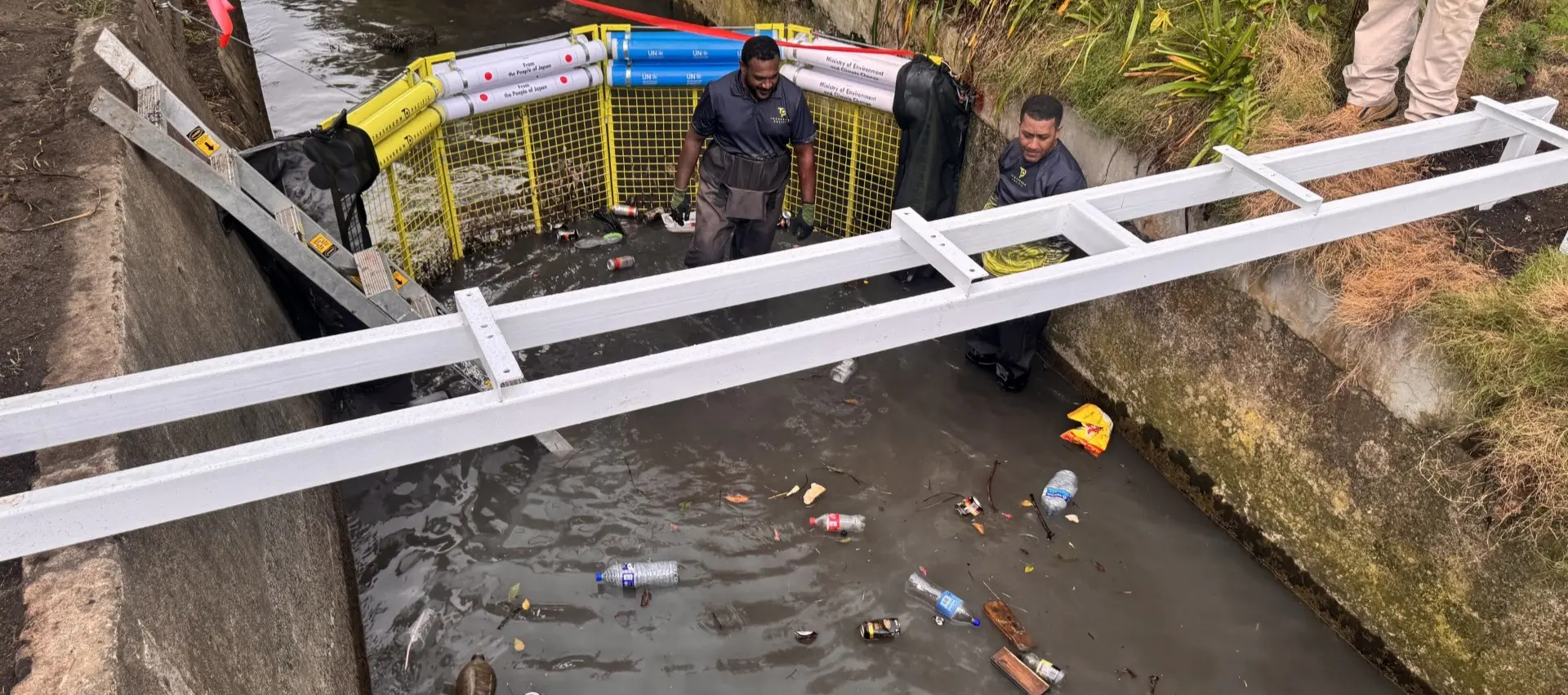
A Trashboom is a floating barrier stretched across a river or creek to capture rubbish – plastic bottles, packaging, diapers, e-waste, and household items before it flows into the ocean.
Photo: Asenaca Ratu
Fiji has collected 13,000 kilograms of plastic waste through 11 floating river barriers, but the country needs about 11,000 of them to effectively address its waste crisis.
This was highlighted by Minister for Information, Environment and Climate Change Lynda Tabuya during the official launch of the latest Trashboom installations in Suva and Nakasi on Monday.
“This is where we need to tackle it because the most amount of people live in the urban corridors and there's a lot of trash going into our streams and rivers,” she said.
Related stories
A Trashboom is a floating barrier stretched across a river or creek to capture rubbish — including plastic bottles, packaging, diapers, e-waste and household items — before it flows into the ocean.
The Nakasi installation, set up last Friday, had already collected 10 kilograms of waste by Monday, including alcohol cans and plastic bottles.
A third Trashboom is expected to be installed in Sigatoka this week.
Trashboom Pacific director Wayne Fuakilau said the barriers had intercepted more than 10,000 kilograms of waste to date, about half of it plastic, and had even captured large items such as washing machines and microwaves.
“You name it, it comes down,” he said.
Of the 11 Trashbooms deployed, six were funded by Government and five by private partners, including Fiji Airways and Coca-Cola.
Japan and the United Nations Environment Programme (UNEP) are also supporting the initiative as part of a regional project across Fiji, Thailand and Palau.
Japan’s Ambassador Hiroshi Tajima said data collected from the Trashbooms would help inform the design of Fiji’s upcoming Container Deposit Return system — a refund scheme for beverage containers aimed at boosting recycling.
Mr Fuakilau said the long-term goal was to recycle recovered plastics into new products, easing pressure on Fiji’s overloaded landfills.
However, both Ms Tabuya and Mr Fuakilau highlighted a critical gap, informal settlements still lack formal waste collection services.
“That is something for Government to look at,” Ms Tabuya said.