Life without payslip: How one man supports a family in Fiji’s informal sector
Saturday 04 April 2026 | 13:00

Across Fiji’s informal settlements, home to an estimated 120,000 to more than 200,000 people, such work is not a side hustle.
By 5.30am each day, Dharmen Chand is already on the move.
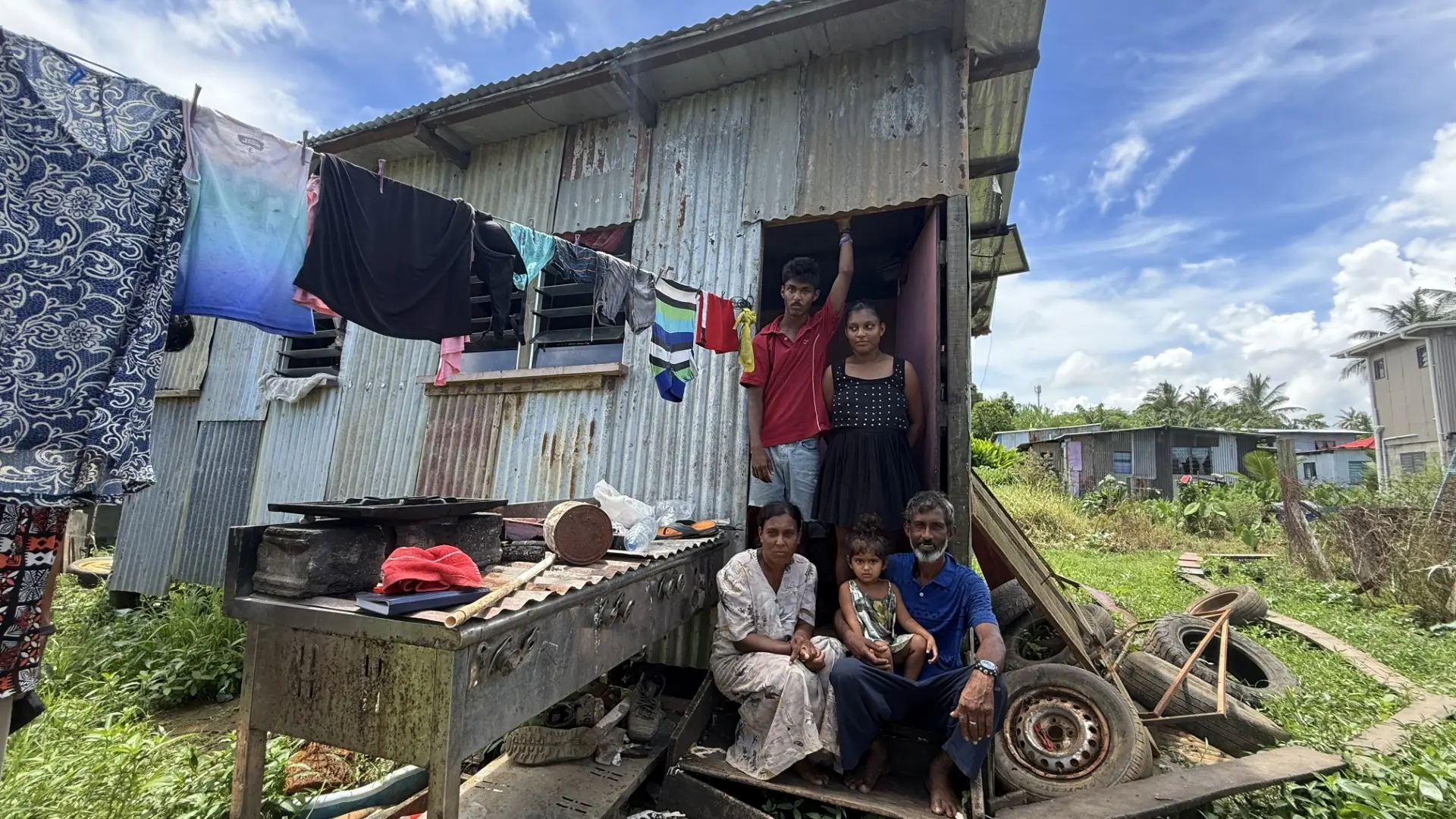
The 52-year-old leaves his two-room tin-and-wood house in Navosai settlement, Narere, carrying his tools as he goes from house to house repairing shoes and bags across Raiwaqa, Vatuwaqa and Toorak in Suva.
On a good day, he earns $100. On a bad day, just $10.
Related stories
“Sometimes no luck, sometimes luck,” he said.
“Like fishing.”
When shoe repairs are slow, he travels to Nausori town to sell balloons, buying $50 worth and selling them for $100.
It is a cash-based life with no payslip, receipts or tax file—and he is not alone.
Across Fiji’s informal settlements, home to an estimated 120,000 to more than 200,000 people, such work is not a side hustle. It is the main economy—shoe repairs, balloon vending, subsistence farming on borrowed land and other small trades that keep households fed.
Dharmen supports a large household that includes children aged seven to 24, grandchildren and a daughter-in-law.
The family relies on his irregular income, occasional support from his son and what they can grow behind their home, dalo and rourou.
“Sometimes no food,” he said.
“I struggle and buy.”
He has no fridge, no electricity and shares water with a neighbour.
During heavy rain, floodwaters enter the house, forcing the family to move to higher ground inside and wait for it to subside.
The $200 Back-to-School Assistance provides some relief.
“Uniform very expensive and $25, $50, $100. $200 goes quickly.”
He said he had applied for social welfare but had not received support.
“I need social welfare to support us because I got seven children.”
Fiji Revenue and Customs Service chief executive officer Udit Singh said people like Dharmen operate within the law up to a point.
“You could be selling balloons up to $30,000,” he said.
“Everyone’s allowed to earn a living, provided they pay some tax.”
However, he acknowledged the wider challenge of the black economy, with unrecorded cash transactions estimated at between $800 million and $1 billion annually.
“The cash economy is one of the big drivers,” he said.
“Digitisation is going to support us.”
For Dharmen, digitisation remains a distant concern. His world revolves around 92-cent bus fares, barracks of 36 houses where even $2 a door adds up, and weekends when people are more likely to have cash.
“When money comes, I can move with my children,” he said of his plan to extend the house.
For now, he walks.
Those wishing to assist Dharmen and his family can contact him directly on 7992239.