SHINE A LIGHT: Examining the Rehabilitation Project
We dive deep into the processes, lead consultancy awards, and contractor selection amidst Government's $234.5 million rehabilitation initiative.
Wednesday 31 January 2024 | 11:49

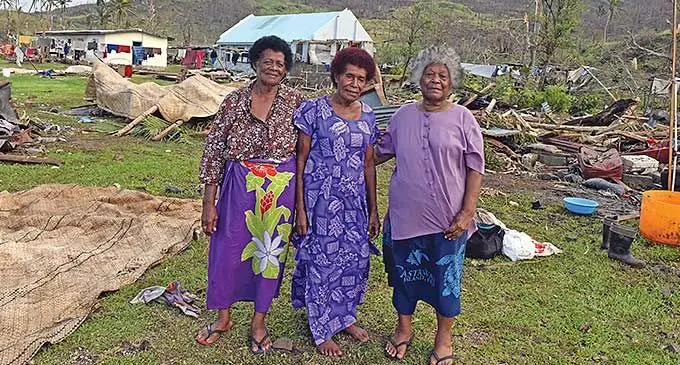
TC Winston also ruined lives and homes at Nasinu Village.
Initial assessments of the damages caused by Tropical Cyclone Winston on majority of the schools around Fiji warranted remedial works.
These were views of engineering experts who spoke on the condition of not being identified.
At the time, the Government engaged the services of Engineers Fiji, whereby 10 engineering firms offered pro bono services to assess the damages of schools and public buildings in affected areas.
Related stories
These engineering companies were:
Chand Engineering Consultants;
Engineered Designs;
Entec Limited;
Erasito Consultants Limited;
Hamend Lodhia Engineers;
Houng Lee Kaba Jacob Limited (HLK);
NRW Macallan (Fiji) Limited;
Pacific Risk Consulting Engineers Limited;
Rupeni Mua Consulting Engineers Limited; and
Shri Singh and Associates Limited.
The areas of assessment were divided into 10 regions and 22 assessment teams comprising 70 professionals were mobilised to assess more than 80 per cent of the 249 properties consisting of about 2000 structures.
From the engineers' damage assessment reports, the Ministry of Finance, as the principal (and client) for the project, through its Construction Implementation Unit (CIU), was to determine medium and long-term priority needs and improving cost estimates of the costs to rebuild.
Among the roles of CIU at the time, it was accountable for the quality of all products and services delivered by the supplier, ensuring project administration and compliance from client, delivery to plan, quality and cost.
The Terms of Reference for (TOR) Lead Consultancy Services document indicated that the Ministry of Finance's representative for the projectwas Mohammed Shah, who was acting manager for CIU at the time.
Mr Shah was later appointed the head of the CIU in December 2017, a temporary unit established in 2016 primarily to oversee and coordinate the reconstruction of government funded schools.
He managed the unit for over five years, before his employment contract was terminated by the Ministry of Civil Service in September last year, just four months after the disbanding of the CIU.
The previous Government spent $234.5 million, inclusive of public and international aid money, to fund the rehabilitation of more than 200 schools.
LEAD CONSULTANTS
An informed source, who was involved in the rehabilitation project, said engineers were to make submissions on their proposed consultancy fees, as per Government's request.
Engineers were to also detail, in their submission, the scope of work on the affected sites they had assessed and the method of implementing the projects.
This was also indicated in the parliamentary speech of the former Prime Minister, Voreqe Bainimarama, on June 22, 2016.
" ... Government has accepted request for lead consultancy proposals from consulting firms to begin the design phase of construction work," Mr Bainimarama said in his speech.
The TOR for lead consultants indicated that upon receiving acceptance letter from the Ministry of Finance, agreement would then be signed between the engineers and the Ministry of Finance on the specified works.
Five members of Engineers Fiji were appointed as lead consultants.
The engineering firms were:
Entec Pte Limited;
Chands Engineering Consultants Pte Ltd;
NRW Macallan (Fiji) Ltd;
Shri Singh and Associates Pte Ltd;
Houng Lee Kaba Jacob Pte Ltd (HLK Jacob).
Fiji had about 20 civil and structural engineering professionals at the time.

The category 5 tropical cyclone Winston caused severe damage to homes and school at Nataleira Village.
TERMS OF REFERENCE
The lead consultants' terms of reference highlighted that engineers were to:
Carry out full construction drawings with preliminary cost estimates;
Prepare tender documents for contractors and necessary contract administration; and
Prepare evaluation reports for submission to the ministry.
Multiple sources, who were familiar with the project, said there were stringent processes in place to ensure transparency and accountability.
One informed source, who spoke on the condition of anonymity, said engineers never dealt directly with contractors.
Instead, any clarifications required for a contract was between engineers, the procurement office, and at times CIU.
Informed sources said the awarding of tenders to contractors went through a transparent process, and tenders were awarded by the Government Tender Board.
PROCUREMENT
Since the 2017/2018 financial year, CIU managed projects approved by the Government Tender Board was 523, valuing $362 million.
Head of the Fiji Procurement Office (FPO), Saimoni Veramu, said 80 per cent of this value, or $289.6 million, was in the 2017/2018 and 2018/2019 financial years, with projects focused on cyclone rehabilitation.
Mr Veramu said the Government mandated, through the Procurement Regulations 2010, that all projects exceeding $50,000 underwent a competitive bidding process through tenders, which was supervised by the FPO.
The process of tendering government projects begins with the:
Preparation of detailed specifications by the relevant ministry, which outlines the project requirements
Once specifications are finalised, the FPO publishes the tender invitation on its electronic tender portal. The portal provides a centralised platform for interested bidders to access tender documents and submit their proposals;
At the tender closing date, a representative of the GTB opens the electronic tender box. The bids received are then subjected to an evaluation process led by a committee appointed by the relevant ministry.
The committee must comprise at least three ministries or departments;
The evaluation committee assesses each bid against the established criteria, considering factors such as technical competence, proposed methodology and price. Once the evaluation is complete, the committee submits its recommendations to the GTB for final approval; and
The GTB, based on the recommendations of the evaluation committee, makes decisions and grants approval to the most qualified bidder.
WERE THE PROCESSES FOLLOWED?
Multiple sources, who spoke on the condition of anonymity, indicated that strict processes were followed throughout the tender.
These sources said it was difficult for one person to manipulate the process.
However, there is always the risk of abuse and lack of transparency in the procurement process around the world, especially when it involves taxpayers' money.
Unity Fiji Party leader Savenaca Narube said processes must be transparent, including any kind of intervention.
"The procurement process must be strengthened."
"Conflict of interest needs to be exposed."
You don't play around with public money," he said.
Next week, we highlight possible conflicts of interest in the awarding of tenders to lead consultants and contractors.
Feedback: ivamere.nataro@fijisun.com.fj