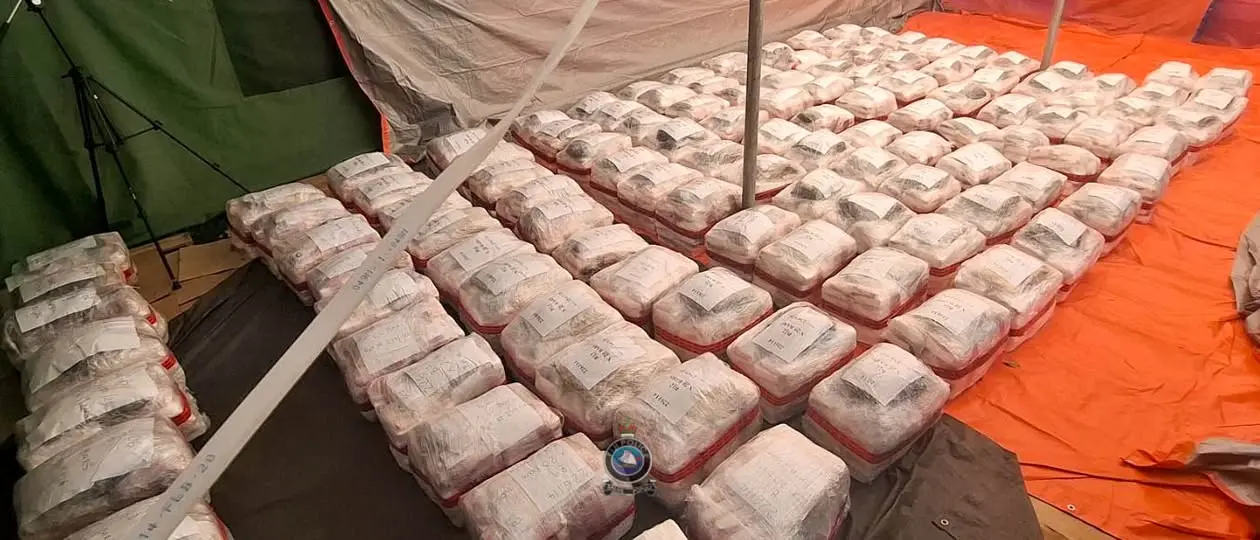
Colombian cartel linked to Vatia $3billion drug bust
Sunday 31 May 2026 | 12:00
Captain Sandoval of the Colombian Navy indicated the drugs belonged to a Colombian-based terrorist group.
The 2.64 tonnes of cocaine intercepted at the abandoned Vatia Jetty in Tavua in January this year was smuggled from South America.
It was destined for Australia – one of the most lucrative markets for illicit drugs.
However, this masthead was informed that some of the cocaine allegedly made its way to Suva before police seized the drugs.
Police spokesperson Ana Naisoro dismissed the allegation, saying there was no such issue.
The drug bust is the largest cocaine consignment seized on Fiji’s shores, valued at $3 billion, and now stored in Suva.
It was revealed at the Transnational Crime Summit held at the Marriott Resort in Nadi last week that the cocaine seized in Fiji and the Pacific Ocean between January and February were trafficked from Colombia, in South America.
Captain Nicolas Mila Sandoval of the Colombian Navy indicated the drugs belonged to the Colombian-based international terrorist group – Clan Del Golfo.
The Clan Del Golfo is the most violent and powerful criminal organisation in Colombia and is one of the largest suppliers of cocaine in the world, often smuggling weapons alongside drugs.
Captain Sandavol said what’s evident with the cocaine seizures was the collaboration between global network of criminal organisations, with the involvement of Ecuadorians.
Quito, the capital of Ecuador, is about 1 hour and 40 minutes by plane to Bogota, the capital of Colombia.
The Fiji Police Force arrested four Ecuadorians in Vatia, while 11 Ecuadorians and Honduras nationals were arrested by French Polynesia authorities following the seizure of almost five tonnes of cocaine in the Pacific Ocean.
Honduras is a country in Central America.
The two drug operations were executed between January 15 and 16.
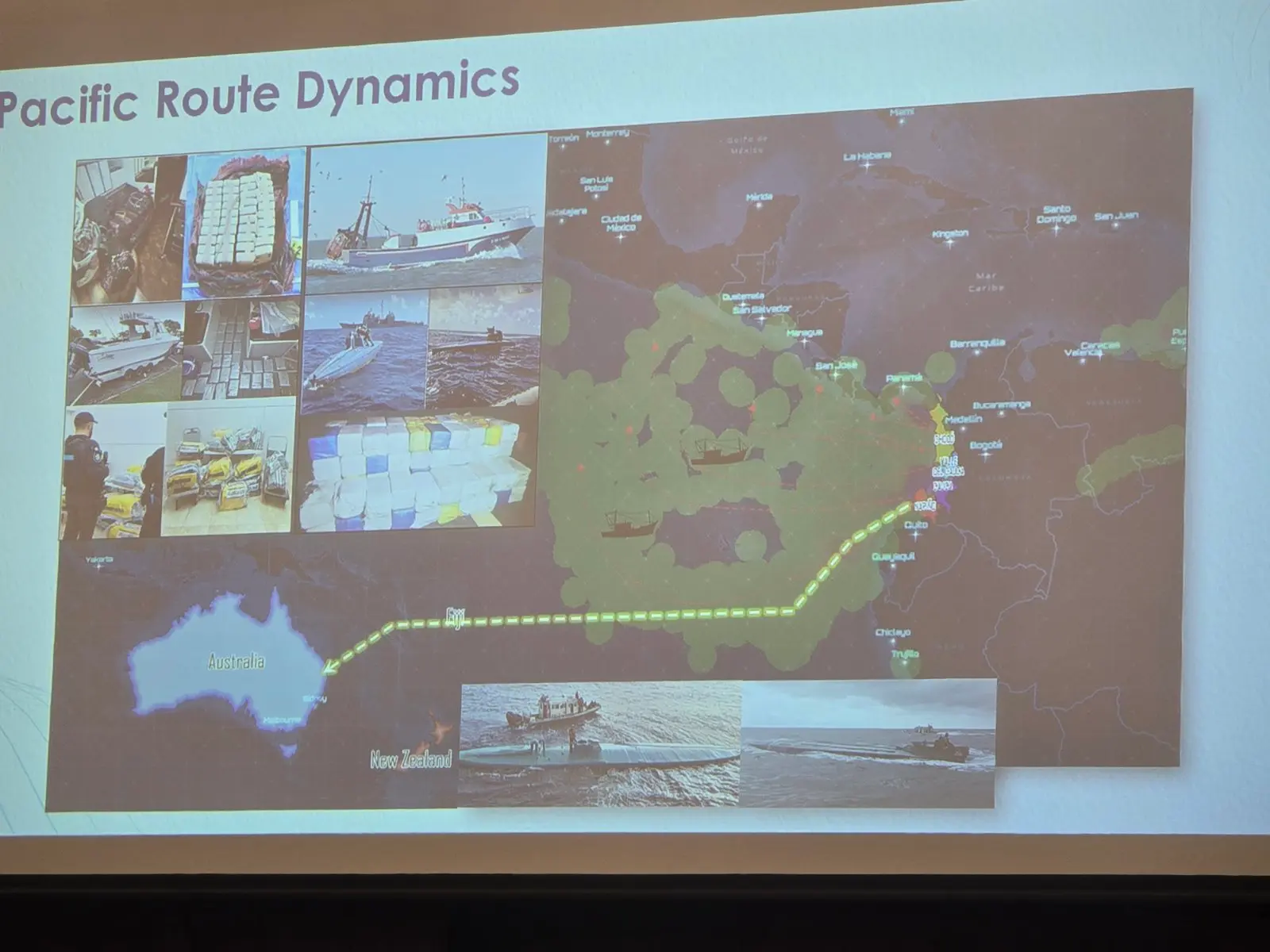
Fiji is on the route of drug smuggling.
Transportation
A semi-submersible, also known as a narco submarine, was used to move the Cocaine to Fiji.
Police never captured the semi-submersible.
Captain Sandavol says cartels are constantly looking for ways to get the cocaine directly to Australia, and an indication is how semi-submersibles are designed.
He referenced a few operations, which included seizing a semi-submersible that was trafficking six tonnes of cocaine, three people, with 16,000 gallons of diesel.
He said last year they detected a self-employed, self-reversible semi-submersible that operated entirely on Starlink internet technology, carrying about 1.5 tonnes of cocaine.
It had three different compartments; each can accommodate one person.
Assistant Superintendent of Police and head of the Transnational Crime Unit, Savenaca Tuivaga, said with the amount of fuel carried by these semi-submersibles, the question for Fiji and the Pacific was whether they were coming into the Pacific to refuel or these semi-submersibles could carry that much fuel.
Mr Tuivaga said traditionally drugs would enter Fiji’s borders through planes, fishing vessels, yachts. Until recently, with the semi-submersible.
But it’s not only coming through Fiji’s maritime.
“We’ve had detections at our borders that are coming in through containers, through flights. We have identified targeted flights, targeted countries that are coming in,” he said at the summit.
Mr Tuivaga did not reveal details, pointing to ongoing live operations.
Around the time of the drug bust in Vatia, a 40-foot container arrived into the Port of Suva, allegedly containing illicit drugs, but the contents of the container were nowhere to be found when Police arrived.
Investigation into the matter continues.
FOREIGN CRIMINAL ACTORS:
- Latin America cartels
- Chinese Organised Crime groups
- Southeast Asian syndicates
- Australian and New Zealand networks
- Local facilitators
- Opportunistic criminals
Illegal collaborations
Captain Sandavol said the criminal network extended to Mexican cartels, mafia groups in France, Serbia, Sweden, Spain, Albania, and Australia.
He indicated that once the cocaine reaches Australia, it would then be distributed to China with triads, with the Russian mafia, including Japan.
Head of Pacific Programme at the Global Initiative against Transnational Organised Crime Virginia Comolli says these criminal actors do not operate in silos.
“We see increasingly the collaboration between Latin American cartels, Asian criminal groups, local facilitators, transnational logistic actors along the supply chains,” she said during the summit.
She referenced the 4.15 methamphetamine bust in Legalega and Maqalevu, Nadi, in 2024, which involved Chinese criminals and the Mexican Sinaloa cartel.
“The Pacific is becoming increasingly embedded within globally criminal ecosystems...criminals operating in the region are often polycriminal actors, the same network that is dealing with drugs may also be involved in money laundering, fraud, labour exploitation, corruption and cyber-enabled crime.”
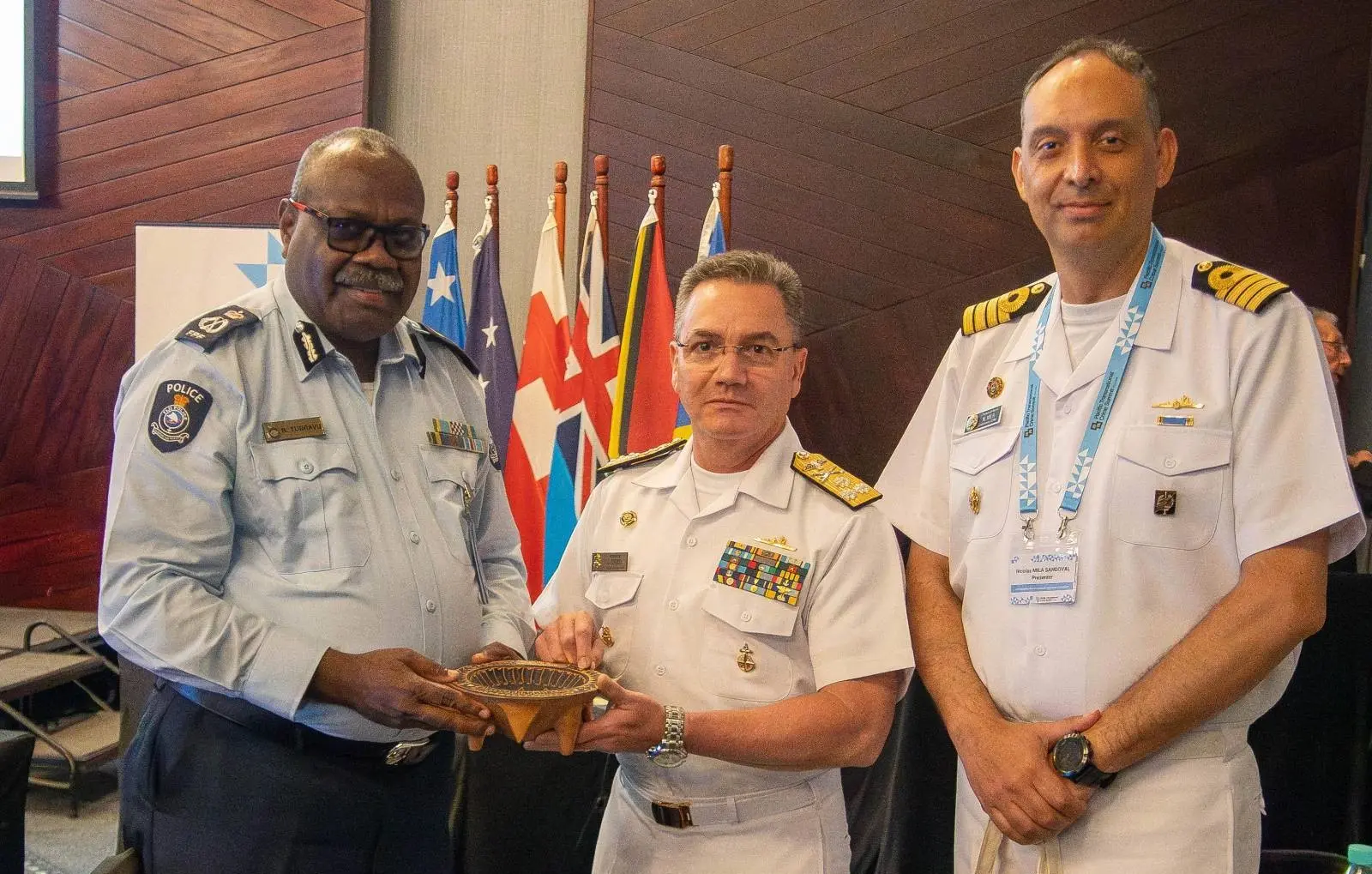
Fiji’s Commissioner of Police Rusiate Tudravu with senior Colombian Navy officers, Vice Admiral Carlos Hernando Oramas Maldonado and Captain Nicolas Sandoval.
Weapons
Drugs and weapons are often smuggled together, Ms Comolli said at the summit.
“Across the wider Pacific region, there have been increasing concerns regarding firearm seizures, weapons trafficking, and the intersection between drugs and violence,” she said.
“As drug trafficking expands, associated arms often follow in terms of violence, intimidation, corruption, money laundering, and also weapon proliferation.”
Ms Comolli also warned that counterfeit goods and illicit trade particularly tobacco and alcohol – often overlooked in discussions on transnational organised crime in the Pacific – are linked to wider criminal economies and supply chains.
DESTINATION AND VALUE OF NARCOTICS:
- Australia - USD$260,000 (F$57,7668) per KG
- France - USD$53,000 (FJD$117,755) per KG
- Italy - USD$38,800 (FJD$86205) per KG
- USA – US$48,000 (FJD$106,646) per KG
- Colombia – USD$1500 (F$33,327) per KG
Opportunity
Mr Tuivaga said the big challenge for Fiji and the region was that cartels use the Pacific as a highway to smuggle their drugs to Australia, New Zealand and Asia.
“They say the Pacific is vulnerable, but these cartels have identified countries that give them opportunities in the Pacific.
“Fiji is considered the hub of the Pacific, where regional and international activities take place, which gives opportunities for cartels to undertake their criminal activity.”
Vatia
In the days leading up to the Vatia bust, residents in the area, including the Vatia Jetty caretaker, who spoke on the condition of anonymity, noticed suspicious activities, including the presence of unknown men in the area.
Following the drug bust, locals noticed the presence of the Republic of Fiji Military Forces navy patrolling the area.
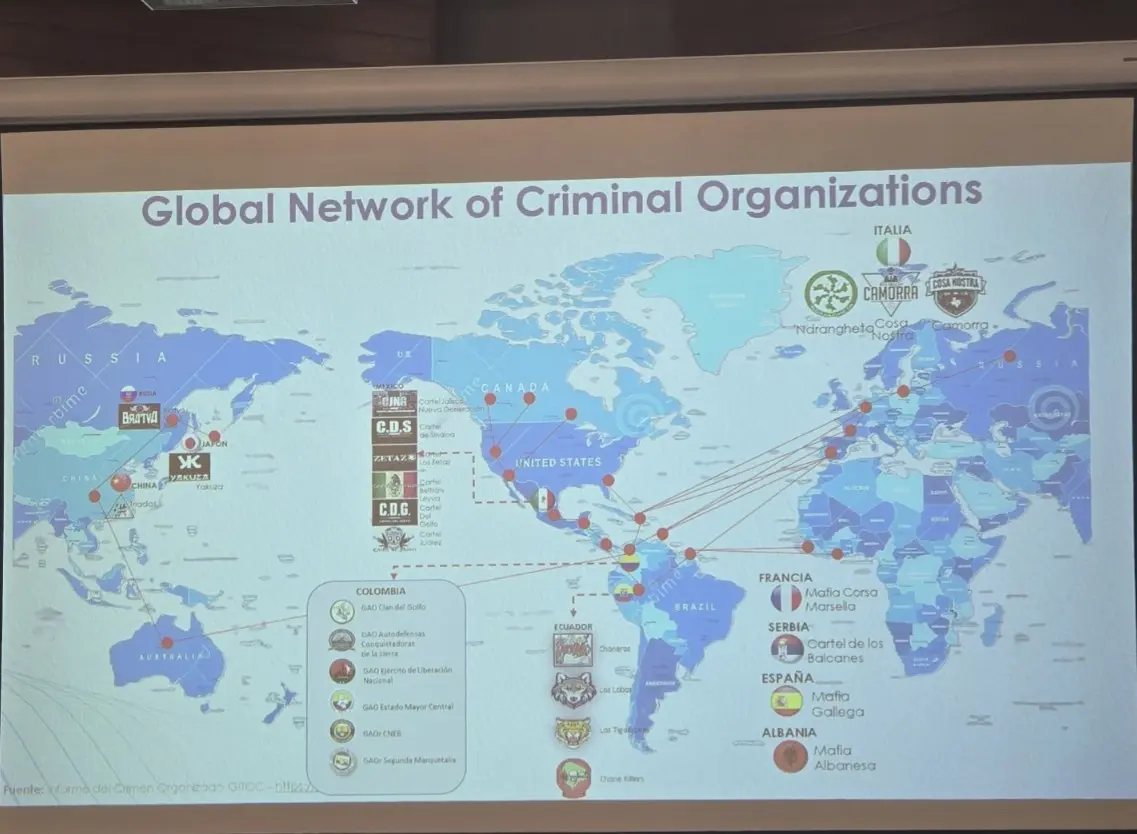
Global network of criminal organisations.
IMPACTS OF DRUG SEIZURES ON ORGANISED CRIME THREAT
- Criminal fragmentation: Sustained pressure causes networks to atomize: tactical operators are replaced, but managers are isolated and subcontracted segments to small cells, reducing traceability without weakening the business.
- Route adaptation: Organisations move routes to less guarded areas and islands, increasing stopovers, sea-to-sea transfers and logistics nodes, increasing time, costs and resilience.
- Economic adjustments: High risk increases final price of the product. Inelastic demand sustains profitability: less volume, higher margin. Military pressure increases the value of the illicit market.
- Criminal innovation: Hybrid governance, front companies, use of legal fleets, secondary ports and sophisticated finance (cryptocurrencies) are emerging. The operational centre moves to less visible areas.
- Vulnerable recruitment: Lethality at sea does not slow down the operation: fishermen and coastal youth become easily replaceable labour.
- Centre of gravity shift: Maritime hardening shifts the business towards the land: production, precursors, laboratories and territorial control. Maritime interdiction pushes the problem inward.