Port security faces inside threat
Sunday 09 August 2026 | 11:00

Fiji Ports is considering a dedicated police office and shared CCTV access after alleged thefts from kava containers at the Port of Suva.
Fiji Ports Corporation Limited (FPCL) says recent alleged incidents of imported kava theft at the Port of Suva is an indication that security threat at the port lies within the boundaries of Fiji Ports.
Because of these threats, discussions are underway for a dedicated police office within the port precinct, including a shared CCTV viewing framework between police and FPCL.
Fiji Ports has come under heavy public scrutiny following Fiji Sun's report of a spate of alleged kava theft from inside shipping containers between May and June this year, exposing serious security gaps within Fiji Ports, and the need to strengthen existing multiagency partnerships.
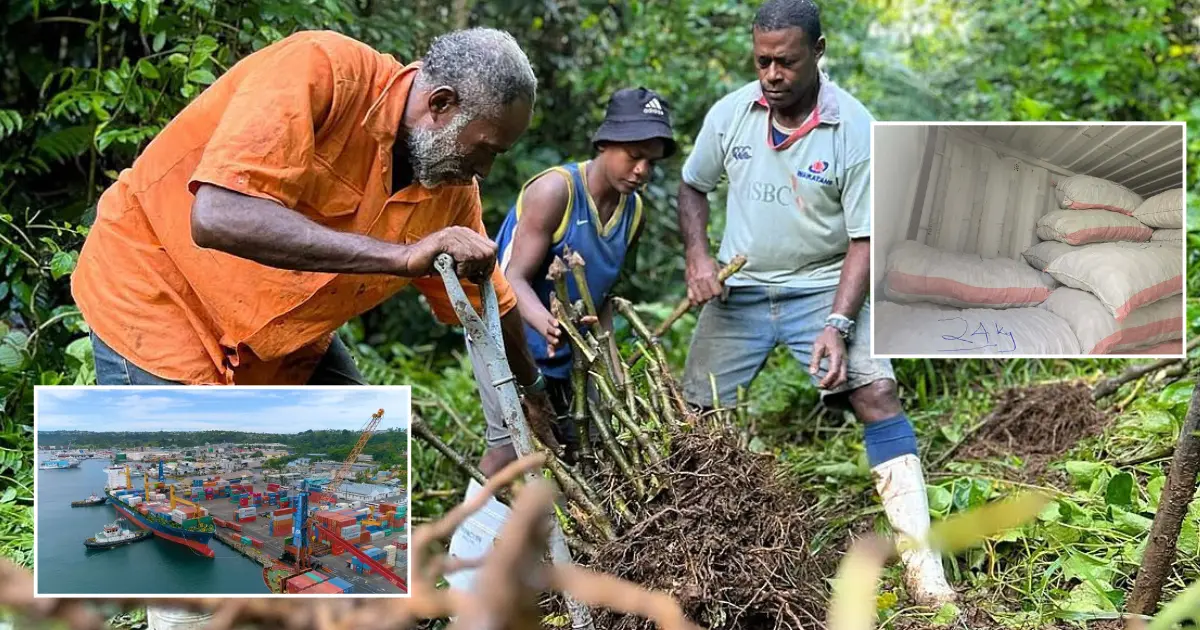
The bags of kava were imported from Vanuatu and Papua New Guinea (PNG) by four local kava trading companies to re-export overseas. Following the alleged incidents, five suspects were taken in for questioning by police. One of the suspects admitted to committing the offence.
The suspect further admitted that a stevedore supervisor at the Fiji Ports masterminded the operation. A stevedore is an individual or company that loads and unloads cargo from ships at a port.
The supervisor is believed to be a 46-year-old male residing in Raiwaqa, Suva. Most of the stolen kava are believed to have been sold to vendors at the Suva Municipal Market.
Fiji Ports acting chief executive officer Suresh Prasad says they are aware of information relating to the police investigation, and admissions made by one of the suspects.
"Any matters concerning admissions or statements made by individuals are for the Fiji Police Force and Fiji Ports Terminal Ltd (FPTL) to confirm.
"We will not comment on allegations involving any individual while investigations are ongoing."
Mr Prasad says FPCL is unaware of the multiple incidents. Instead, he confirms that there is one reported cargo theft matter currently under investigation by police and FPCL.
Allegations
However, information gathered by this masthead indicated that there were three shipping containers that were broken into on three separate occasions.
One incident involved the stealing of about $100,000 worth of Vanuatu kava belonging to a timber and hardware company in Nasinu.
The kava was shipped to Suva port on May 1, 2026. The owner of the timber company removed the container from the port on May 11, 2026.
Upon arrival at the timber yard, the owner discovered that there were visible signs of forced entry into the container.
Another incident involved the stealing of $24,000 worth of Vanuatu kava, weighing about 240 kilograms.
In a separate incident, a prominent local kava trading company had 17 sacks of dried kava stolen on June 18, 2026, with estimated value of more than $20,000.
Twins Kava Dealers director Ravneel Chand said $200,000 worth of dried kava from Papua New Guinea (PNG) was stolen from the container inside the Suva port.
Mr Chand had imported 249 kava bags with a value of $203,830. Of the 249 kava bags, there were 65 kava chips bags valued at $195,800, and one bail of waka roots with a value of $8030.
Mr Chand said he was informed of the tampered shipping container by his agent on June 24.
He immediately contacted the exporter in PNG. Mr Chand said the exporter sent photos of the original container seal and padlock prior to export.
On June 25, Mr Chand, together with his staff, inspected the container at the shipping services yard in Lami, where he discovered that there were no seal and padlock, and 66 kava bags missing.
In the presence of Ministry of Health and Biosecurity Authority (BAF) of Fiji staff, Mr Chand and his staff transferred the 183 kava bags to his storage room at his yard in Naitata, Navua.
Mr Chand is urging Fiji Ports to take responsibility and compensate companies for their stolen commodities.
Meanwhile, Mr Prasad said Fiji Ports treated all reports of cargo theft, tampering, or unauthorised access seriously.
"Each case requires thorough investigation to determine where and how the incident occurred," he said.
"Any matters relating to liability or compensation will be addressed in accordance with the relevant contractual arrangements, applicable laws, and the findings of the ongoing investigation. At this stage, it would be premature to speculate on the outcome."
Mr Prasad said investigation remained under the jurisdiction of the police.
"FPCL continues to cooperate fully by providing all available information, including CCTV footage, access to relevant records, and any other assistance requested by investigators."
Fiji Police Force spokesperson Ana Naisoro confirmed that investigation into the matter was ongoing.
Police are also investigating a case where illicit drugs, which allegedly arrived at the Suva port in a 40-foot container in January this year, were missing from the container at the shipping yard.
FijiPort Security
Mr Prasad said security and surveillance systems at the Suva port operated under a 24-hour security and surveillance system.
In addition, he said an external security service provider oversaw the gate and conducts routing site patrol on periodic basis, with the support of a surveillance monitoring team operating on a shift basis.
These security arrangements are regularly assessed by the Maritime Safety Authority of Fiji (MSAF).
"FPCL is aware and recognises its critical role in Fiji's trade, economy, and national security. FPCL employees are expected to uphold high standards of professionalism, integrity, and accountability," Mr Prasad said.
FPCL board chairman Isikeli Tuituku said the board was only aware of one incident.
However, he said the board was interested to know the details, including those involved, the outcome of the investigation, and the loopholes that needed to be addressed.
Fiji Revenue and Customs Service (FRCS) chief executive officer Udit Singh expressed his concern given their mandate to clear items from ports before customers receive them.
"At the end of the day it's a concern for us because if there are secure containers at the port, we expect them to be secure," he said.
"The key is making sure that the security parameters are met, but port security is not under our jurisdiction. We are only there to inspect the container and its contents."
Mr Singh said addressing the problem required understanding the root cause and addressing them urgently.
"I know that everyone's working on it, trying to find out what the issues are, and relooking at security arrangements."
Multiagency Partnerships
FPCL convenes the Port Security Committee (PSC) for the Suva and Lautoka ports.
The committee comprises representatives from MSAF, police, Republic of Fiji Military Forces, FRCS, BAF, Immigration Department, Fiji Ports Terminal Limited, and shipping agents.
The committee regularly assess security threats, vulnerabilities and mitigation strategies to strengthen port resilience. The committee met twice this year and completed a port facility security threat assessment in June.
Fiji Ports also has an existing memorandum of understanding with the Fiji Police Force, signed last year, that establishes a framework for intelligence sharing, and joint operations.
Under the MOU, police are carrying out the vetting of all port workers, and port users.
Mr Prasad said plans were being finalised for a shared CCTV viewing framework between police and Fiji Ports, including discussions for a dedicated police office within the port vicinity.
"FPCL is confident that this relationship will continue to deliver tangible security benefits for the port and the wider trade community," he said.
Minister for Policing Ioane Naivalurua says the tampering of secured shipping containers is an "inside job".
"The port is a restricted zone. My understanding is that right now there's an internal investigation undertaken by Fiji Ports," he said.
"There's a provision within the existing MOU for us to enter Fiji Ports, but it must be initiated by port authorities on special circumstances that require police assistance."
Mr Naivalurua said the stealing of imported kava may have been an isolated case.
"But it just reflects the inability of the whole security arrangements to make sure that whether incoming or outgoing goods are not tampered with."
Why Import Kava
Minister for Agriculture Tomasi Tunabuna said locally grown kava couldn't meet overseas demand because of the Kava Dieback Disease (KDD), decrease in labour, and the increase in local consumption.
Mr Tubuna said kava was being imported from Vanuatu and PNG for FJ$50 to FJ$80 and re-exported to China and India for more than FJ$200 per kilo.
In 2025, the kava sector was given a grant of $1 million, and it raked in a revenue of $79 million.
Mr Tubuna said this indicated the potential of the industry to boost Fiji's economy.