‘Shine A Light’: Loopholes in Maritime Surveillance
The challenge of monitoring Fiji’s porous maritime borders is exacerbated by the country’s weak vessel tracking regulations, increasing the vulnerability of Fiji being used as a hub for drugs and
Saturday 21 September 2024 | 16:30
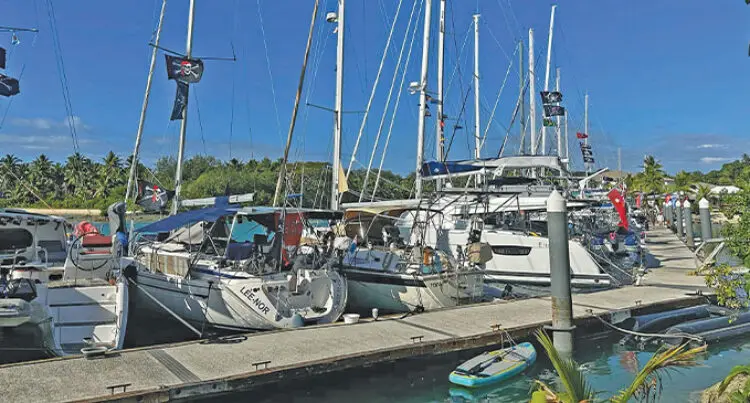
Yachts and small crafts have long been suspected of smuggling illicit drugs and other prohibited goods into the country.
The challenge of monitoring Fiji’s porous maritime borders is exacerbated by the country’s weak vessel tracking regulations, increasing the vulnerability of Fiji being used as a hub for drugs and human trafficking.
Right now, vessels (yachts, boats) can cross Fiji’s borders without being detected by the local authorities.
It is not mandatory to maintain an automatic identification system (AIS) on board-a vessel tracking system that was implemented during COVID-19 in Fiji to help monitor movements of vessels within Fiji’s maritime borders.
Related stories
It’s estimated that between 700 and 800 yachts visit Fiji each year.
The extensive movement of yachts and small crafts coming in and out of Fiji’s exclusive economic zone (EEZ) and the lack of resources to monitor thousands of kilometres of ocean consistently pose challenges to our national border security efforts.
The seizure of the drugs in Nadi is a clear example of how criminal syndicates, cartels and local mid-tier operatives can exploit our resource-stricken state to use our marinas and ports to transit large amounts of meth worth billions of dollars.
As we highlighted in our Shine a Light column last weekend, the 4.15 tonnes of meth seized in Nadi earlier this year came from overseas on a yacht which berthed out in the Yasawa waters before it was transported by a hired barge to a marina in Nadi.
Over the past five years, the Fiji Revenue and Customs Service (FRCS) recorded 47 illicit drug detections at the border.
Commander for the Republic of Fiji Military Forces Naval Division Commander, Commodore Humphrey Tawake, says the perception that scattered island groups are the high-risk areas in terms of drug trade is an understatement.
“We say the whole of Fiji is all equal and the same. These guys [criminals] are smarter than you think. These guys operate as a commercial business or commercial entity.
If they do one this side, they’ll do three up north,” Commodore Tawake said.
As we continue our investigations into the methamphetamine problem in Fiji, we explore the risks surrounding our maritime borders, yachting in Fiji and the role of local authorities in monitoring visiting yachts and safeguarding the border against illegal drug activity.
YACHTING IN FIJI
Yachts and small crafts have long been suspected of smuggling illicit drugs and other prohibited goods into the country.
Authorities in 2018 found more than US$10 million (FJ$22m) worth of cocaine and ecstasy on board the yacht of an Australian couple at Port Denarau.
The yacht’s reportedly suspicious journey from the United States, through South America and French Polynesia, and then to Nadi was a major red flag to local officials.
Also in 2018, bricks of cocaine washed up on several islands in the Lau Group.
Drug Free World Fiji founder Kalesi Volatabu said she knew of yachts that were exploiting locals in the outer islands.
“One of the stories we got from the Lomaiviti group last year when we were doing a workshop was girls being picked up from the Lau Group and they would be trafficked all around the islands,” she said.
“You’re talking about the yachts going into the Lau Group, picking up girls from there and using them for sex, parties and when they’re done, they just drop them off.” Many visiting yachts often cruise around the Mamanuca and Yasawa groups, Savusavu and the Lau group, close to the marinas and service centres.
Commodore Tawake said the increasing presence of these vessels was a concern especially when they operated outside the yachting season from May to October.
Some yachties choose to stay and cruise outside this period, but that would be unusual and risky. A boat’s migration pattern can also raise suspicion.
With most yachts visiting from Europe, the United States, Australia or New Zealand, their journey to Fiji can provide valuable information to authorities.
“If a yacht from South America comes to Fiji, it must have passed through French Polynesia – that information needs to be shared through the regional arrangements that we have,” Commodore Tawake said in an interview in July.
SEARCHING VESSELS
Vessels can be searched at any given moment when they are in Fiji waters.
Several sailors, who wished to remain anonymous, said large groups of border security officials in recent weeks had searched dozens of boats that had just checked in but also those that had been in Fiji for a week.
They said it was a ‘routine’ search and officials weren’t acting on ‘suspicion’.
Port Denarau Marina chief executive officer Cynthia Rasch said those exercises had increased over the years and could also be very messy. Recently, authorities were criticised for the way they searched vessels in Savusavu, with some sailors calling the rummaging ‘intrusive’ and ‘violating’.
One sailor claimed their boat suffered damages as a result and said they were seeking reimbursement from the FRCS.
Another yachtie, whose boat was searched for two hours along with at least a dozen others, said they felt as if a thief had rifled through their belongings.
These complaints come in the wake of a large joint search of a foreign-flagged vessel in Savusavu by the FRCS, Fiji Navy, Fiji Police Force and other partner agencies, which led to the seizure of undeclared alcohol, the penalty of which amounted to over FJ$6500.
Acting Police Commissioner (ACP) Operations Livai Driu said Police were warning vessel owners that random checks would be conducted, and he called on operators to comply with law enforcement and maritime laws in place. Viki Moore, director of the Island Cruising Pacific Rally, said it was worrying to hear about the unpleasant experiences of some fellow sailors.
“We encourage all the boats on the Pacific Rally to ensure they correctly declare all requested items on their Fiji entry forms and I am very happy for customs to carefully search visiting vessels,” she said.
“However, this needs to be done carefully to ensure they are not damaging them or having things going missing from the boats.”
Ms Moore said she was concerned about the potential fallout of the searches on the yachting sector, particularly in an area like Savusavu.
“Savusavu is trying to develop and grow its yachting tourism with the new Nawi Marina there, which is brilliant.
“I’d hate for them to get a reputation as a place where vessels are regularly being stripped and searched and potentially damaged there.
“But the only people who should be worried are the ones breaking the law.”
ARRIVING IN FIJI
FRCS requires foreign vessels that visit Fiji to notify them of their arrival in advance and proceed to an FRCS-designated Port of Entry for official clearance before they’re allowed passage through Fijian waters.
Yachts and small crafts must make advanced notification through a 13- page joint C2-C form and obtain arrival clearance from FRCS, Ministry of Health and Medical Services, Biosecurity Authority of Fiji, and Immigration before leaving their port of departure overseas.
The C2-C form is a declaration of their stores on board, crew members, where they’re coming from, where they’re going, and the intended duration of their stay in Fiji.
Once approval is given to enter Fiji, they will need to seek clearance and engage with customs and other border security agencies at one of the many marinas situated around the country, including Suva, Port Denarau, Vuda, Copra Shed, and Nawi Island.
“FRCS has a flag system, and it’s green, yellow and red. And if those C2-C forms pop up with too many red flags, then they target them, and they do a full search, which involves dogs and many officers,” said Vuda Marina chief executive officer and general manager, Adam Wade.
COMMUNITY SURVEILLANCE
The marinas play an important role in ensuring that any suspicious and potentially illegal activity is reported. All the border security agencies often engage in joint sea and maritime searches and patrols.
FRCS implements a Coastal Watch Programme, and they work closely with maritime communities and coastal villages to detect and report suspicious activity.
Boats that are allowed passage into Fiji’s cruising grounds obtain a cruising permit issued by the iTaukei Affairs Board. It’s another form of surveillance.
“The cruising permit, a letter that’s written in Fijian, says that a boat is cleared into the country, and it’s free to go through Fiji waters,” Mr Wade said.
“When a yacht turns up [to a village], they can ask for that cruising permit, and if they don’t have it, then it’s a little bit of a red flag, and they contact the FRCS or the police.”
Commodore Tawake, however, believes law enforcement, including the Navy, needs to have a more active presence in these places.
“We need to be out there more within the communities in those islands to tell them to report any suspicious activity.”
Feedback: ivamere.nataro@fijisun.com.fj