Employment Act review to be tabled in Parliament this month
“In the next Parliament sitting, from May 24 to 28, we will table it. This time it is going to be tabled. We have worked tirelessly on this. It has been a long time coming — 16 years of waiting,” he said.
Friday 08 May 2026 | 08:00

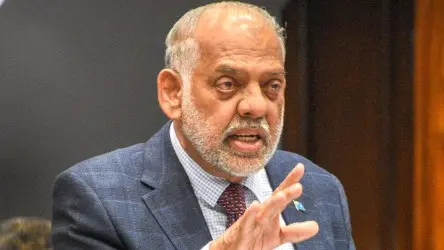
Employment Minister Agni Deo Singh says the review of the Employment Act will be tabled in Parliament later this month after three years of consultations between the ministry and unions.
Speaking in Ba on Tuesday, Mr Singh said the review included changes to the national essential industries list, which currently restricts some workers from taking industrial action.
“There’s a list of industries that are essential, and those who fall under those industries are not allowed to take certain industrial actions, including strikes,” he said.
Related stories
The restrictions include workers in the health sector because of concerns over public safety, health and wellbeing.
“There are very few, but the previous government had included the entire civil service in that list. Teachers couldn’t go on strike because we were part of that list,” Mr Singh said.
He said the revised list was now being aligned with International Labour Organisation (ILO) conventions, giving workers greater freedom to take industrial action when necessary.
“We’ve been working on the ILO review for last three years. It is now in the final stage,” the minister said.
Mr Singh said the review was expected to reach the Solicitor-General soon.
“In the next Parliament sitting, from May 24 to 28, we will table it. This time it is going to be tabled. We have worked tirelessly on this. It has been a long time coming — 16 years of waiting,” he said.
General Orders under review
Mr Singh also said General Orders were under review.
The OMRS system that had been implemented would also be reviewed.
He said all early childhood education (ECE) teachers were now being paid the same salary rates as other teachers and working full-day schedules.
“They work for eight hours. We have clarified the duties of some teachers,” he said.
Mr Singh said duty hours for teachers were from 8am to 3.30pm and a circular had been issued to clarify this.
He urged unions to ensure the policy was not breached.
“Rural and location allowances are under review. The General Orders are being reviewed. Your collective agreement is the General Orders,” he said.
“All civil servants are employed under the General Orders and your union is negotiating to review them to strengthen the public sector.”
Mr Singh also said the Education Act, which dates back to 1966, was under review through stakeholder consultations.
“The unions are involved in all reviews and in any changes that are to be made,” he said.