Labour shortage threatens Fiji growth: PM
Severe shortages exist across construction, nursing and specialised healthcare, telecommunications.
Friday 08 May 2026 | 07:30

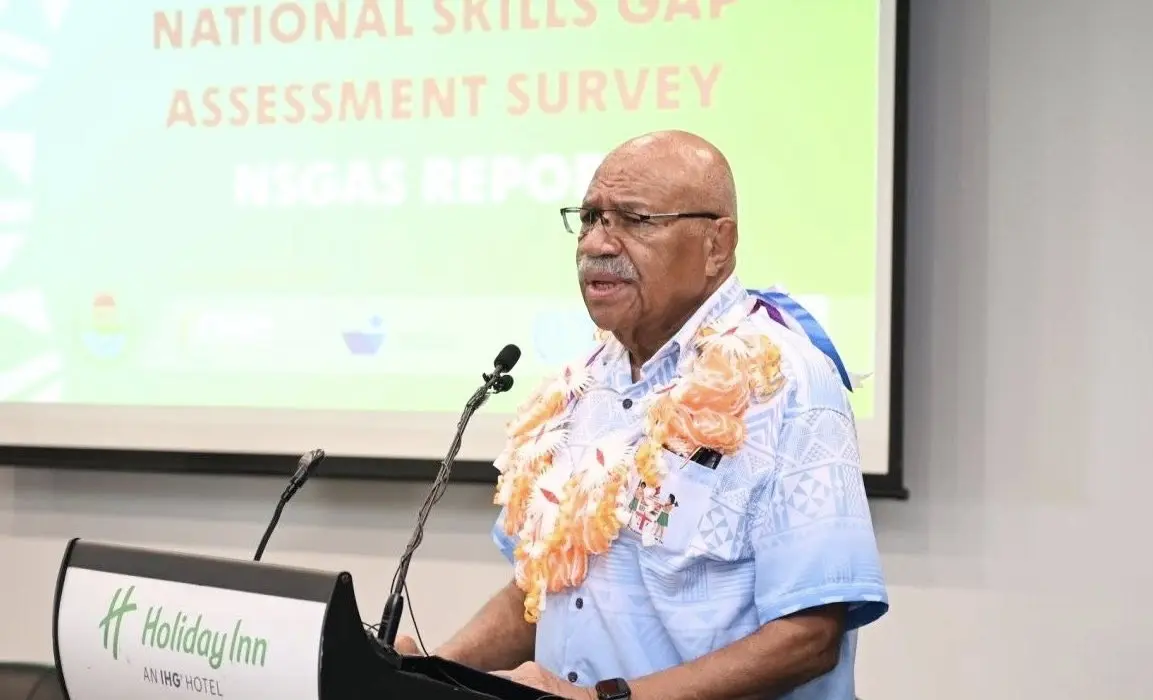
Launching the 2026 National Skills Gap Assessment Survey at the Holiday Inn Suva, Sitiveni Rabuka revealed the study identified severe shortages across construction, nursing and specialised healthcare, telecommunications engineering and aviation safety.
Fiji Government
The Prime Minister warns that Fiji’s worsening labour shortage is becoming a major obstacle to economic growth, with critical industries struggling to recruit skilled workers.
Launching the 2026 National Skills Gap Assessment Survey at the Holiday Inn Suva, Sitiveni Rabuka revealed the study identified severe shortages across construction, nursing and specialised healthcare, telecommunications engineering and aviation safety.
Demand for skilled trades workers continues to outstrip supply, while employers are also struggling to fill professional and regulatory positions, including quality assurance officers, human resource personnel and occupational health and safety inspectors.
Related stories
Mr Rabuka said about 15,500 Fijians left for overseas employment between January 2023 and February 2024, placing further pressure on the country’s workforce capacity. He said foreign employment rose by 79 per cent between 2022 and 2024 as businesses increasingly relied on overseas workers to fill technical, machine operation, accounting and culinary roles.
The survey also revealed a growing mismatch between education pathways and labour market demands, particularly among young people aged 15 to 24 who remain outside both employment and education despite vacancies across several sectors.
“This youth paradox highlights a critical disconnect between education pathways and labour market needs,” Mr Rabuka said.
More than 90 per cent participation from businesses and organisations since the survey rollout last November reflected strong support from both the public and private sectors, he said.
The findings will help shape Government policy and guide the proposed Five-Year National Strategic Human Resource Plan aimed at aligning education, training and workforce development with industry needs.
Mr Rabuka also announced plans to strengthen labour and skills planning through reforms, including the proposed Productivity Commission of Fiji and the repositioning of the Fiji Training and Productivity Centre. He said Fiji must urgently improve school-to-work transitions, strengthen digital capability and better prepare workers for the future job market.