Fiji growth forecast slashed in half as inflation set to surge
The Reserve Bank is also seeing signs that consumers are becoming more cautious with spending.
Tuesday 09 June 2026 | 16:00

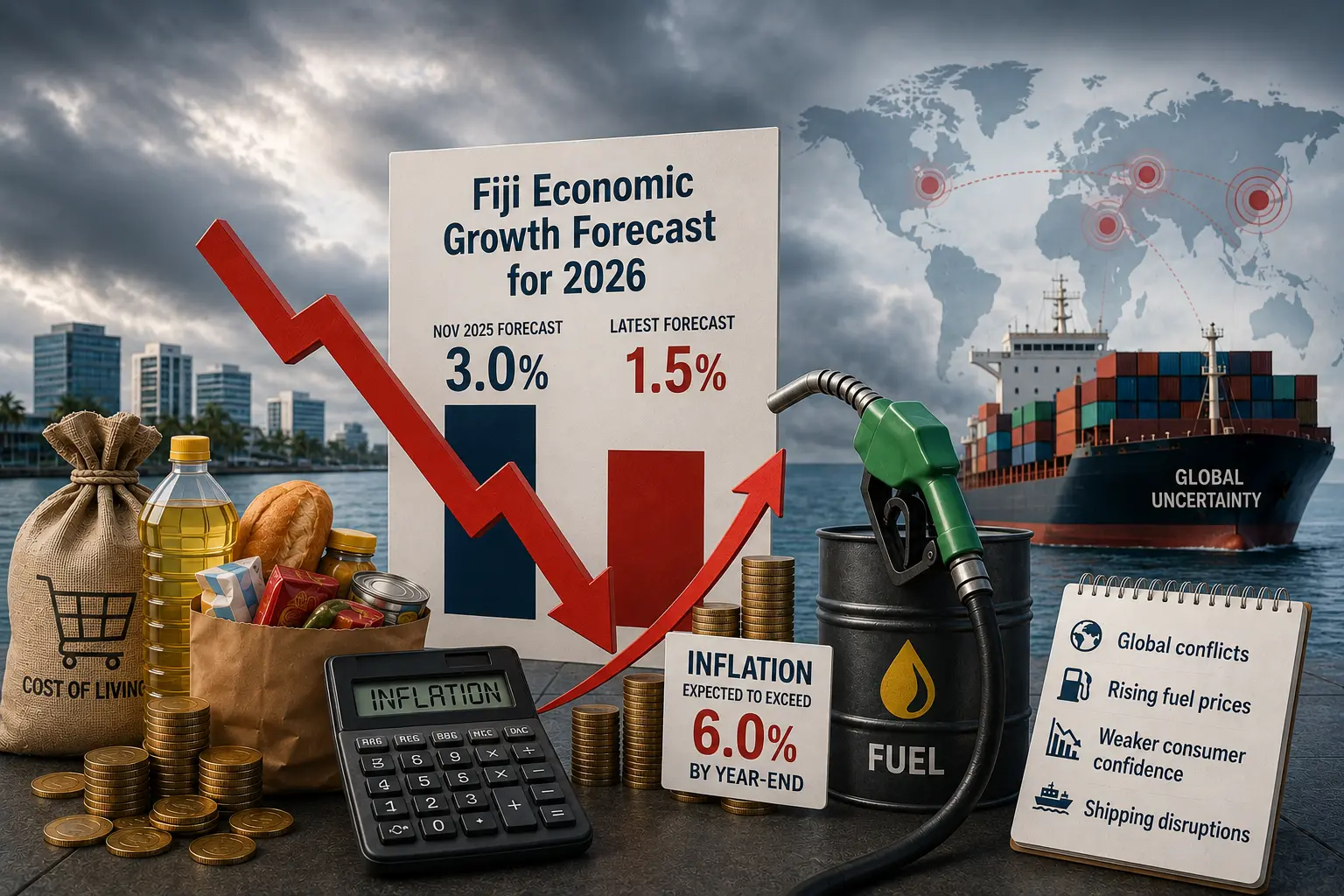
Fiji's economic growth forecast for 2026 has been slashed in half, with the Reserve Bank now expecting the economy to grow by just 1.5 per cent compared with the 3.0 per cent forecast issued seven months ago, as global conflicts, soaring fuel prices and weakening consumer confidence weigh on activity.
At the same time, inflation is expected to exceed 6.0 per cent by year-end, raising fresh concerns over the cost of living for households already facing higher food and fuel prices.
Reserve Bank of Fiji Governor and Macroeconomic Committee chairman Ariff Ali said escalating conflict in the Middle East, uncertainty surrounding global trade policies and concerns over shipping disruptions through the Strait of Hormuz had significantly worsened the outlook.
Related stories
"The Fiji economy is projected to grow by 1.5 per cent, revised down from the 3.0 per cent forecast in November 2025, with downside risks remaining elevated," Mr Ali said.
He said higher fuel prices were increasing production and transport costs, reducing business profits and pushing up consumer prices.
"Higher fuel prices increase production and transportation costs, reduce business profits and output, and raise consumer prices, thereby reducing household spending power."
Latest figures show inflation rose to 3.9 per cent in May, a sharp turnaround from -3.8 per cent in September 2025.
Mr Ali said inflation was now expected to exceed 6.0 per cent this year, driven largely by imported fuel and food costs and their flow-on effects across the economy.
The Reserve Bank is also seeing signs that consumers are becoming more cautious with spending.
Businesses surveyed in the latest Reserve Bank Retail Sales Survey expect retail sales growth of only 2.0 per cent in 2026, compared with 6.8 per cent projected in August last year.
The tourism sector, which has been a major driver of Fiji's recovery, is also beginning to lose momentum.
While visitor arrivals remain supportive, the pace of growth has slowed amid weaker forward bookings, reduced flight frequencies, energy security concerns and tighter monetary conditions in key markets such as Australia.
Mr Ali said these factors were expected to dampen private consumption and investment activity throughout the year.
Despite the weaker outlook, the Reserve Bank forecasts growth will recover to 2.5 per cent in 2027 and return to its long-term trend of around 3.0 per cent in 2028.
Foreign reserves remain strong at approximately $3.4 billion, enough to cover around 4.7 months of retained imports.