Fiji risks losing a generation to drugs, faith leaders warn
Faith Harvest Centre Senior Pastor Manasa Kolivuso described the situation as a matter of national survival.
Tuesday 10 February 2026 | 06:30

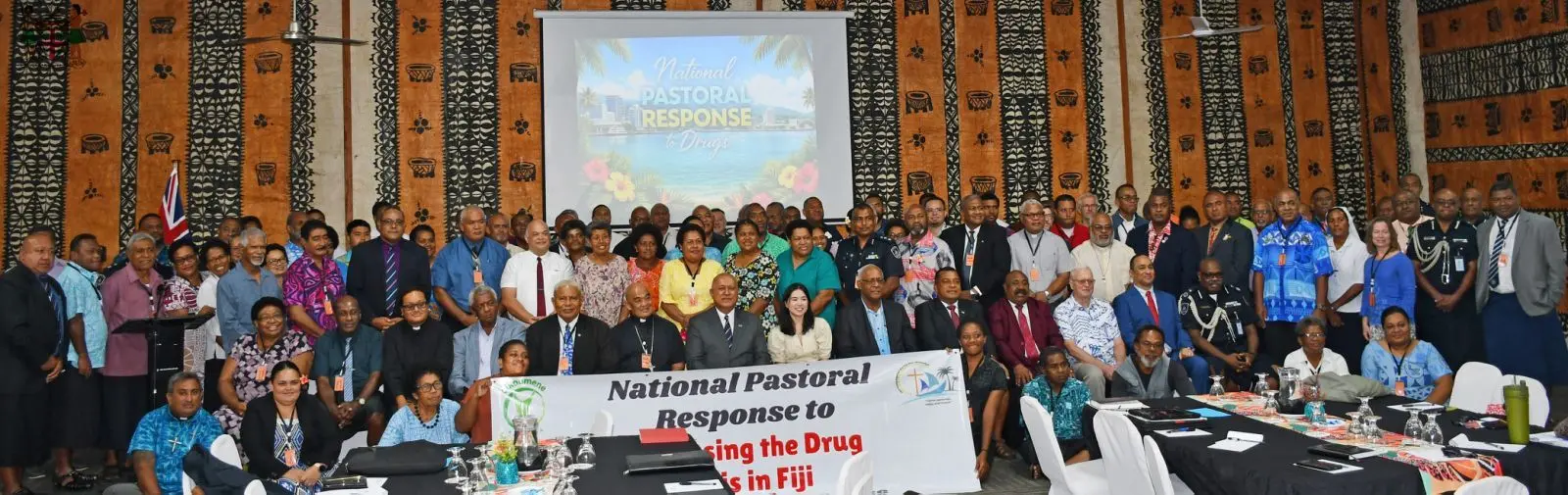
Participants of the National Pastoral Response to Drugs workshop in Suva
Fiji Government
Fiji risks losing an entire generation to drugs if urgent action is delayed, church leaders and partners have warned, calling the growing crisis a threat to the nation’s survival.
Faith Harvest Centre Senior Pastor Manasa Kolivuso described the situation as a “matter of national survival,” saying the scale and spread of drug use now demanded immediate and decisive action.
“This demands a national response in a bigger and faster way,” he said.
Related stories
His comments were made as national organisations, churches and international partners strengthened a coordinated response to Fiji’s escalating drug crisis, amid increasing pressure from international drug syndicates using the Pacific as a transit route.
The renewed alliance was reinforced during the National Pastoral Response to Drugs workshop in Suva yesterday, where leaders agreed the drug problem could no longer be left to police alone.
Participants at the workshop said drugs were no longer confined to urban centres, but were spreading rapidly into villages and communities, deepening social and health risks across the country.
The coordinated response forms part of Fiji’s National Counter Narcotics Strategy 2023–2028, which promotes a balanced approach combining enforcement, prevention, treatment and rehabilitation.
United Nations representative Megumi Hara confirmed that methamphetamine remains the primary drug threat in the Pacific. She warned that organised crime groups continue to exploit the region’s geographic isolation and limited maritime surveillance.
Ms Hara also highlighted the growing health impact of drug use, noting that in 2024 nearly half of those starting HIV treatment in Fiji reported injecting drug use.
Leaders agreed that without urgent, collective action involving families, communities, churches and state institutions, the drug crisis would continue to worsen, placing Fiji’s young people — and its future — at serious risk.