Fiji’s power grid is dangerously close to capacity, blackouts likely without investment: EFL
Energy Fiji says urgent funding is needed to boost generation and strengthen the grid as electricity demand continues to rise.
Saturday 10 January 2026 | 07:00

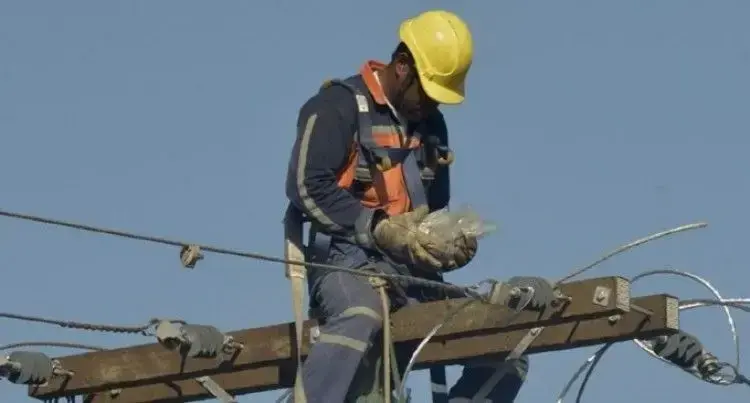
EFL said electricity demand in Fiji increased by approximately 9 per cent in 2024, with forward projections indicating average growth of around 5 per cent per year.
Supplied
Energy Fiji Limited (EFL) has warned that Fiji's electricity grid is operating dangerously close to capacity, with power disruptions becoming increasingly likely without urgent infrastructure investment.
EFL chief executive officer Fatiaki Gibson said the national grid is already stretched, and under an N-1 operating scenario – where a major generation or transmission asset is unavailable due to maintenance or outage – the risk of blackouts increases significantly.
"Without a tariff adjustment, EFL will be unable to invest in new generation capacity, strengthen transmission and distribution networks, or improve grid resilience and reliability," Mr Gibson said.
Related stories
The statement comes as EFL responds to recent criticism of the approved 24.2 per cent electricity tariff increase, which was supposed to take effect January 1, 2026 but suspended to allow for a 21-day consultation.
Mr Gibson said some public commentary reflected narrow perspectives that failed to consider the country’s long-term energy security needs.
"Recent views expressed in the media reflect narrow sector-specific perspectives or ideological positions that do not fully consider Fiji's long-term national energy security, system reliability, and sustainability needs," he said.
EFL said electricity demand in Fiji increased by approximately 9 per cent in 2024, with forward projections indicating average growth of around 5 per cent per year.
Demand is expected to rise from approximately 1.1 billion kilowatt-hours to 1.9 billion kilowatt-hours within the next four to eight years.
To meet future demand, EFL plans to invest $653 million in two major hydropower projects, $400 million in new solar generation, and $731 million in new transmission infrastructure.
Mr Gibson said the proposed tariff adjustment was not arbitrary but followed a rigorous, regulated process grounded in internationally recognised utility regulation principles.
Feedback: kaneta.naimatau@fijisun.com.fj