Lifestyle diseases cost Fiji $263m a year: ADB Report
Fiji’s growing burden of diabetes, heart disease and other NCDs is straining both the health system and the economy, a new report finds.
Thursday 16 April 2026 | 10:00
Updated 16 April 2026 | 11:07 FJT

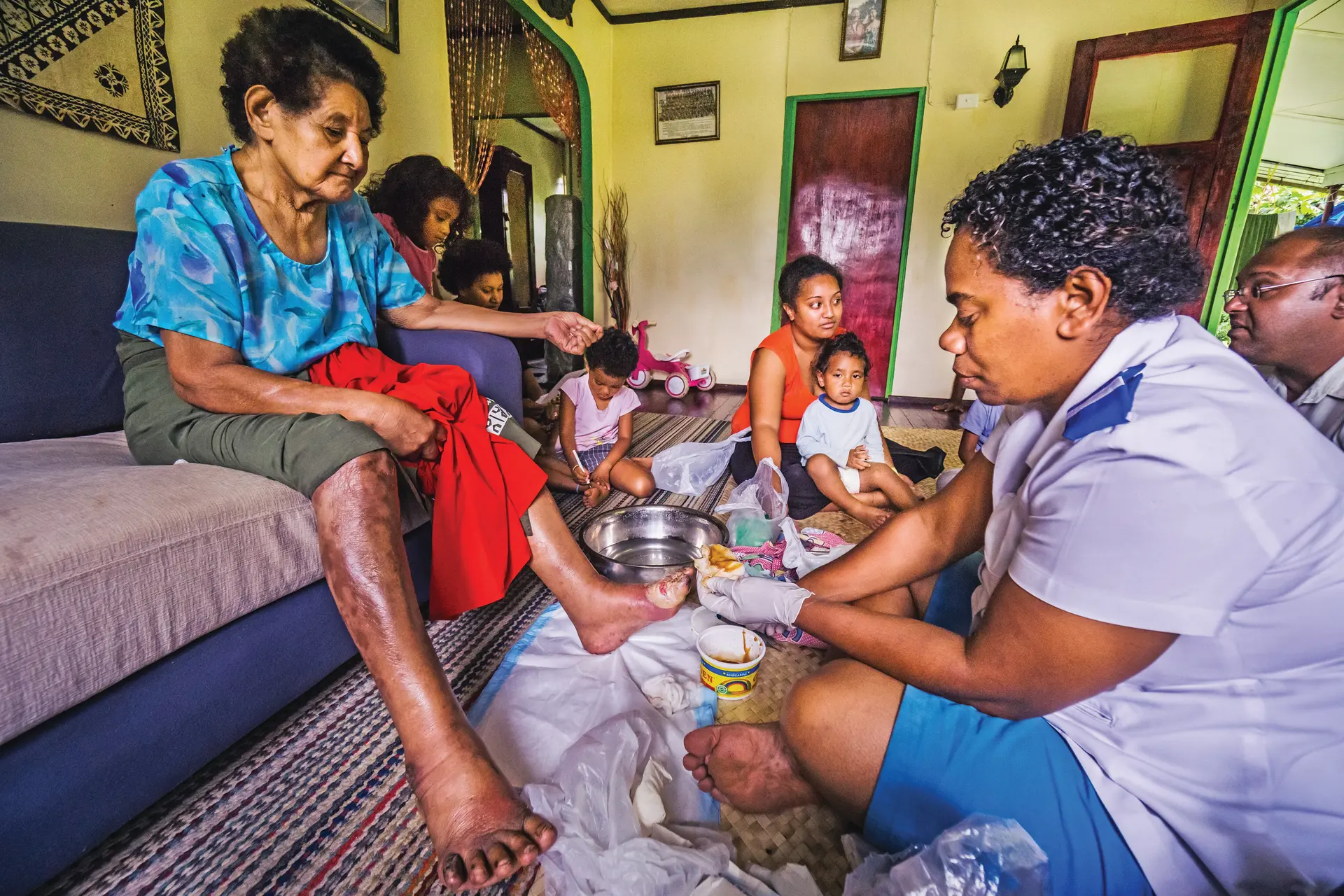
A nurse attends to a woman living with diabetes during a home visit.
Photo: WHO
Non-communicable diseases (NCDs) are killing more than eight in every 10 Fijians who die each year and are costing the country approximately $263 million annually.
This was highlighted in the Asian Development Bank's Asian Development Outlook (ADO) for April 2026, which dedicated a special policy section to Fiji's growing health crisis driven by NCDs.
NCDs are long-term illnesses such as diabetes, heart disease, and obesity that are not passed from person to person.
Related stories
The report described the situation as a "severe health crisis" and said the burden was not only a health problem but also an economic one, with high rates of these diseases keeping Fiji's workforce participation rate stuck below 58.9 per cent since 2014.
NCDs, as they are commonly known, include conditions like diabetes, high blood pressure, stroke, and cancer.
They are largely linked to lifestyle factors, including poor diet, lack of exercise, tobacco use, and alcohol consumption.
The ADB report noted that while most Fijians do not pay much out-of-pocket for healthcare, with around 70 per cent of health spending coming from the Government, public health spending remains limited.
Public health spending sits at only about four per cent of GDP, which is below the World Health Organisation's recommended five per cent.
The report said the Ministry of Health and Medical Services had recently completed a national survey on key NCD risk factors and was investing in awareness campaigns, screening programs programmes, and healthy school policies to reduce childhood obesity.
However, it warned that "implementation gaps and resource constraints remain," and called for reforms, including expanded excise taxes on high-sugar products to fund better healthcare.