National Digital ID will be voluntary, Reserve Bank of Fiji assures
Consultations begin on Fiji’s proposed NDID platform, which will allow citizens to control their own personal data.
Tuesday 10 March 2026 | 11:30
Updated 11 March 2026 | 18:56 FJT

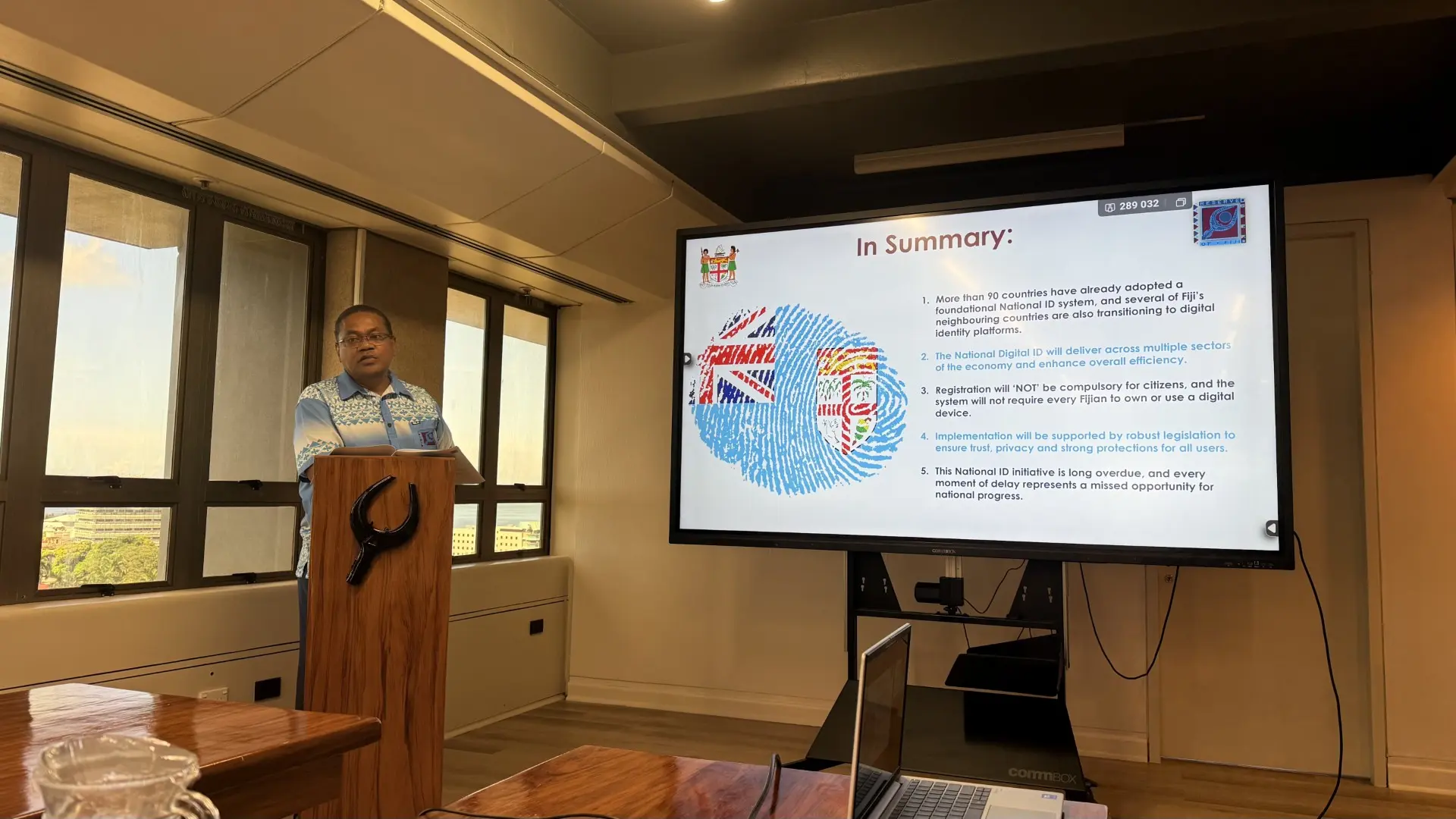
Deputy Governor of RBF Esala Masitabua presenting the proposed National Digital ID (NDID) system at the Reserve Bank of Fiji in Suva on March 10, 2026.
Photo: Talei Roko
Fiji is accelerating efforts to implement a National Digital ID (NDID) system, a strategic move aimed at eliminating the administrative bottlenecks that have long hindered the nation’s economic and digital development.
The proposed National Digital ID system will be voluntary, with the Reserve Bank of Fiji (RBF) assuring that citizens will not be required to register or own digital devices to access the platform.
RBF says that the project is ‘long overdue,’ noting that Fiji risks falling behind regional neighbours who have already adopted similar platforms.
Related stories
This was highlighted during a consultation between the RBF and the Fiji Media Association (FMA) today, part of ongoing stakeholder engagement on the new National Digital ID (NDID) system.
The system will use biometric verification, including fingerprints, facial recognition, and iris scans.
RBF Deputy Governor Esala Masitabua said Fiji was advancing toward the implementation of a NDID system, a project long considered overdue to address inefficiencies in current identification methods and mitigate risks such as identity theft and administrative complexity.
Mr Masitabua said the NDID is being designed to make it easier for people to access government services, healthcare, banking, and social welfare.
“The National ID will be voluntary and fully controlled by citizens,” Mr Masitabua said. “Once verified, you can access multiple services without repeated paperwork.”
He said the platform aims to be inclusive, ensuring people without smartphones or internet access, particularly those in rural areas, the elderly, and vulnerable groups, can still use the services.
Under the proposal, children may receive a National ID at birth for health and civil registration purposes. Biometric data would first be captured at age five, and again at 17 or 18, when the individual assumes full control of their ID.
The RBF said Fiji’s current identification system relies on multiple forms of ID and manual processes that can be slow and vulnerable to identity theft.
A digital system, they said, would streamline processes such as government benefit applications, health record updates, and electronic “Know Your Customer” (KYC) checks for banking.
Privacy and data protection remain central to the project, with officials stressing that personal information will only be shared when necessary and will remain under the control of citizens.
Other key features are that the NDID will be:
- Inclusivity: The system is designed to be accessible to all Fijians; individuals without smartphones or internet access will still be able to use physical identification cards.
- Privacy and Security: The initiative is built on strong protections, including penalty provisions in the draft Bill for the misuse of information, and the system is not a surveillance or tracking tool.
- Data Usage: Data captured, which includes biometrics (fingerprints, iris, facial recognition) and personal details, may only be used for permitted purposes by authorized agencies.
The consultation with the FMA is the first of more than 30 engagements planned with agencies and associations. A public consultation is also expected to be held before the end of March to gather feedback from the wider community.
If implemented, the NID programme aims to provide a safer and more convenient way for Fijians to prove their identity and access essential services, while preserving personal choice and privacy.
Public consultations close at the end of March, with the goal of tabling the draft Bill in Parliament in May.