Neglecting mental health at work harming families, productivity
“It ripples outward. It affects families, communities and entire societies. We are seeing this in very real and troubling ways.”
Monday 27 April 2026 | 06:00


Ignoring mental health in the workplace is not just affecting employees — it is spilling into homes, straining relationships and contributing to wider social issues.
Fiji National University pro-vice-chancellor Isimeli Tagicakiverata warned that poor psychosocial wellbeing was fuelling problems such as substance abuse, family breakdown and even gender-based violence.

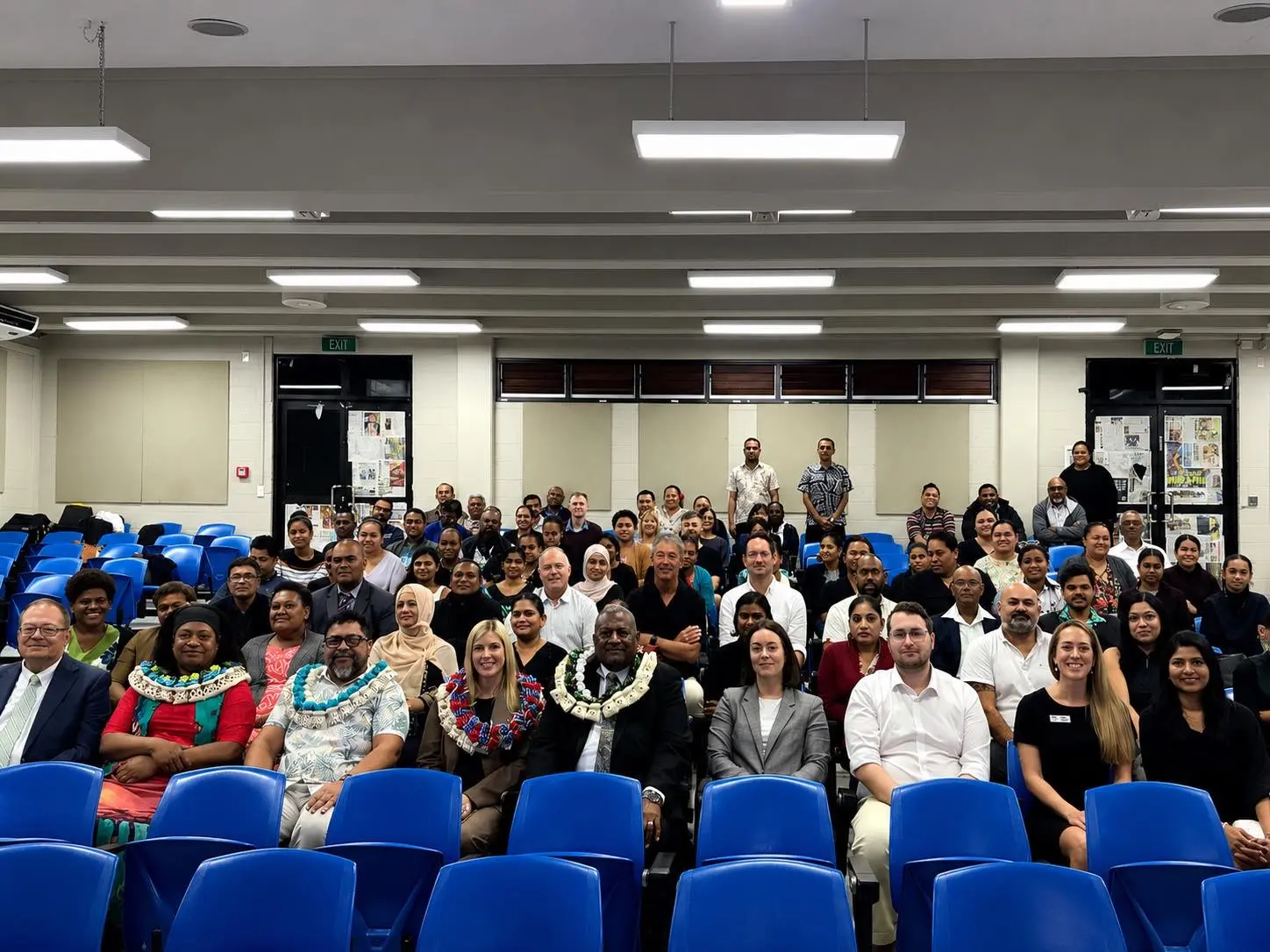
Fiji National University (FNU) Technical and Vocational Education and Training (TVET) Pasifika and National Training and Productivity Centre (NTPC) pro-vice-chancellor Isimeli Tagicakiverata with the Australian Institute of Health and Safety board of directors chair Celia Antonovsky at the 2026 Fiji Occupational Health and Safety Conference in Nadi.
Photo: Katherine Naidu.
Related stories
Speaking at the 2026 Fiji Occupational Health and Safety Conference in te weekend, he said the effects of mental health neglect did not stop at the office.
“When mental health is neglected, whether in the workplace or beyond, it does not remain contained,” he said.
“It ripples outward. It affects families, communities and entire societies. We are seeing this in very real and troubling ways.”
Mr Tagicakiverata said unaddressed stress, trauma and psychological distress were driving harmful coping behaviours and damaging relationships.
He stressed that mental health should be treated as a national priority — not just a workplace requirement.
“We must begin to reframe how we view psychosocial well-being. It is not simply a compliance requirement to be ticked off in policies and procedures; it is a productivity imperative.”
He said businesses could not sustain growth without supporting their workers.
“Productivity is not merely driven by technical competence or infrastructure; it is sustained by people, and people thrive when they feel safe, respected, supported and valued.”
Mr Tagicakiverata said organisations that prioritised psychological safety saw real benefits, including better staff retention, lower absenteeism and stronger performance.
“Organisations that prioritise psychological safety foster innovation, reduce absenteeism, strengthen retention and ultimately achieve sustainable growth.”
“In contrast, environments that neglect these aspects risk not only diminished performance but also long-term harm to individuals and communities,” he said.
He added that education institutions also played a role in shaping future workplaces.
“We are not only preparing graduates with technical skills; we are shaping future leaders to build workplaces where people feel psychologically safe.”
Mr Tagicakiverata called for stronger collaboration between sectors, saying mental health challenges could not be addressed in isolation.
“They require strong and sustained partnerships between academia, industry, regulators and professional bodies,” he said.
He warned that the impact extended beyond the workplace and into future generations.
“When a worker is struggling mentally, it does not end when they leave the workplace. It follows them home. It shapes how they interact with their loved ones. It influences the wellbeing of future generations,” he said.
He urged action from all sectors.
“Let us move beyond seeing psychosocial well-being as an abstract concept and instead recognise it as a fundamental pillar of thriving individuals and strong organisations.
“Let us challenge conventional thinking, share practical solutions and commit to meaningful action,” he said.