Northern Division remains critical for climate action, says Climate Change director
Department of Climate Change launches engagement programme on Climate Change Act 2021 in Labasa.
Tuesday 19 May 2026 | 00:00

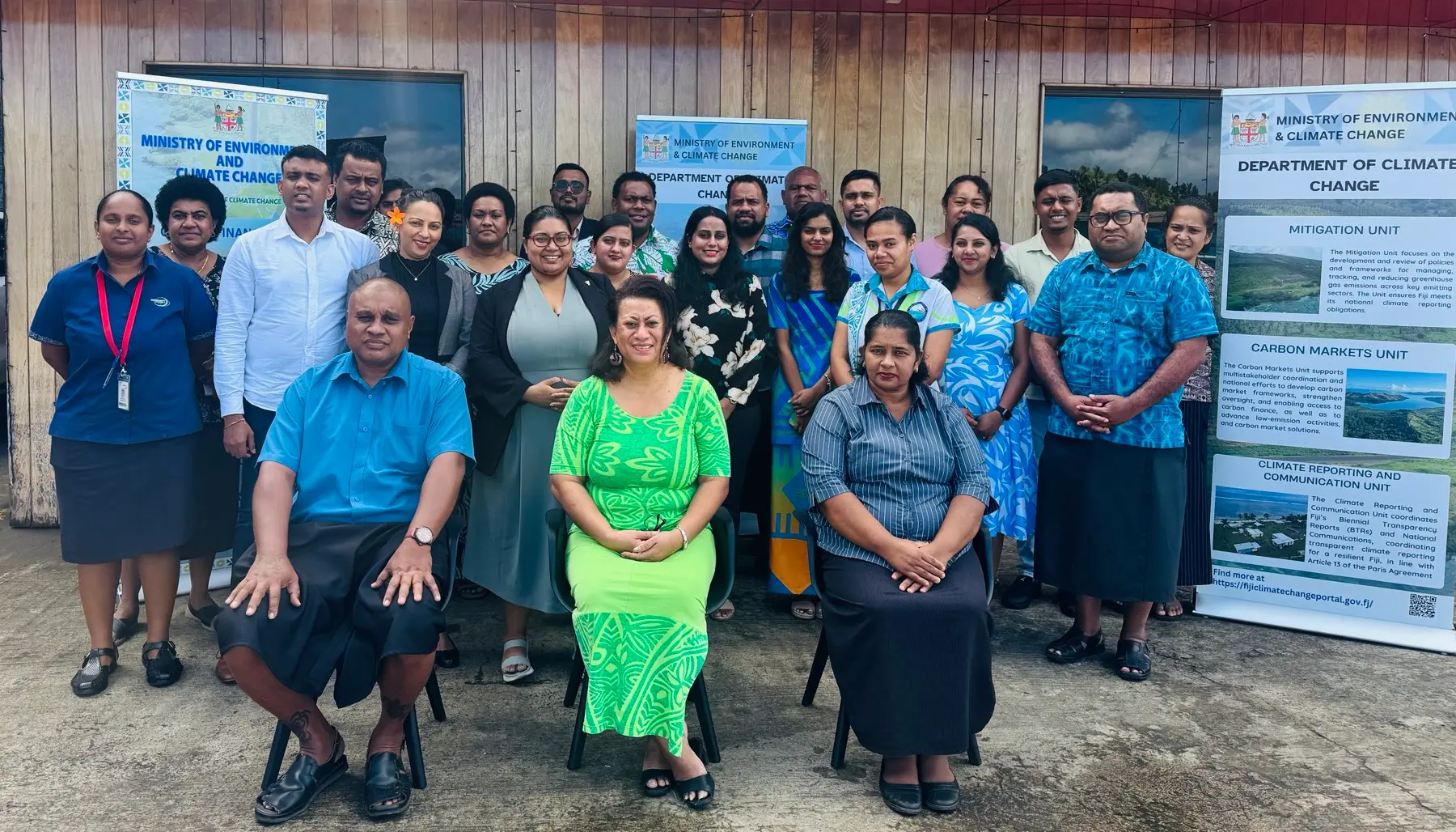
Participants gathered with the staff from Department of Climate Change during the opening of mandatory socialisation of the Climate Change Act 2021 at Galaxy Hotel and Apartments in Labasa on May 19, 2026.
Photo: Department of Climate Change
The Northern Division remains a critical area for climate action, says Department of Climate Change director Senivasa Waqairamasi.
Speaking at the opening of a four-day programme on the mandatory socialisation of the Climate Change Act 2021 at Galaxy Hotel and Apartments in Labasa today, Ms Waqairamasi said the North continued to face significant climate-related vulnerabilities.
These include impacts on coastal and marine ecosystems, agricultural systems, rural livelihoods and community infrastructure.
Related stories
At the same time, she said the region was characterised by strong community resilience, local knowledge systems and growing engagement in climate-responsive development.
The Ministry of Environment and Climate Change, through the Department of Climate Change, has organised the week-long programme as an integrated engagement process that includes a talanoa (dialogue) under the theme: “Our Shared Responsibility – Climate Act and You”.
Ms Waqairamasi said the Climate Change Act 2021 was a landmark legislative achievement for Fiji and the wider region.
“It demonstrates our nation’s leadership and unwavering commitment to confronting one of the defining challenges of our time,” she said.
“More importantly, the Act provides the legal and institutional foundation to guide coordinated climate action across all sectors of society, from national government institutions to local communities, businesses, traditional leaders and individual citizens.”
However, Ms Waqairamasi said legislation alone could not deliver transformation.
She said the true strength of the Act depended on how well it was understood, embraced and implemented by all stakeholders.
“As we continue to witness increasing climate-related impacts across Fiji, including coastal erosion, intensified weather events, ecosystem degradation and threats to food and water security, the urgency for informed and decisive action has never been greater,” she said.
“Our efforts today are therefore critical in ensuring that communities and institutions alike are empowered with the knowledge, tools and understanding required to contribute effectively to Fiji’s climate ambitions.”
Explore more on these topics








Advertisement
Advertise with Fiji Sun