'Praying for the next meal'
It is a reality that reflects life in Fiji’s informal settlements—where households do not just stretch budgets, they survive on faith.
Monday 06 April 2026 | 07:00

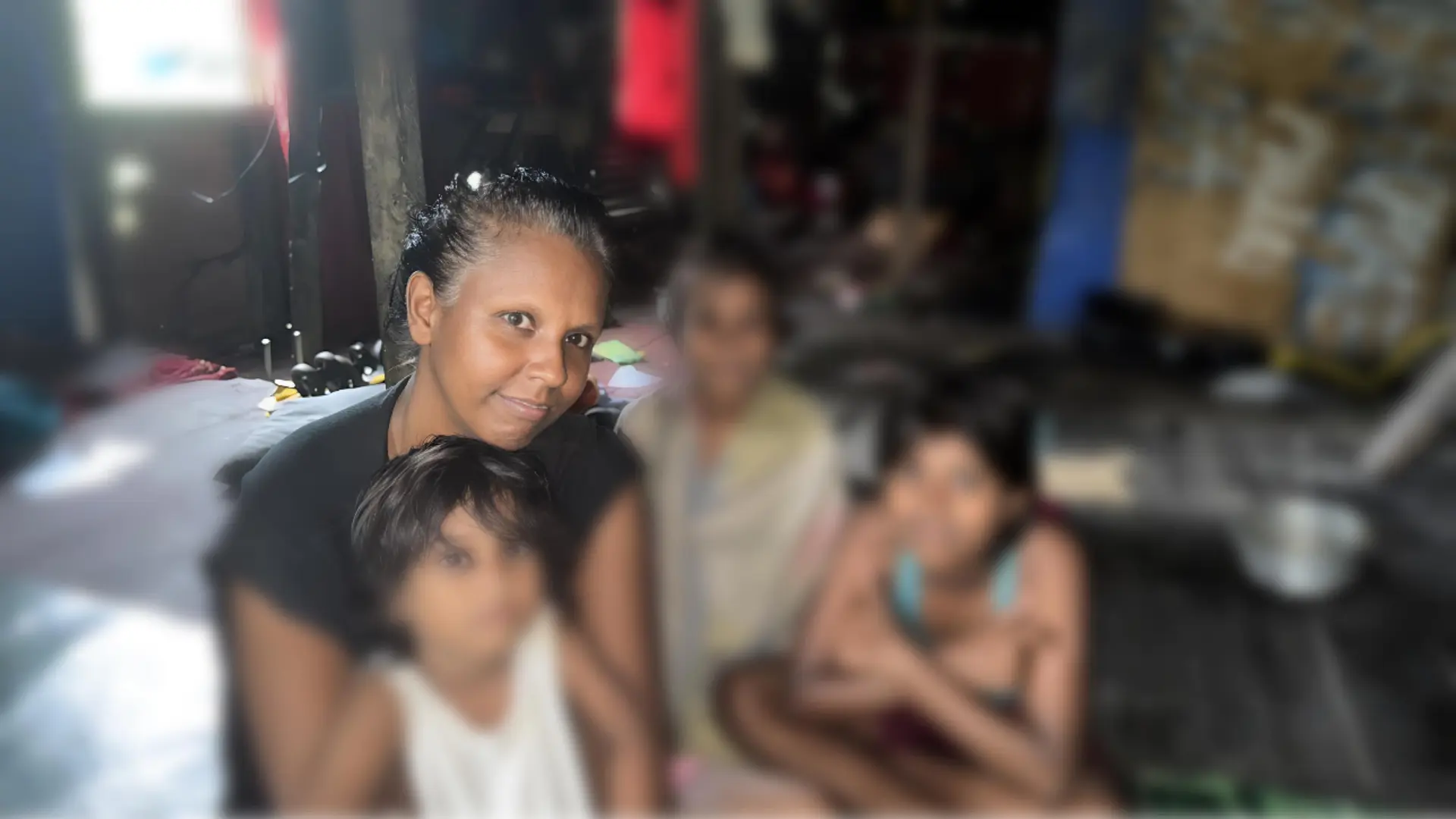
Yogita Hussein and her three daughters at their home in Nabua.
Photo: Talei Roko
For Yogita Hussein and her four daughters, some nights there is simply no food. They pray, and they sleep.
The 41-year-old mother has lived in the Nabua Muslim League settlement for 12 years.
Her husband has been in prison since 2018. No one in the house works.
Related stories
Their only income—$170 a month in social welfare for three of her children—stopped in December after documents were misplaced.
“Main source of income is nothing,” she said. “We’re just depending on the welfare plus the church. That’s all.”
When there is nothing left to eat, the family turns to their Pentecostal church in Samabula. Sometimes it gives money. Sometimes groceries.
“If we don’t have anything, we just pray, and God answers our prayer.”
It is a reality that reflects life in Fiji’s informal settlements—where households do not just stretch budgets, they survive on faith.
Yogita is one of thousands. Approximately 15 to 25 per cent of Fiji’s population—between 120,000 and more than 200,000 people—live in informal or squatter settlements, mostly across the Suva-Nausori corridor. That number grows by roughly five per cent each year.
While data from the Fiji Bureau of Statistics shows overall prices are slightly lower than a year ago—down 0.5 per cent in February 2026 compared with February 2025—food costs jumped 2.5 per cent in just one month, from January to February. Since 2019, food prices have risen 21 per cent.
For families like Yogita’s, those figures mean little. When she went shopping recently, $61 bought four kilograms of rice, one liver, one giblet and a packet of diapers. With no fridge, the meat had to be eaten the same day.
Her four daughters—aged 13, 11, eight and two—walk to Arya Samaj School. Their bus cards have not yet been topped up. She walks them there and back.
“It’s unsafe,” she said, describing drunken strangers knocking on their door at night and youths throwing stones on the roof.
“Like we’re living in fear.”
She is not alone.
Next door, Luisa Kaukimoala, 42, moved into a single room in the same settlement a year ago after leaving government quarters in Flagstaff.
She, her husband and their nine-year-old daughter share the space—kitchen and bed in one room.
The bathroom is outside, shared with the landlord.
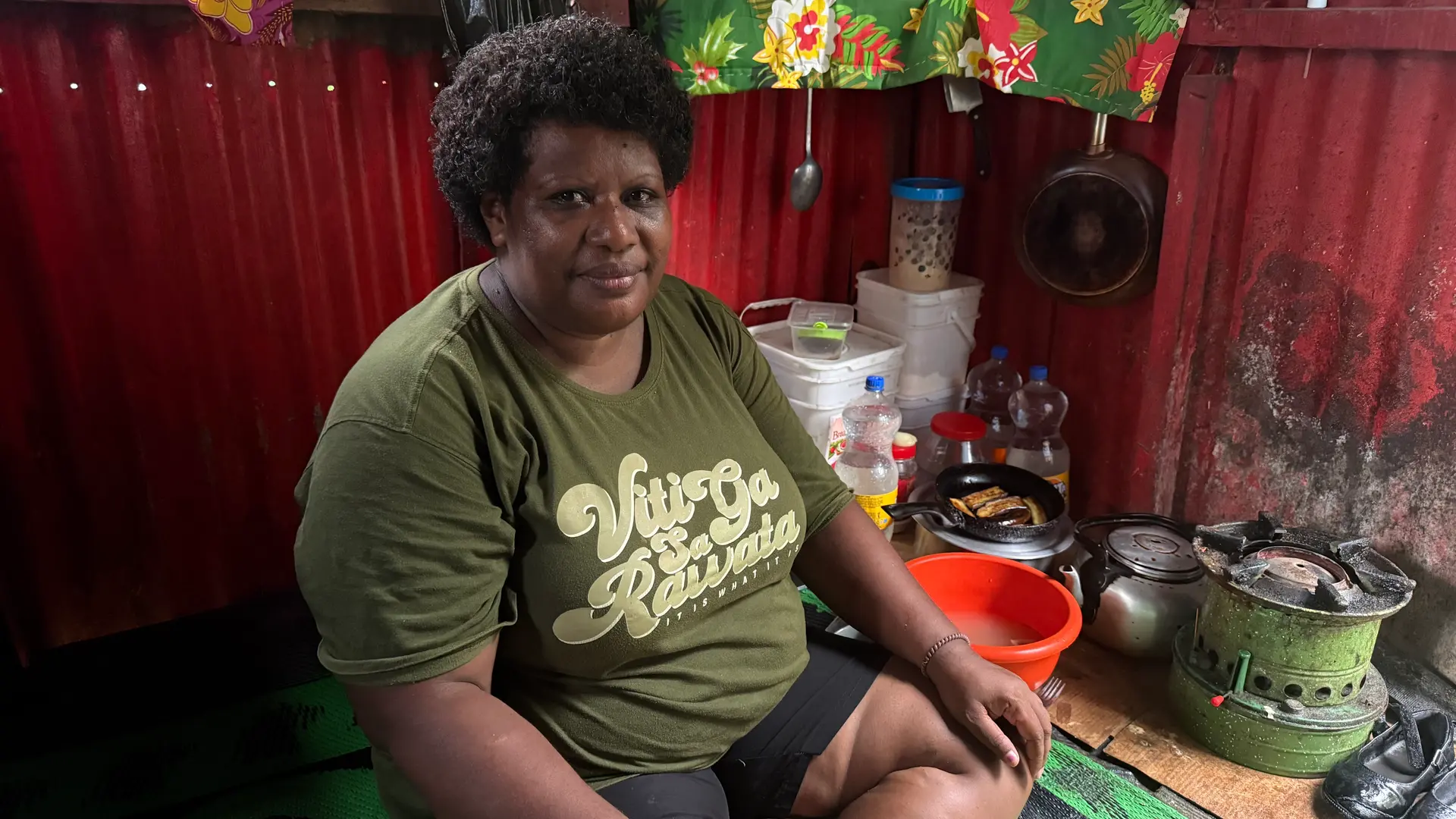
Luisa Kaukimoala, 42.
Photo: Talei Roko
Her husband earns $200 a week working in housing assistance. Rent is $70 a month, plus $20 for water.
“Before we had $50, we could buy everything—sugar, rice, everything,” Ms Kaukimoala said. “But now, today, $50 is not enough.”
She saves what she can—around $50 in a good week—but when rent is due, there is nothing left.
At Wailea settlement in Vatuwaqa, Benedito Namai, 47, takes a different approach.
He works in security, earning $380 a week. His 18-year-old son earns $250 part-time.
Together, they save $100 a week towards extending their house and buying a vehicle.
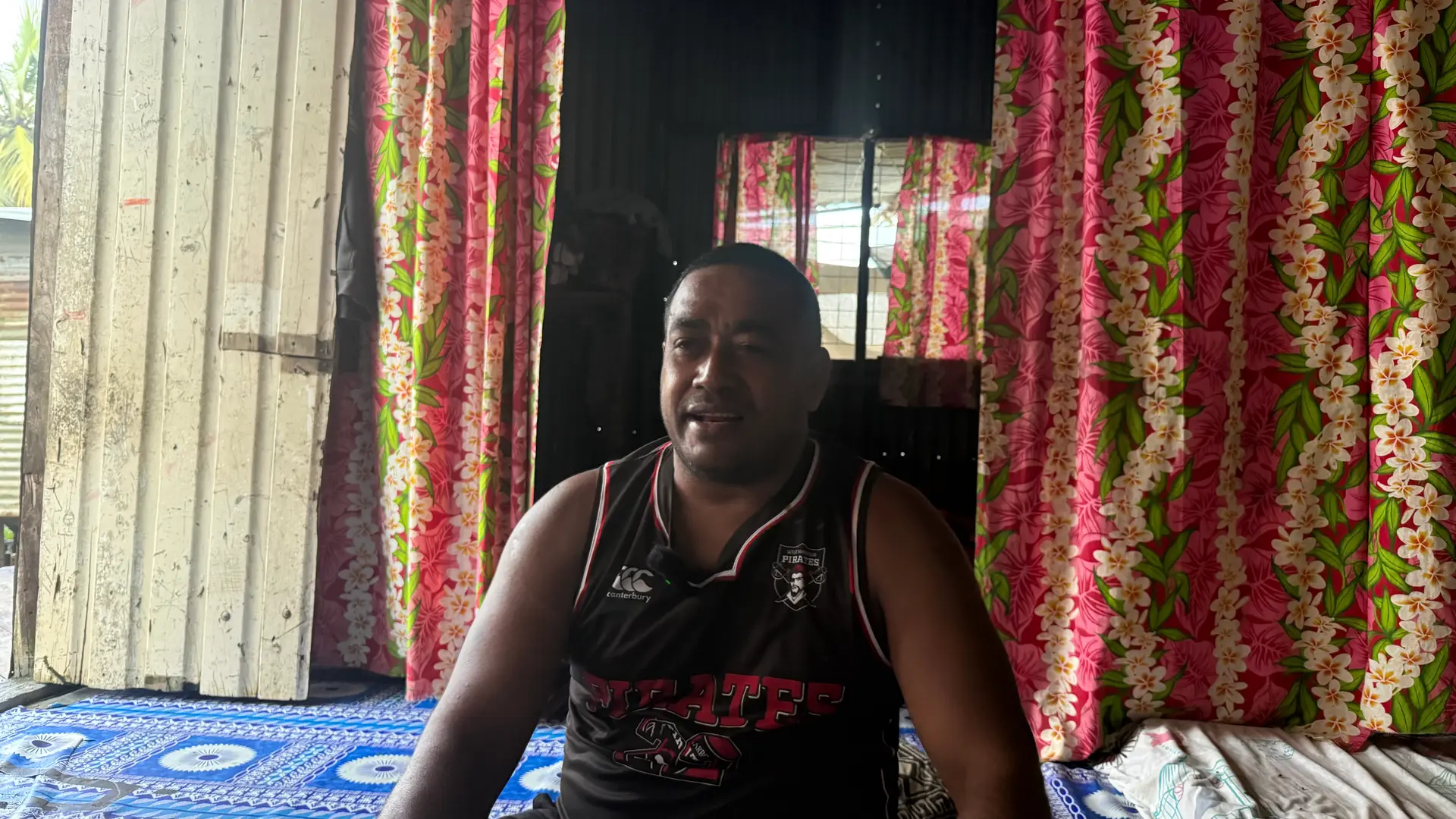
Benedito Namai, 47.
Photo: Talei Roko
“When you get your wages, at least just put some of your savings, your rent, everything, aside, before you spend some more,” he said.
But he is among the more stable. Across settlements, the picture is tougher.
The Fiji Council of Social Services says $100 now only covers basic starch and sugar for large families, often running out before the next payday.
Consumer Council chief executive Seema Shandil said her team was monitoring prices and urged families not to panic buy.
“Just budget wisely, plan your spending, and just buy what you need,” she said.
Finance Minister Esrom Immanuel told the Fiji Commerce and Employers Federation State of the Economy Breakfast last month that because Fiji imports most of its goods, price increases are largely driven by global factors.
He said the Government’s focus had been on raising incomes rather than controlling prices.
The coalition Government reduced Value Added Tax (VAT) from 15 to 12.5 per cent last August as part of an $800 million cost-of-living package.
Minimum wage has risen to $5 an hour. Social welfare allowances were also increased.
But for Yogita Hussein, those measures have not reached her.
“It’s not enough,” she said.
“Life is full of struggling. So just depend on God.”
Her husband is due for release in April 2027. Until then, she keeps her daughters close, taking them wherever she goes.
“Wherever I go, I take them with me.”