Editorial: Constitution review exposes clash of identity, rights and traditional authority
Villagers across Lau call for return of chiefly power, Christian state recognition and changes to rights-based protections under 2013 Constitution
Thursday 07 May 2026 | 11:00
Updated 07 May 2026 | 12:18 FJT

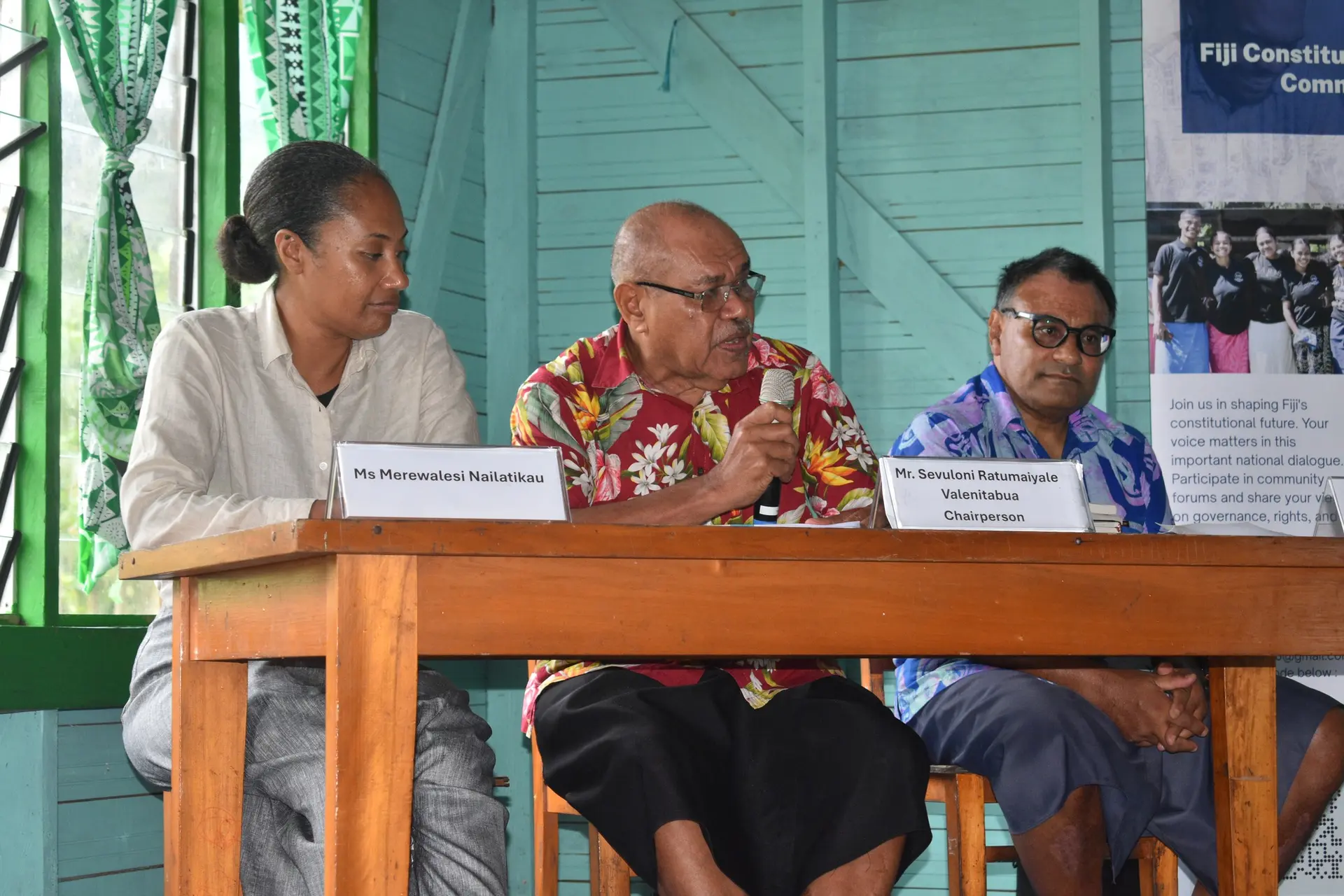
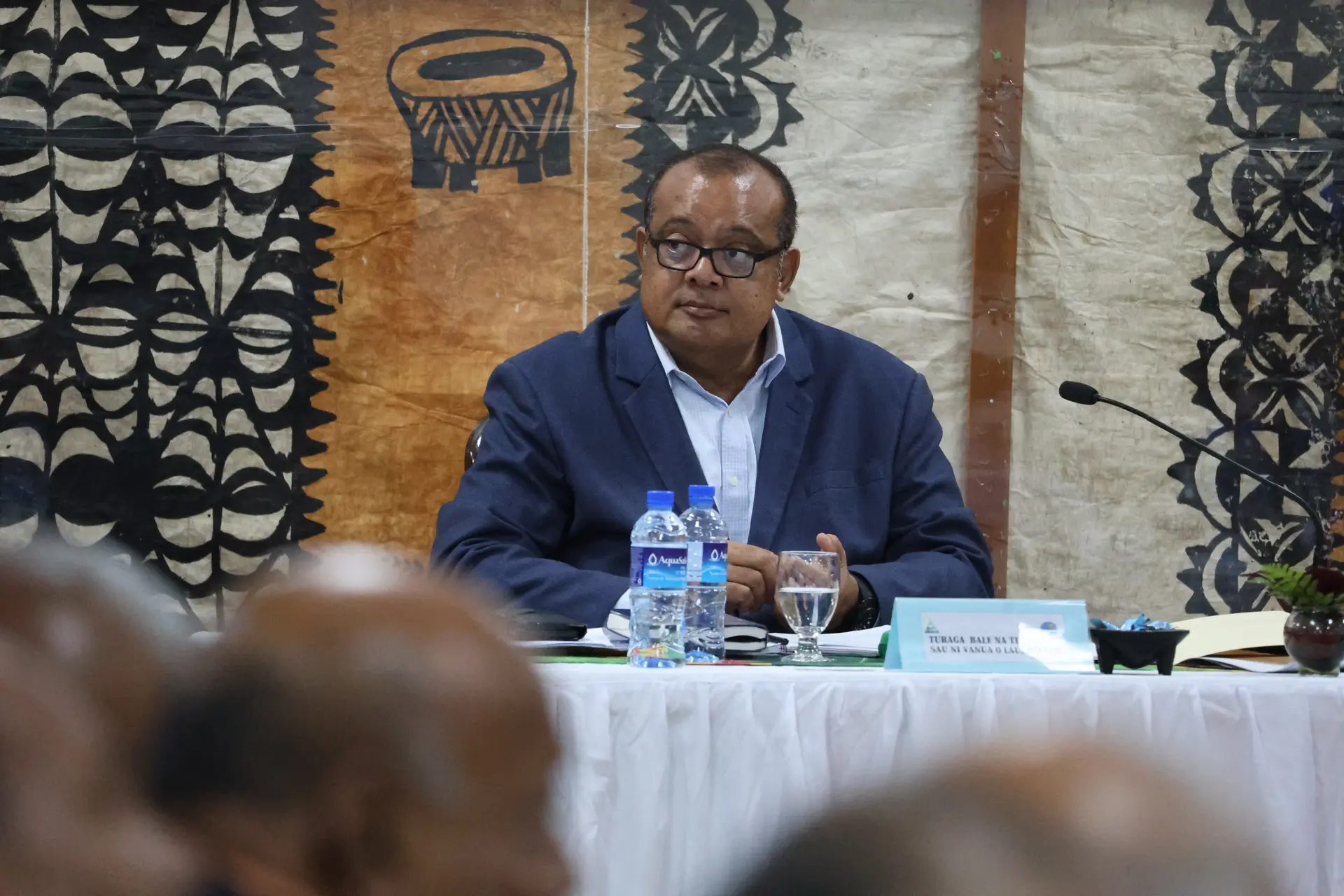
Constitutional Review Commission chairperson Sevuloni Valenitabua (middle) during the CRC consultations in Fulaga, Lau.
Photo: Constitutional Review Commission
The nationwide constitutional review is beginning to expose something deeper than routine public consultation.
It is revealing a clear and consistent divide over what Fiji’s 2013 Constitution should represent and who it should serve.
Across villages in Kabara and Fulaga in Lau, submissions to the Constitution Review Commission have repeatedly returned to the same themes: the restoration of traditional authority structures, stronger recognition of iTaukei customary systems, changes to rights protections, and a desire to reshape the country’s legal and political identity.
Related stories
Taken together, these views are forming a pattern that cannot be ignored.
In several consultations, villagers have called for the return of the Bose Levu Vakaturaga, or Great Council of Chiefs, to play a formal role in national decision-making, including in the appointment of the President.
Others have questioned the removal of the Senate, arguing it once served as a safeguard for indigenous interests.
There have also been repeated calls for greater control over customary fishing grounds, or qoliqoli, amid concerns State ownership frameworks may weaken traditional rights tied to the sea and livelihoods.
Alongside these institutional demands, some submissions have gone further. There have been calls for Fiji to be recognised as a Christian state, with national laws more explicitly reflecting religious identity and values.
At the same time, other proposals have raised concerns by suggesting changes to existing protections under the Bill of Rights.
These include calls to reintroduce corporal punishment in villages and arguments that child protection laws have weakened parental authority.
There have also been submissions suggesting the voting age should be raised from 18 to 21 on the basis of maturity and influence.
What is emerging is not a single reform agenda, but competing constitutional visions.
One view calls for a stronger return to customary leadership systems, religious identity and communal authority structures.
Another is anchored in the current constitutional framework, which is built on equality before the law, protection of individual rights and a secular state model.
The 2013 Constitution has long been contested, particularly among communities that believe it does not fully reflect indigenous identity or traditional governance systems.
These consultations are now giving that debate a public platform once again.
However, constitutional reform is not only about reflecting identity. It is also about protecting rights that apply equally to all citizens, including women, children and minority groups.
Any discussion on culture and tradition must still operate within that framework.
The challenge for the Constitution Review Commission is therefore significant. It must listen to all views while distinguishing between cultural preference and constitutional principle.
As consultations continue nationwide, one reality is becoming clearer: Fiji is not only reviewing legal text.
It is revisiting fundamental questions about identity, authority and the balance between tradition and modern governance.