Editorial: Debt Dilemma
Achieving a surplus budget requires cutting expenditures and boosting revenue, not just relying on external funds.
Sunday 23 June 2024 | 10:03

Fiji is good for a few things, not least talking about things over and over, until we're either blue in the face, or our ears fall off.
We are also good at paying debt with money that is not entirely ours. But with every "Saqamoli" there is in the country - in crevices and couches, under mattresses, garden sheds, flower beds, you name it we may not survive until a surplus budget is delivered.
A surplus budget in my lifetime is an illusion. For as long as we continue to hand down deficit budgets, Fiji's debt level outstanding will keep increasing annually; the medium-term fiscal strategy budget points to deficit budgets as far as the eyes can see.
Related stories
What the current and previous governments did was pay off maturing debt with someone else's money, long enough to "dinau" again, in a style synonymous with a vicious cycle of the iTaukei term "dre tale".
We took from Peter to pay Paul, as principal debt was not paid with our own money.
Our 'Peters', superannuation body Fiji National Provident Fund, and institutional investors such as banks, insurers, unit trusts and large corporates, are also our 'Pauls'.
We borrow from a bank to pay FNPF; we borrow from an insurer to pay a bank, and on it goes. That's ok for debt investment, because investors only care about getting their money back.
Hence, our 'Pauls' are also the big investors in Fiji, including FNPF, and institutional investors such as banks, insurers, unit trusts and large corporations.
The good news is that the Government's credit rating is sound, with a debt servicing record that is impeccable.
Debt to GDP ratio is also trending in the right direction, south, meaning it is continuously able to get investor support for its securities/debt instruments such as bonds and treasuries, a trend that will most probably continue into perpetuity.
But the Government is not using its own revenue from taxes, fees and levies, to pay off the principal.
It can, if it chooses to live within its means, that is, spend a little less than what you earn so you can use the savings to pay debt. Fixing the compliance challenges too would go a long way.
We are retiring debt using someone else's money, which means the stock of debt never goes down. It is not budget repair when you do not use your own money to live within your means; when you opt in-stead to borrow year after year, to fund ever increasing expenditure, especially operating spending.
There is no money in the kitty to retire debt with one's own money; zero balance and a big fat over-draft.
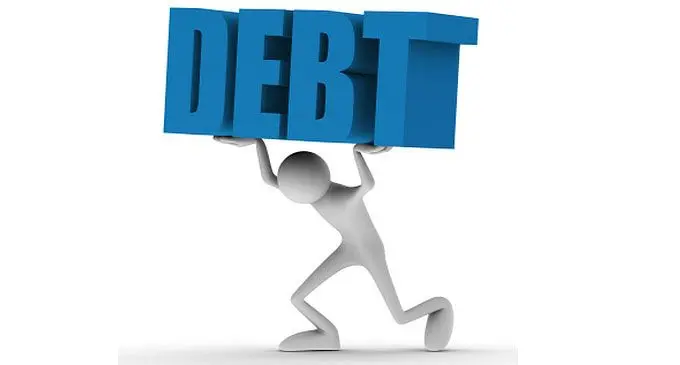
Debt level is projected to reach a new record high of $10.4bn by the end of July 2024. It was $9.7bn in July 2023, and $9.5bn in December 2022. In July 2019, it was $5.7b.
The higher the level of debt, the greater the servicing requirement, so more money is set aside in interest payments. Interest paid on national debt this year was $380m, whereas the first nine months of 2022-23 was $324m.
It is tricky to say that debt refinancing is debt paid, when it really is not. Debt refinancing is paying a creditor by "dinau" from someone else.
If we have any hope of reducing the stock of debt, we need to work towards a surplus budget, and use the surplus in the kitty to retire principal debt.
To get there, we must cut out the fat, cut operational expenditure, and grow the economy to improve the revenue. The civil service headcount would have reduced, given the opportunities people are taking, to work overseas. This gives the State a perfect opportunity to examine its workforce requirement, and right size it. The timing is perfect for this.
We must look at the whole of Government operations and reduce the excesses where it exists.
We need to get on with the job of implementing our growth plans, as we have clearly mastered the art of talking about it over and over again.
Feedback: frederica.elbourne@fijisun.com.fj