Opinion | M-PAiSA: An Economic Bridge, Not a Burden on Fiji's Poor
For many ordinary Fijians, particularly those outside the major urban centres, M-PAiSA is not an economic burden, but rather an instrument that has reduced an economic burden.
Tuesday 18 August 2026 | 14:00
Updated 18 August 2026 | 15:47 FJT
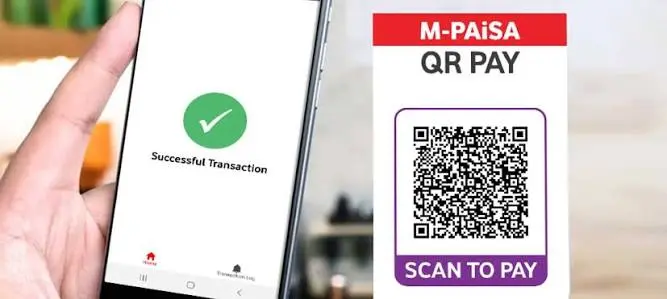
Recent criticism of M-PAiSA argues that the charges associated with mobile money transfers impose an unfair burden on poor Fijians.
This argument deserves examination. But it must be examined using economics rather than by simply pointing to a transaction or withdrawal fee and concluding that because a charge exists, consumers, particularly poorer consumers, must be worse off.
That is not how economists measure the cost or welfare effect of a service.
Related stories
The proper economic question is not: Does M-PAiSA charge a fee? The proper question is: What is the total economic cost of transferring, receiving and using money with M-PAiSA compared with the available alternatives, and are consumers better or worse off as a result of having this additional choice?
Once we ask the correct question, a very different picture emerges.
In a research paper a published in the International Journal of Bank Marketing in 2025 title “Technology and communal culture of sharing and giving: implications on household savings behaviour in Fiji”, I noted that Mobile money transfer, known as M-PAiSA (Vodafone) or My Cash (Digicel) in Fiji represents one of the significant technological innovations in the global retail financial system.
It has made it possible to transfer money virtually instantaneously to people living hundreds of kilometres away.
It has connected urban workers with their families in rural and maritime communities.
It has reduced the need to travel simply to conduct a financial transaction. It has enabled small businesses to participate in digital commerce and has brought financial services closer to people whom conventional banking infrastructure has historically struggled to reach.
For many ordinary Fijians, particularly those outside the major urban centres, M-PAiSA is not an economic burden, but rather an instrument that has reduced an economic burden that already existed.
The Transaction Fee Is Not the Total Cost
This distinction is fundamental. In economics, the price printed on a receipt is not necessarily the total cost saved in obtaining a service; rather, it’s the cost plus markup to provide that service.
Consider a person living in a rural community who needs to travel to a bank or another financial institution to receive money.
The economic cost of that transaction includes the direct financial charge, if any, but it also includes bus or taxi fares, fuel, the time spent travelling, the time spent waiting, and the income or productive activity sacrificed while undertaking the transaction.
For maritime communities, the costs can be considerably greater.
Before mobile financial services became widely accessible, some people could spend significant amounts travelling by boat simply to reach a location where they could access financial services.
The economic absurdity was obvious: in some circumstances, a person could incur a substantial transport cost merely to withdraw or receive a relatively small amount of money. That historical context matters.
My earlier discussion of M-PAiSA noted precisely these barriers: rural and maritime Fijians could face transport expenditure, queues and substantial opportunity costs simply to conduct basic financial transactions.
Economists call these transaction costs. Mobile money transfer platform brought many of those services to the person using a mobile phone.
Therefore, the correct comparison is: Total cost of conventional transfer = financial charge + transport + time + opportunity cost + inconvenience + risk.
Compared with:Total cost of mobile transfer = applicable mobile-money charge + any associated cash-out cost.
If a person pays a small fee but avoids a F$10 journey, two hours of travel and an hour standing in a queue, that person has not become poorer because a fee was charged.
The person has made an economic gain.
This is particularly important when discussing low-income households because the opportunity cost of accessing conventional financial infrastructure is frequently overlooked.
Of course some may argue that there are thousands of users in a geographic area and thus the mobile company is making windfall gains. Then we are questioning a visionary investment that the company has made and returns over time, with associated risks over time.
Time Has a Price: The Opportunity Cost
There is another mistake in treating travel and waiting as though they were free. They are not.
Time is a scarce economic resource. A farmer who leaves the farm to travel to town loses productive time.
A market vendor who closes a stall for two hours potentially loses sales.
A teacher in rural Lau Island leaves school to withdraw his/her salary from another island, depriving the students of class time. An employee may need time away from work.
A taxi driver waiting in a financial institution's queue is not earning income from passengers.
Economists call this the opportunity cost of time.
Technology creates economic value partly by reducing these costs.
While internet banking saves customers from visiting branches, online airline booking saves people from visiting travel agents, electronic tax filing saves people from physically delivering forms, mobile money operates on exactly the same economic principle.
It substitutes technology for travel, queues and administrative friction.
Fiji's Geography Makes Mobile Money Even More Valuable
The economics becomes particularly compelling in Fiji because of our geography. We are an island nation with communities spread across rural interiors, outer islands and maritime areas.
It is expensive for commercial banks to establish conventional branches everywhere.
A bank branch requires premises, staff, security, cash holdings, technology, electricity, communications infrastructure and regulatory compliance.
These are substantial fixed costs. It would make little economic sense to construct a fully staffed bank branch in every small community or island.
Mobile money changes the economics of financial-service delivery.
Instead of requiring customers to travel to financial infrastructure, digital technology takes part of that infrastructure to the customer.
A mobile telephone becomes a payment instrument.
An agent network substitutes, in part, for an expensive conventional branch network.
The result is a dramatic reduction in what might be called the economic cost of distance.
A daughter working in Nadi can send money to her parents elsewhere in Fiji within seconds.
A son working in Suva can transfer money home immediately when his family needs it.
Distance has not disappeared geographically.
But technology has substantially reduced its economic significance.
That is a technological revolution which has reduced infrastructure cost, improved accessibility and empowered rural dwellers.
This is why the benefits of M-PAiSA should be considered from the perspective of financial inclusion. Financial exclusion is itself expensive. People without convenient access to formal financial services face higher costs in receiving money, paying bills, accumulating financial balances and participating in commerce.
Mobile money lowers the threshold for participation in the payments system.
This has particular significance for lower-income households, rural communities, market vendors, informal businesses and people geographically distant from conventional banking infrastructure.
It is therefore misleading to analyse the distributional impact of M-PAiSA by considering only the fee.
We must also ask: Who receives the greatest benefit from the reduction in distance and transaction costs?
An affluent person living five minutes from several commercial banks may receive a convenience benefit from mobile money.
A person on an outer island or in a remote rural settlement may receive a much larger benefit because the alternative transaction is substantially more expensive.
The poor may therefore receive disproportionately large benefits from precisely the technology that critics claim burdens them.
The International Economic Evidence: Mobile Money as Social Security
This is not merely theoretical. Some of the world's strongest empirical evidence on mobile money comes from Kenya, where M-PESA transformed the country's payments system. Economists William Jack and Tavneet Suri examined how mobile money affected households' ability to cope with economic shocks.
Their study, published in the American Economic Review in 2014, found striking differences.
When households experienced negative shocks, consumption among households without access to the mobile-money technology fell by about 7 per cent, while the consumption of user households was unaffected.
Why? Mobile money reduced the transaction cost of receiving assistance from relatives and friends. Users received more remittances and could draw assistance from a geographically wider network.
That finding is extremely relevant to Fiji. Fijian families have extensive networks connecting rural and urban communities and linking families across islands and internationally.
When a household experiences sickness, unemployment, cyclone damage, a funeral, school expenses or another unexpected event, the ability of relatives to transfer funds immediately provides an informal form of insurance.
Mobile money makes that network considerably more effective. It converts social relationships into a more efficient economic risk-sharing network.
Jack and Suri's research therefore demonstrates something extremely important: reducing the cost of transferring money can help households protect consumption when adversity strikes.
Mobile Money and Poverty Reduction
The international evidence goes further. In a major study published in Science in 2016, Tavneet Suri and William Jack examined the longer-term effects of M-PESA in Kenya. Their estimate was remarkable.
Expanded access to mobile money increased per-capita consumption and lifted approximately 194,000 households, about 2 per cent of Kenyan households, out of poverty
The effects were particularly significant for female-headed households.
he researchers linked the results to greater financial resilience and savings as well as changes in employment and occupational choices, including women moving from agriculture into business.
Some readers may argue that we should not mechanically apply the numerical Kenyan result to Fiji. The countries and economies are different. But the economic mechanisms are highly relevant.
Mobile money reduces transaction costs, improves remittance flows, strengthens household risk-sharing, allows people to respond more quickly to financial shocks and widens participation in the financial system.
These are precisely the mechanisms through which economic welfare can improve.
Money Can Move More Efficiently, contributing to more Output
M-PAiSA also improves the efficiency with which money moves between economic agents. Suppose a worker receives wages in Suva and sends part of that income home.
The recipient uses the money to purchase groceries. The shop uses its receipts to replenish stock.
The wholesaler pays suppliers and workers. Mobile money allows the original purchasing power to move rapidly between participants in this chain.
The economic significance of mobile money extends beyond the convenience of transferring funds.
By enabling money to circulate more rapidly between households, businesses, workers and suppliers, platforms such as M-PAiSA can increase the effective velocity of money and support successive rounds of economic activity.
Consider a consumer who uses M-PAiSA to purchase goods from a small retailer.
The retailer uses part of that revenue to replenish stock from a wholesaler; the wholesaler pays suppliers and employees; those recipients, in turn, spend part of their income elsewhere in the economy.
The original expenditure therefore generates subsequent rounds of expenditure, income and production.
This is the basis of the economic multiplier effect. Where recipients spend a significant proportion of the additional income they receive, an initial injection of expenditure can generate a substantially larger cumulative increase in economic activity.
In an economy such as Fiji's, where households, micro-enterprises and communities are geographically dispersed, and transaction costs can be high, this effect may be particularly important.
Greater circulation of money through digital payment systems can strengthen the link between household expenditure, business revenue, supplier payments, wages and subsequent consumption, thereby amplifying the initial economic stimulus through the multiplier process.
As I often used to say in my previous position, remember, a good road does not itself produce agricultural output.
But by opening access to markets, by reducing transportation costs, it can make farming, marketing and trade more profitable and thus improve the welfare of farming households, increase overall output and exports and raise national income.
Likewise, a digital payments network does not itself produce goods and services. It makes economic exchange easier.
That is why modern payment infrastructure contributes to both economic efficiency and increased national output.
Cash Free…is it?
Critics of mobile-money charges implicitly make another questionable assumption: that cash is free. It is not.
Cash must be transported, counted, stored, reconciled, protected and insured.
Businesses handling large amounts of cash face risks from theft, robbery, counterfeit currency, employee pilferage and counting errors.
They incur expenditure on safes, security, insurance and transporting money to financial institutions.
Fresh in our memory is the 2022 case of Westpac Bank money of $850,000 that disappeared while being transported from Savusavu to Nausori.
Till today, this case has not been solved; the money is still missing.
Mobile-money agents also incur costs. An agent providing cash-out facilities must maintain sufficient cash liquidity.
The agent must rebalance cash and electronic value and operate a business that reliably serves customers.
The cost of maintaining a national cash distribution network does not disappear merely because the customer does not see it.
Therefore, comparing a visible M-PAiSA fee against an imaginary zero-cost cash alternative is economically incorrect.
The Real Issue: Competition or Price Regulation
M-PAiSA is also not a charity but rather an innovative business. It is a commercial service operating within Fiji's regulated financial environment.
The provider must invest in technology, cybersecurity, compliance, system resilience, customer support, agent infrastructure and innovation. Someone must pay for these resources.
The relevant public-policy question is therefore not whether the provider earns revenue.
The relevant question is whether consumers have choices, whether pricing is transparent, whether competition exists, and whether there is evidence of abuse of market power.
That brings us to competition economics. In a competitive market, economists generally prefer competition to administrative price controls.
Businesses compete on price, convenience, accessibility, quality, reliability and innovation.
A consumer choosing a money-transfer mechanism is similarly making a choice between different combinations of these characteristics. Fiji does have alternatives.
Post Fiji, for example, continues to provide domestic money-transfer services.
Its Post Money Order service operates through post offices around the country, including rural and maritime areas, and Post Fiji also provides online local money-transfer facilities. Banks and other payment channels provide additional alternatives.
Indeed, Post Fiji and M-PAiSA have previously competed directly in the money-transfer market.
Post Fiji itself described its Post Money Order product as a competitor to M-PAiSA and promoted its nationwide network as an alternative.
This matters enormously for the regulatory argument. The economic case for direct price regulation becomes stronger where a provider possesses substantial market power, consumers lack realistic substitutes, barriers to entry are substantial, and prices are demonstrably inconsistent with competitive market outcomes.
The mere existence of a fee does not establish any of these conditions.
If alternative transfer mechanisms exist and consumers voluntarily choose M-PAiSA because its combination of convenience, speed, accessibility and price gives them greater utility, that choice itself contains economic information.
Regulators should certainly monitor the market, protect consumers, require transparent disclosure and intervene against anti-competitive conduct.
But price regulation should be based on demonstrated market failure, not simply dissatisfaction with the existence of a charge.
There is also a danger in setting prices artificially low. If providers cannot recover the cost of operating agents in remote, low-volume communities, they may reduce those services.
A regulation supposedly designed to help rural and poor households could therefore have the unintended consequence of reducing their access to financial services.
Mobile Money and Household Savings
There is, however, one legitimate macro-financial issue that I have previously raised.
If increasing amounts of household money remain in mobile wallets rather than moving into deposit-taking institutions, this could potentially affect conventional household savings mobilisation and financial intermediation.
I examined the broader relationship between technology, the digital revolution and household saving behaviour in a research published in the International Journal of Bank Marketing in 2025. But the solution is not to restrict mobile money.
The economically superior solution is interoperability.
Consumers should be able to move money easily between mobile wallets and conventional bank accounts. And Fiji has made major progress in precisely this direction.
The Reserve Bank of Fiji's integration of mobile wallets into the national payment infrastructure enabled instant transfers between mobile wallets and bank accounts and also direct transfers between customers of different mobile wallets.
That is exactly how a modern financial system should evolve. Mobile money and banks should not be regarded as opposing financial systems. They should be complementary components of an integrated financial ecosystem.
A rural household can receive money through a mobile wallet, use what is required for transactions and move surplus funds into savings. That connects financial inclusion with savings mobilisation.
The Correct Policy Response
None of this suggests that mobile-money providers should operate without oversight. Far from it.
The Reserve Bank and competition authorities have important responsibilities.
Policy should ensure transparent fees, effective competition, protection of customer funds, cybersecurity, fraud prevention, system reliability, interoperability and accessible mechanisms for consumer complaints.
Authorities should continually monitor affordability and market conduct. But there is a major difference between regulating a market and administratively determining its prices.
The first is essential. The second requires evidence that competition is incapable of protecting consumers.
The objective should be to encourage more competition and innovation, not suppress them.
M-PAiSA Is Economic Infrastructure
We should therefore think differently about M-PAiSA.
It is more than a mechanism for sending money through a telephone. It forms part of Fiji's emerging economic infrastructure.
While roads move people and commodities, telecommunications networks move information and payment networks move purchasing power.
Reducing the cost of moving any of these improves the functioning of markets. For Fiji, the consequences are particularly significant because geography has historically imposed substantial costs on economic participation.
Mobile money reduces some of those costs. It connects a worker in an urban centre with parents in a rural village. It connects households experiencing emergencies with relatives able to assist them.
It connects small businesses with customers. It connects previously underserved communities with the payments system.
And increasingly, interoperability connects the mobile wallet itself with the formal banking system.
Concluding Remark: the Real Question
The debate over M-PAiSA should therefore return to the fundamental economic question.
Are Fijians better off having this service available than they would be if it did not exist? For hundreds of thousands of transactions, the revealed preference of consumers provides part of the answer.
People use mobile money because it provides value, speed, accessibility, and convenience.
A fee should always be transparent and should remain subject to the discipline of competition.
But the existence of a fee cannot be considered independently of the economic value of the service purchased with that fee.
International evidence demonstrates that mobile money can reduce transaction costs, strengthen household risk-sharing and contribute to poverty reduction. Kenya's experience provides particularly powerful empirical evidence: mobile-money users were better protected against consumption shocks, while longer-term expansion of the system was associated with approximately 194,000 households escaping extreme poverty. Fiji should build upon this technological transformation rather than retreat from it.
We should promote competition between providers, deepen interoperability, expand agent networks, improve digital financial literacy, protect consumers and continue integrating mobile wallets with the banking system.
The objective should be to make moving money progressively cheaper, faster, safer and more accessible.
For a person in a remote community who can receive money from a son or daughter within seconds rather than travelling for hours to obtain it, technology has not created an economic burden. It has removed one.
For a small business able to accept a digital payment without expensive conventional payment infrastructure, technology has lowered a barrier to commerce.
For a household facing an emergency and able to receive assistance immediately from relatives elsewhere, technology has strengthened economic resilience.
And for a nation and region consisting of dispersed islands and communities, mobile money has reduced the economic penalty imposed by geography.
M-PAiSA should therefore not be characterised as a burden on Fiji's poor.
It is better understood as an economic bridge, connecting rural and urban Fiji, families and businesses, savers and financial institutions, and previously underserved households with the modern economy.
Dr Reddy is a Senior Fellow at the Graduate School of Business, University of the South Pacific. The views expressed in this article are his and do not represent those of his employer.