Making it Happen: How to Deliver Fiji's NDP?
Keeping our talent in the country and bringing skilled Fijians back home should be top priorities-otherwise, all the job creation in the world won't matter if there's no one here to fill them.
Saturday 05 October 2024 | 10:27
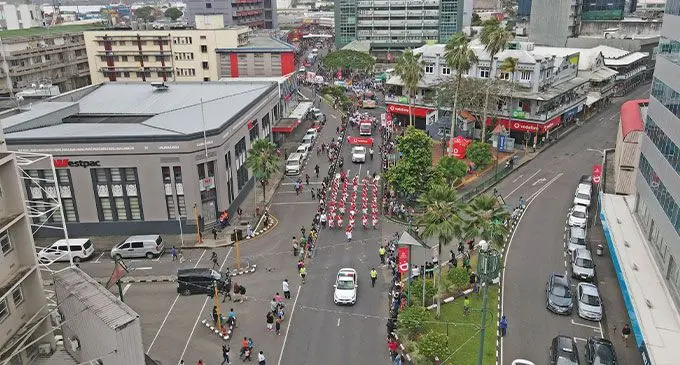
RIGHT: Suva City hosting the Miss Hibiscus Festival in August. Photo: Leon Lord
The elephant, the rugby field , and the plan that needs to score tries
So here we are. Fiji's got itself a big, fancy National Development Plan (NDP ) 2025-2029, and everyone's talking about the bright future ahead-thousands of new jobs, lower poverty, better opportunities for everyone.
Sounds pretty good, right? But here's the deal: making a plan is like drawing up a rugby play on a whiteboard. It looks great in theory, but unless you've got the right players on the field, the right training, and someone keeping an eye on the score, it's just a lot of scribbles. No tries, no points, no victory.
Related stories
The thing is, we've got some major challenges standing in our way, and they're about as subtle as an elephant in the room. One big, grey, heavy, stomp-all-over-our-dreams issue is emigration. You know, Fijians packing their bags and heading off to Australia, New Zealand, and anywhere else for better opportunities and future for their children.
Meanwhile, we're left here trying to create 2000 new tourism jobs and 7000 jobs in outsourcing by 2029.
Who's going to work these jobs if our best people are overseas caring for the sick and elderly, helping business in IT or picking fruit?
But hold on-it's not all doom and gloom. We're not the first small island nation to face this challenge, and we can definitely learn from those who've successfully navigated this tricky path.
Take Mauritius and Singapore, for example. These two nations were in a tough spot once, but they pulled themselves up, dusted off their plans, and turned their economies into success stories. If they can do it, Fiji can do it too.
But we're not going to get there by sitting around and hoping for the best. Nope. We need a game plan, here's a suggestion for the 6-step playbook (let's just call it common sense). In this game plan, we'll break down how to actually deliver on the NDP, and a few hard truths about what needs to happen if we want to win.
So grab your rugby boots, tighten your laces, and let's start with the first two steps-because if we mess these up, it's game over.
Step 1: Set clear, ambitious goals (Know where the try line is)
Now, if there's one thing you don't want to do in rugby, it's run around the field without knowing where the try line is. Can you imagine?
Just a bunch of players running in circles, confused, passing the ball to no one. No one scores, the fans get bored, and you lose the game. Same goes for the NDP.
If we don't have clear goals, how do we know where we're headed?
And more importantly, how do we know when we've won? Here's where Fiji's NDP actually does a good job-it's got some pretty clear and ambitious targets. Let's break it down:
■ Tourism Jobs: The plan is to create 2000 new tourism jobs by 2027 and ramp it up to 7000 by 2029. That's a solid target, and let's be honest, tourism is a no-brainer for Fiji. It's like scoring a try when you're already at the five-metre line. We've got the beaches, the culture, the friendly people-let's use it.
■ Agriculture Jobs: 400 new farmers in the next three years, and 700 by 2029 (baseline is 80). Now, I don't know about you, but 400 new farmers sounds like a lot of planting to me. The thing is, agriculture can be our secret weapon-if we play it right. But we'll get to that.
■ Outsourcing Jobs: Fiji's going to become a hub for outsourcing, with 4,000 jobs in the next three years and 17,000 by 2029 (baseline is 8000).
That's a huge leap, and if we get it right, we'll be fielding calls from around the world while sitting under coconut trees.
■ Manufacturing Jobs: Manufacturing jobs will make up 15 per cent of total employment in three years and 17 per cent in fl ve years (baseline is13.9 per cent). This one's going to take some serious effort, but hey, if Mauritius can go from sugarcane to textiles and IT, we can boost our manufacturing too.
■ Micro, Small, and Medium Enterprises (MSMEs): MSMEs will account for 62 per cent of total jobs in three years and 65 per cent by 2029 (the baseline is 60 per cent). These are the backbone of our economy small shops, family businesses, and local enterprises keeping things ticking. We've got to support them to thrive.
So, there you have it. The try lines are set. We know what success looks like. But let's not forget the key to
Step 1: being ambitious is great, but we've got to make sure we've got the players who can actually get us across those try lines.
Let's learn from Mauritius and Singapore's playbooks Mauritius had its own turning point when they realized relying on sugarcane was a losing game. They set ambitious goals to diversify into tourism, textiles, and IT. They didn't just say, "Oh, let's create a few jobs and see what happens."
No, they aimed big-like we're doing with our 7000 tourism jobs and made sure their people were trained to get there.
Singapore? Well, when they broke free from Malaysia in 1965, they were a tiny island with hardly anything to their name. But they didn't let that stop them. They set massive goals for infrastructure, manufacturing, and tech innovation. Fast forward a few decades, and Singapore's GDP per capita is now one of the highest in the world. Why? Because they knew exactly what they wanted and made sure everyone was on board to make it happen.
Step 2: Assign responsibility {Who's got the ball?)
In rugby, you've got to know who's carrying the ball, otherwise it's chaos. The same is true for delivering the NDP. We've got these great goals-2000 new tourism jobs, 17,000 outsourcing jobs, new farmers, construction workers, the works-but who's in charge of making sure these things happen?
Right now, the NDP says the Ministry of Finance is in charge of coordinating the whole plan. Now, no offense to the very abled staff at the Ministry, but should they really be leading this? That's like asking your team's accountant to captain the rugby squad. Sure, they're great with the budget, but this is Fiji's future we're talking about-we need someone with the big-picture vision to lead the charge. And that's why the Prime Minister needs to take the lead here.
The Prime Minister should be like the team captain, making sure every ministry knows its role, holding them accountable, and checking the scoreboard every step of the way. And if someone drops the ball? Well, it's the Prime Minister's job to pick it up and get things back on track.
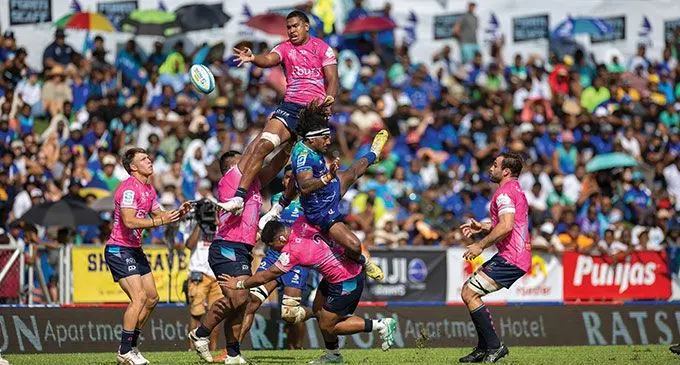
The Super Rugby Pacific matchups against the Fijian Drua at home have been a crowd pleaser. Photo: Leon Lord
Breaking down responsibilities: Who's got what?
Here's how we assign the ball:
■ Ministry of Tourism: You've got the 2000 tourism jobs to deliver by 2027. That's your try line. Start working with hotels, resorts, and travel companies to make sure those jobs are filled with trained locals.
■ Ministry of Agriculture: You're responsible for getting 400 new farmers in the next three years. Time to get those agricultural training programmes in place and start offering incentives for young people to stay on the farm.
■ Ministry of Communications and IT: We're counting on you to deliver those 4000 outsourcing jobs. It's time to work with international companies, boost our IT infrastructure, and get Fijians trained for those roles.
■ Ministry of Trade: We're expecting you to make manufacturing 15 per cent of total employment in the next three years. That's going to take some heavy lifting, but hey, if Singapore could go from fishing boats to tech hubs, we can crank up the factories.
And just like in rugby, if any ministry is slacking, we've got to bench them. No excuses.
Learning from Singapore's accountability playbook Singapore's rise wasn't just about setting goals-they were relentless about accountability. Every ministry knew exactly what they were responsible for, and if they weren't delivering, they got called out. They had clear deadlines, progress checks, and if something wasn't working, they fixed it fast.
No mucking around. That's exactly what Fiji needs to do. We can't afford to sit back and hope things work out. We need to track progress constantly and make sure every ministry is delivering on their part of the NDP.
Steps 3-6: Keeping score, fixing problems, and celebrating the wins
Once the goals are clear and everyone knows who's responsible for what, the key is to track progress regularly-just like checking the scoreboard during a rugby match. Fiji needs quarterly progress reports to see if we're hitting those job targets or if we're falling behind. If things aren't going as planned, we need to fix problems fast, whether it's training gaps or bureaucratic roadblocks-send in the problem solvers and get things moving again. When we hit a milestone, like creating those 2,000 tourism jobs or training 400 new farmers, it's important to celebrate the wins-let the public know we're on track and boost morale. And of course, hold everyone accountable-if a ministry isn't delivering, they need to be benched, no excuses.
But here's the kicker: the NDP seems to rely too much on economic growth as the magic bullet to solve all the country's problems.
Growth is important, but it won't fix everything on its own. If we want the NDP to succeed, every government policy-whether it's macroeconomic, trade, investment, education, or social policy-needs to be laser-focused on creating decent jobs.
We can't just hope that growth will trickle down; we need to actively make Fiji an attractive place to work and live, not just for Fijians here but for those abroad.
Keeping our talent in the country and bringing skilled Fijians back home should be top priorities-otherwise, all the job creation in the world won't matter if there's no one here to fill them.
Conclusion: Time for Fiji to play like champions
So there you have it, folks-the playbook to deliver Fiji's National Development Plan. The goals are ambitious, but we've got everything we need to win this game if we stick to the plan.
Let's learn from the success stories of Mauritius and Singapore, invest in skills, assign clear responsibilities, and hold everyone accountable.
Now it's time to lace up those boots, tackle that elephant in the room, and get out there to deliver on the NDP. When we work as a team, there's no stopping Fiji from crossing the try line and scoring big for our future.
By: Dr. Naren Prasad
- Dr. Naren Prasad, Head of Education & Training, International Labour Organization, Geneva, Switzerland-- He is a seasoned economist with over 30 years of international experience, specializing in education, training, and public policy. Having held key roles in UN agencies like ILO, UNESCO, UNRISD, and UNESCWA, he is currently involved in high-level leadership positions and training programmes worldwide aimed at evidence-based policymaking. As a Fiji national, Dr. Prasad's deep connection to his rural upbringing in Dreketi fuels his passion for advocating social justice, democracy, and good governance. He holds a PhD in economics from Universite Paris II Assas-Pantheon (France).
The views expressed herein are those of the author and do not necessarily reflect the views of the International Labour Organization.








