Opinion: A constitutional path for a unique Fijian democracy
Fiji’s democracy is unique. It provides stability while showing how diverse societies can respect indigenous roots and still build inclusive political systems.
Monday 22 June 2026 | 11:00
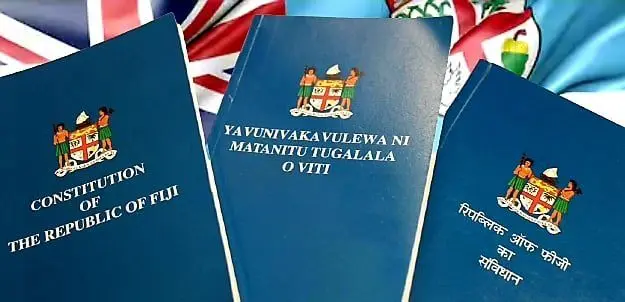
In the quiet corridors where Fiji’s constitutional future is debated, a fundamental question persists: Why has liberal democracy, with its emphasis on equal citizenship, individual rights, and majoritarian rule, failed to deliver lasting stability in our islands?
And what might genuinely legitimate governance look like if we took indigenous foundations seriously?
These questions are not merely academic. They speak to the lived reality of a nation that has experienced four coups since 1987, each leaving deeper wounds on our collective psyche.
Related stories
They demand answers that go beyond superficial observations about political parties or electoral processes. They require us to confront the constitutional wound at the heart of Fijian political life.
The liberal-centric blind spot
Consider Professor Steven Ratuva’s recent observation that multiple political parties signify healthy democracy.
This perspective, while academically respectable, operates within what might be termed a liberal-centric framework, one that measures Fijian political development against
Western democratic benchmarks without interrogating whether those benchmarks adequately address indigenous aspirations.
As one commentator sharply observed, “To look only at colonialism and disregard capitalism and neo-colonialism and how they manifest in Fiji is like a blind man trying to feel an elephant.”
The liberal framework tends to focus on procedural democracy, elections, parties, representation, while neglecting substantive questions of constitutional legitimacy, cultural authority, and historical justice.
What is needed is a constitutional theory that emerges from Fijian soil rather than being imported from elsewhere.
This theory must acknowledge that Fiji is not a blank slate of abstract citizens but an indigenous polity with deep historical roots, complex kinship systems, and a spiritual connection to land that predates colonial intervention.
The indigenous foundation thesis
At its core, our indigenous foundation thesis advances a simple but profound proposition: Fiji’s constitutional instability stems from unresolved indigenous political aspirations, and constitutional reform should place iTaukei political authority at the centre of any constitutional order.
This argument rests on several interconnected propositions that emerged from a Facebook exchange with Dr Jalesi Nakarawa, who thoughtfully distilled them into a coherent framework:
First, equality and the rule of law, while important, are insufficient foundations by themselves.
Constitutional democracy cannot rest solely on abstract equal citizenship but must be grounded in our society’s historical, cultural, and political realities.
Second, Fiji is fundamentally an indigenous polity. The constitutional order must recognise our status as an indigenous society predating colonial rule. Constitutional arrangements should acknowledge the iTaukei’s prior status as Fiji’s original inhabitants.
Third, colonialism disrupted indigenous political authority. Colonial constitutional arrangements and later political settlements did not adequately accommodate indigenous political aspirations.
This is not only about land ownership or cultural recognition but about political authority and constitutional legitimacy.
Fourth, every coup since 1987 has been a violent expression of unresolved iTaukei anxiety. This view sees coups not simply as failures of democracy or military ambition but as expressions of deep indigenous concerns over political control, identity, representation, and security.
Fifth, military intervention cannot be solved without addressing indigenous concerns. Military reform or constitutional democracy will fail unless the underlying source of indigenous anxiety is addressed.
Sixth, a unique Fijian democracy differs from liberal democracy. It refers to a constitutional system that combines indigenous political authority, customary institutions, cultural legitimacy, and democratic rights for all citizens. Democracy is not based solely on equal citizenship but is anchored in indigenous political and cultural foundations.
Seventh, iTaukei political authority should be constitutionally foundational. This suggests a constitutional hierarchy where indigenous authority occupies the constitutional foundation and the rights of other communities are recognised within a constitutional order grounded in indigenous legitimacy.
Eighth, constitutional reform must prioritise indigenous aspirations. Questions of land, customary authority, indigenous representation, cultural protection, and political influence must be resolved before broader constitutional issues can be addressed.
Ninth, the military reflects constitutional legitimacy problems. The military’s ongoing political role reflects an unresolved legitimacy issue within the constitutional order. Once legitimacy is established, military intervention loses political relevance.
The vanua as constitutional foundation
The vanua concept represents far more than a romanticised notion of tradition. It embodies a complete cosmology of relationships, between people and land, between living and ancestors, between chiefs and commoners, between humanity and the spiritual realm.
Recognising iTaukei political authority as foundational is not ethnic supremacy but constitutional realism, the recognition that political legitimacy in our context cannot emerge from abstract principles divorced from the lived realities of indigenous peoples who, despite being numerical majorities, often experience marginalisation within their own homeland.
Recent reflections on therapeutic frameworks offer a helpful lens. Healing occurs when wounded parts feel safe enough to release their protective roles and allow the core self to lead. For Fiji, the Vanua functions as this self, the foundational identity from which all other aspects of national life derive meaning.
When constitutional arrangements ignore or marginalise the Vanua, they create conditions where wounded parts must act protectively. Military interventions, political instability, and indigenous mobilisation are not expressions of malice but protective responses to perceived threats to the indigenous foundation. These protective parts are not the problem but the symptom of deeper wounds requiring acknowledgment and healing.
What unique Fijian Democracy might look like
What would genuinely Fijian democracy look like if it honoured iTaukei foundations while embracing pluralistic participation? Several features suggest themselves:
Constitutional recognition of indigenous political authority, not as symbolic gesture but as substantive constitutional principle that structures governance arrangements.
Chiefly institutions, customary decision-making processes, and traditional governance systems must be constitutionally significant, not merely culturally interesting.
Land rights as foundational rather than supplementary, recognising that land in Fijian culture is not merely property but identity, the physical manifestation of ancestral presence and future hope. Constitutional protection of indigenous land tenure is not a special privilege but the recognition of prior ownership.
Governance structures that accommodate both indigenous authority and democratic participation, creating spaces where traditional leadership and elected representatives share governance responsibility, reflecting the dual nature of Fijian society.
Decision-making processes that respect iTaukei temporality, recognising that indigenous processes often prioritise consensus-building and long-term sustainability over rapid electoral cycles.
Dispute resolution that emphasises restoration over punishment, incorporating customary mechanisms alongside formal legal systems, acknowledging that justice in iTaukei contexts requires relational healing.
Responding to critics
Critics may argue that indigenous rights can be protected without elevating one group to foundational political status.
This objection deserves serious consideration, but it rests on a questionable assumption, that indigenous rights can be effectively protected within a constitutional framework that treats all citizens as formally equal while ignoring substantive inequalities.
Without constitutional recognition of indigenous foundational status, indigenous communities face perpetual pressure to assimilate into majority cultural frameworks.
The promise of equal citizenship rings hollow when the constitutional order itself reflects the cultural assumptions of former colonial powers.
Elevating indigenous authority to foundational status does not mean other communities lack rights or representation. It means the constitutional order acknowledges that its legitimacy derives from the prior political authority of the indigenous people. This is not hierarchy but integration, the whole, in this model, is greater than the sum of its parts.
Critics may also argue that military intervention is the principal cause of constitutional instability, not just a symptom of unresolved indigenous concerns.
This objection recognises that military intervention itself creates instability, which is undeniable. However, it fails to ask why military intervention occurs with such regularity in Fiji while remaining rare in other contexts.
The answer lies in the constitutional wound, the failure to adequately recognise indigenous political authority within the constitutional order.
Conclusion: A healing constitution
The indigenous foundation thesis is not ethnic supremacy. It is constitutional realism, the recognition that political legitimacy in our context cannot emerge from abstract principles divorced from the lived realities of indigenous peoples who, despite being numerical majorities, often experience political marginalisation within their own homeland.
As we contemplate our constitutional future, we would do well to approach the conversation with compassion, curious about the wounds behind the protective behaviours, patient with the healing process, and committed to creating conditions where all parts of our national community can feel secure enough to release their burdens.
The military will return to being barracks only when our constitution honours the people whose land it governs.
This is not idealism but practical wisdom, the recognition that constitutional arrangements that wound the collective psyche will inevitably generate protective responses.
A unique Fijian democracy offers not only constitutional stability but also a distinctive contribution to global thinking about how diverse societies can honour their indigenous foundations while building inclusive political futures.
The path forward requires courage, the courage to imagine political arrangements that honour indigenous foundations while embracing democratic participation for all.
This is not a rejection of democracy but its deepening, a recognition that democracy in Fiji must be rooted in Fijian realities, not abstract principles imported from elsewhere.
The Vanua calls us the iTaukei, to remember who we are, a people with ancient governance traditions, deep spiritual connections to our lands, and collective identities that transcend the individualistic assumptions of liberal democracy.
In answering this call, we may discover that a constitution grounded in indigenous foundations offers not only stability but also healing, for ourselves, for our communities, and for generations yet unborn.
Feedback: editorial@fijisun.com.fj