Opinion: The silly season has arrived
This week’s Dialogue Fijian State of the Economy debate, gave political rivals the chance to critique the government’s projections and lay out their own economic policies.
Friday 12 June 2026 | 21:00
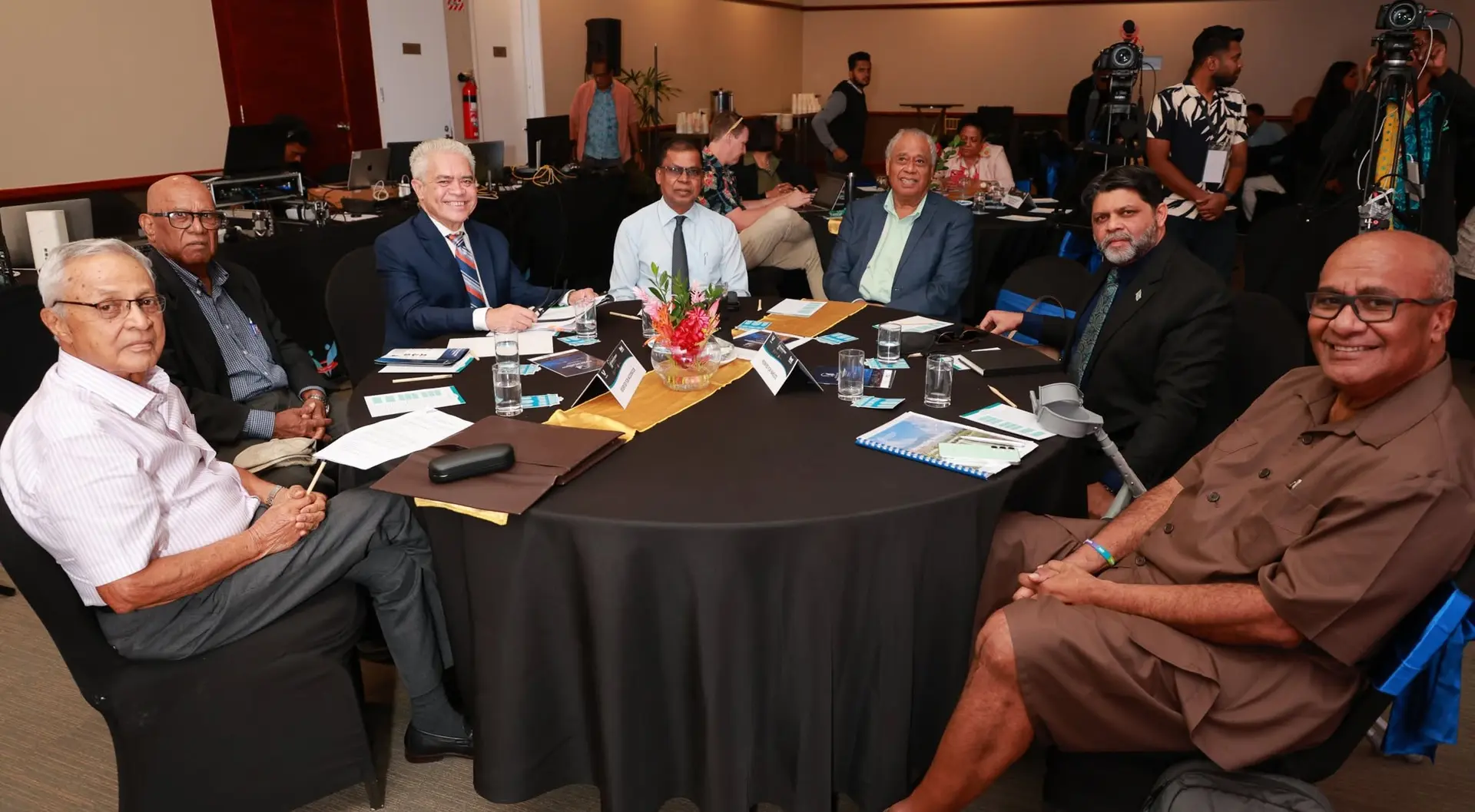
Current and former Members of Parliament at the Fijian State of the Economy Dialogue at the Grand Pacific Hotel in Suva.
Photo: Dialouge Fiji
Fiji is scheduled to hold its next election latest by February 2027. That is, if it happens at all.
This is not idle speculation. Events entirely outside government control may well alter that timeline entirely.
Consider the perfect storm forming on the horizon: an ongoing Gulf war causing global energy disruptions and shortages; a Tier 1 Super El Niño predicted for 2026 with potentially devastating weather impacts; a converging crisis of drugs, HIV, and non-communicable diseases; an economic meltdown that could deliver a COVID-like shock; and the very real prospect of a State of Emergency declaration. Any one of these could destabilise electoral preparations. All of them together? That is not merely a doomsday scenario—it is a trajectory any close observer of Fiji’s political, economic, environmental and social condition, would recognise.
Yet the deeper problem is not the external shocks. It is our collective refusal to imagine something better. The Western liberal democratic model grafted onto Fiji has, in my view, never been a comfortable fit. But rather than build a truly Pasifika democratic framework—one that thinks outside the imported box and looks toward a visionary future—our leaders cling to what they know. Perhaps that is unsurprising when so many of them rose to prominence in the last century.
But where are our new political leaders? The 2013 Constitution does not encourage independent thinking or cultivate new talent. It is a strongman’s document, built for an autocrat at the expense of potential. To call for fresh leadership while that constitution remains immovable, is to display a certain national naivety.
The Bose Levu Vakaturaga understands this perfectly. That is why it insists on working within the existing system to secure its autonomy. Many Fijians dismiss the Great Council of Chiefs (GCC) as an outdated governance model, but they are wrong.
The iTaukei remain a largely traditional population, with all the nuances of belonging that non-iTaukei either fail to grasp or are conveniently blind to.
The Fiji First party tried systematically to downgrade—if not eradicate—the chiefly system and iTaukei traditions. It did not succeed. But that does not mean later iterations of that same impulse, or individuals carrying that torch, have given up. Sadly, too many urban iTaukei—whether educated or simply misguided—have bought into this notion entirely. And so we enter the silly season, even before the writs are issued.
Debate
This week’s Dialogue Fijian State of the Economy debate, gave political rivals the chance to critique the government’s projections and lay out their own economic policies. But we have such short memories. The previous regime made us live in fear of speaking, of criticising, even of sneezing.
Dialogue Fiji itself felt that wrath. When that regime was defeated in December 2022, the nation was euphoric. We celebrated their demise with glee. We allowed the opposition that defeated them to form a bloated coalition—but that was beside the point. The Fiji First regime was gone. We voted for change. And we got it.
Then we were let down. The visionary, mature, experienced, caring leadership we expected never materialised. The coalition’s selfish decision to grant themselves a massive pay raise, undressed whatever political virtues they claimed. Even their truest supporters felt the disappointment.
Since then, they have shot themselves in the foot repeatedly: the lack of experienced political advisors; the Commission of Inquiry blunder and its ongoing fallout; the cynical embrace of figures from the previous regime’s innermost circle; the absence of a functioning National Security Council or a National Security Adviser; the palpable disrespect toward the Bose Levu Vakaturaga and iTaukei aspirations. The list goes on. Yes, they have done genuine good as well.
But their worst instincts have consistently outweighed their best efforts, making their achievements look lethargic and their concern feel like an afterthought. They have seemed distant, living inside their own tinted Prado bubble.
So here we are at the beginning of the silly season: the good, the bad and the ugly. If we learn one thing, let it be this: we must choose our politicians wisely. Not the loudest. Not those with the flashiest social media presence or the smoothest delivery.
We must choose those who actually believe in and deliver what they promise. And if they do not, we must vote for those who convince us they will. There are far too many wannabe politicians without the experience or professional attributes to back up their ambitions. Too many carrying baggage from previous lives that should give us all pause.
That someone has a social media following does not make them a leader. We must stop being a gullible electorate and start thinking critically—about vision for our children and grandchildren, about the future of the iTaukei, our aspirations and about the future of Fiji as a nation.
Let me return to this week’s State of the Economy dialogue. It brought together political rivals, state officials and economists to debate our economic health ahead of the national budget.
They spoke about economic factors in isolation—without any discussion of the looming energy crisis, the projected Tier 1 El Niño weather pattern, the drugs and HIV and NCD crises robbing us of our next generation, or the ‘people drain’ of the PALM and NEC schemes emptying Fiji of its young population.
They talked about the ‘now’. Not a single intergenerational vision for the nation was offered. All short-term thinking. No vision.
If these are Fiji’s next political leaders, the nation is truly doomed. So I will leave you with the only question that now matters, the one that hangs over every crisis, every empty promise, every short-term calculation: Where are our next generation’s political leaders?
Explore more on these topics




Advertisement
Advertise with Fiji Sun