NFP MPs to reject Constitution Bill over rushed process
NFP Management Board instructs all party MP to attend Parliament and vote against the Bill at its third reading.
Saturday 31 October 2026 | 14:00


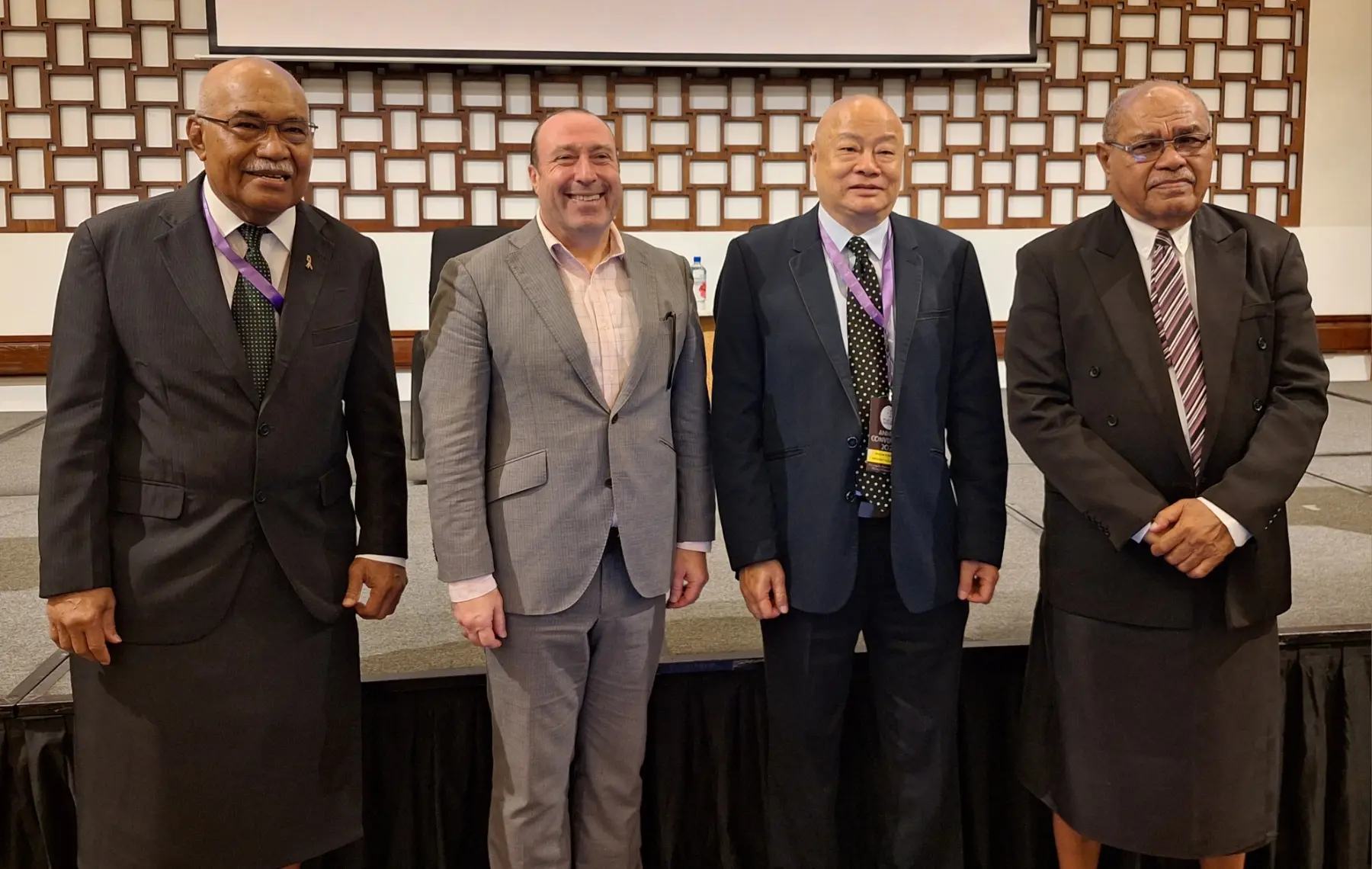
National Federation Party members of parliament (from left) Minister for Defence and Veteran Affairs, Pio Tikoduadua, Minister for Women, Children and Social Protection Sashi Kiran, NFP leader Biman Prasad and Assistant Minister for Foreign Affairs Lenora Qereqeretabua.
Photo: National Federation Party
The National Federation Party (NFP) has issued a directive all its Members of Parliament to vote against the Constitution (Amendment) Bill 2026, accusing the Government of rushing constitutional reform without adequate public consultation.
The decision puts the NFP at odds with its coalition partner, the People's Alliance, ahead of the Bill's third reading in Parliament.
In a formal three-line whip issued on October 30, the NFP Management Board directed every party MP to attend Parliament and vote against the Bill.
Related stories
The directive prohibits MPs from supporting the Bill, abstaining or deliberately avoiding the vote. It also requires them to sign written undertakings confirming they will comply.
The party has invoked constitutional provisions concerning the possible loss of parliamentary seats if MPs vote or abstain against party directions without permission.
In a press conference today, NFP leader Professor Biman Prasad explained that the party's opposition was driven by concerns over the speed of the constitutional reform process.
Professor Prasad said he had written to Prime Minister Sitiveni Rabuka on October 29, advising him of the NFP's position and urging the People's Alliance to withdraw the Bill from Parliament's consideration on Monday, November 2.
He said the NFP had supported the Bill at its second reading on October 2 in good faith, believing that public consultation and negotiations could produce common ground.
However, his participation in the Special Parliamentary Committee's consultations had reinforced his concerns about the timetable.
According to Professor Prasad, many Fijians had barely been given enough time to read the proposed Constitution, let alone understand its implications.
He also criticised the absence of translations into vernacular languages, restrictions on the time allocated to public submissions and the lack of interaction between committee members and those making submissions.
“When citizens are being hurried through their submissions on the supreme law of their own country, something is fundamentally wrong with the process. When there is no interaction whatsoever between the members of the Special Committee and Fijians making submissions, particularly through questions and answers, and when the provisions of the Bill are not outlined in Vosa Vakaviti and Hindi for ease of understanding, consultations become meaningless and worse than a cosmetic exercise.”
Professor Prasad said the committee had not collectively examined the Bill clause by clause and that fundamental questions remained unresolved.
He also argued that excluding opposition parties from the earlier review process had made national consensus more difficult.
NFP challenges reform timetable
Professor Prasad questioned the 19-day timetable from October 12 to 31, which he said allowed about three days for preliminary work, 13 days of restricted public consultations and two days to finalise the committee's report.
The report was expected to be presented to Parliament on November 2.
He said the process was inadequate for legislation of such national importance.
“We cannot condemn the imposition of the 2013 Constitution while accepting an inadequate process for replacing it. We would be hypocrites if we did so – replacing one imposed constitution with another one.”
Professor Prasad argued that there was no compelling reason to complete constitutional reform before the next general election.
He said the process could continue after the election, allowing more time for public consultation, parliamentary scrutiny and an informed referendum.
The NFP leader maintained that the party remained committed to constitutional reform and cooperation with its coalition partners.
“But constitutional legitimacy cannot be sacrificed for political expediency. There should be no shortcuts or fast-tracking of a constitutional process.”
He said the NFP had exhausted its efforts to persuade the Prime Minister and the committee to extend the timetable.
“We have exhausted all avenues to convince the Prime Minister and the Committee to extend the timeline beyond the general elections for continuation of the process.”
Professor Prasad also announced that he would no longer participate in the Special Parliamentary Committee or sign its report to Parliament.
“I will therefore no longer participate in the special parliamentary committee, nor will I be a signatory to the Report of the committee to Parliament.”
MPs ordered to vote against Bill
The NFP's formal voting directive, signed by party president Parmod Chand and general secretary Kamal Iyer, leaves no room for MPs to depart from the party's position.
It states:
“EVERY NATIONAL FEDERATION PARTY MEMBER OF PARLIAMENT IS HEREBY DIRECTED TO VOTE AGAINST THE CONSTITUTION (AMENDMENT) BILL 2026 AT ITS THIRD READING.”
The directive requires every NFP MP to attend the third-reading vote, vote against the Bill and ensure their opposition is formally recorded.
MPs are prohibited from abstaining, deliberately absenting themselves or withdrawing from the parliamentary chamber to avoid voting.
The Management Board also states that neither the party leader nor the parliamentary whip may individually vary or withdraw the directive.
Any change must be authorised by the appropriate party body and communicated formally in writing before the vote.
Every NFP MP must provide a signed written undertaking to the general secretary before the third reading.
Warning over parliamentary seats
The directive refers specifically to section 63(1)(h) of the 2013 Constitution, concerning the vacation of parliamentary seats when an MP votes or abstains contrary to a direction of the political party under whose banner the MP was elected, without prior permission.
It also cites section 63(3), which sets out the procedure for notifying the Speaker of an alleged contravention.
The document states:
“THIS DIRECTIVE REQUIRES EVERY NFP MEMBER OF PARLIAMENT TO VOTE AGAINST THE BILL. ABSTENTION IS NOT AUTHORISED.”
According to the directive, the decision was unanimously endorsed by nine constituted NFP branches through a flying minute dated October 29.
Despite the disagreement over constitutional reform, Professor Prasad said the NFP remained committed to constructive engagement with its coalition partners.
He concluded his statement with a call for a more inclusive process.
“Fiji deserves a Constitution made with its people, not hurried past them.”