Social challenges threaten Fiji’s economic prospects
He emphasised that Fiji’s economic future depended not only on investment and infrastructure but also on the health, skills and productivity of its workforce.
Thursday 26 November 2026 | 08:00

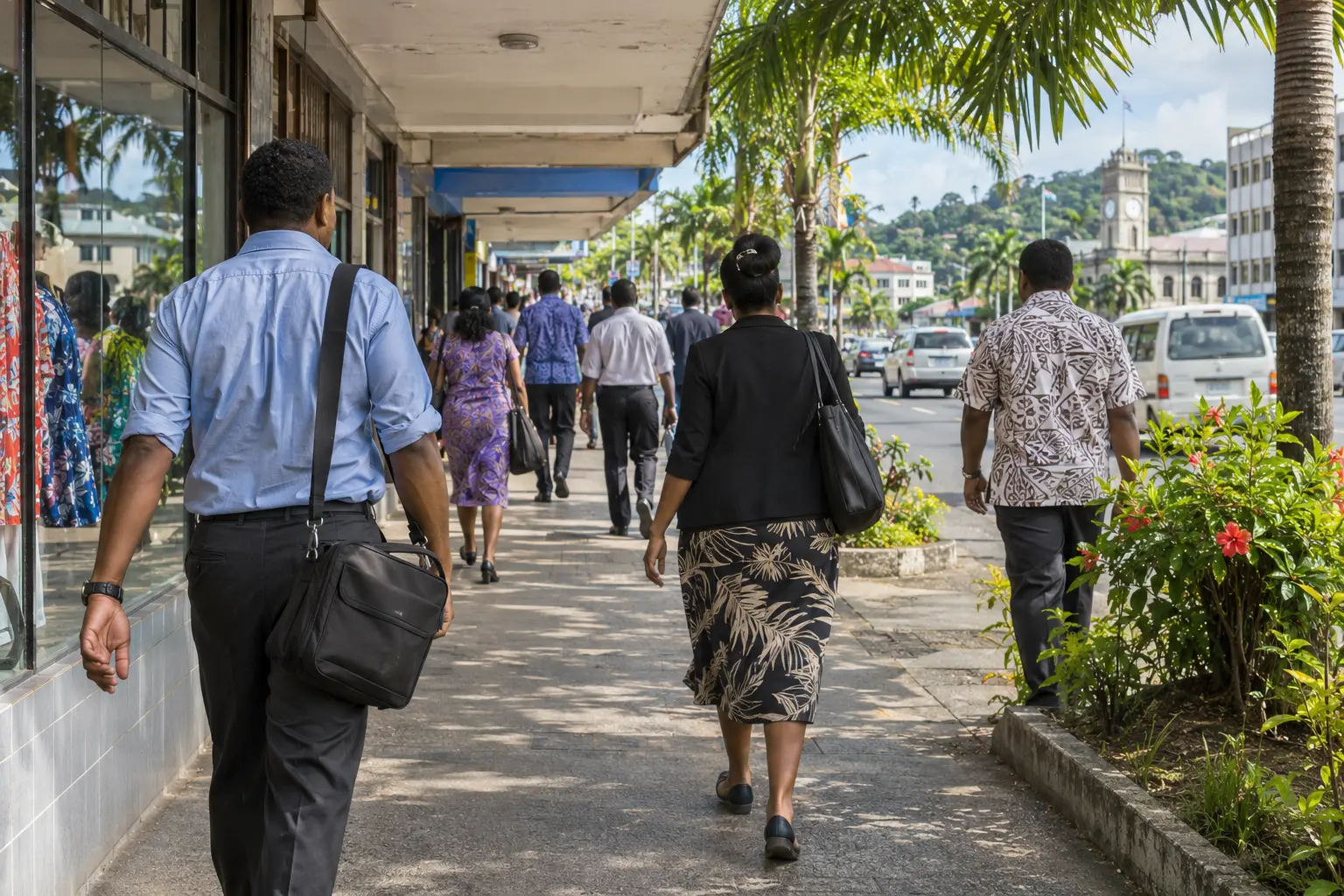
The concerns come as Fiji continues to grapple with structural economic challenges, including labour shortages, productivity constraints and infrastructure gaps
AI generated
Fiji’s long-term economic growth could be undermined by HIV, illicit drug use and crime, with concerns mounting over their potential impact on workforce productivity and social wellbeing.
Reserve Bank of Fiji (RBF) Governor and Macroeconomic Committee chairman Ariff Ali highlighted these social challenges in the latest revised macroeconomic projections for 2026–2029.
He emphasised that Fiji’s economic future depended not only on investment and infrastructure but also on the health, skills and productivity of its workforce.
Related stories
“In this regard, addressing broader social challenges, including HIV, illicit drug use and crime, is critical given their potential implications for labour productivity, social wellbeing and inclusive economic development.”
The concerns come as Fiji continues to grapple with structural economic challenges, including labour shortages, productivity constraints and infrastructure gaps.
While the country’s economic growth forecast for 2026 has been revised upwards from 1.5 per cent to 1.8 per cent, growth prospects for 2027 have been downgraded from 2.5 per cent to two per cent.
Economic growth is projected to recover to 2.7 per cent in both 2028 and 2029.
However, the committee warned that structural challenges would continue to constrain medium-term growth.
Mr Ali noted that sustaining economic growth would require continued efforts to strengthen economic resilience, raise productivity and address structural constraints.
Challenges associated with the ease of doing business could also slow the implementation of planned investments, despite broadly favourable investment intentions.
Climate-related events, geopolitical tensions, global uncertainty and weaker economic growth among Fiji’s key trading partners remain additional risks to the economic outlook.
The committee will review its macroeconomic projections in the second quarter of 2027.