Fiji urged to set up dedicated drug court, boost asset seizures
Experts say specialised court and stronger proceeds-of-crime measures will improve sentencing consistency and rehabilitation for drug offenders.
Friday 13 February 2026 | 08:00
Updated 13 February 2026 | 10:26 FJT

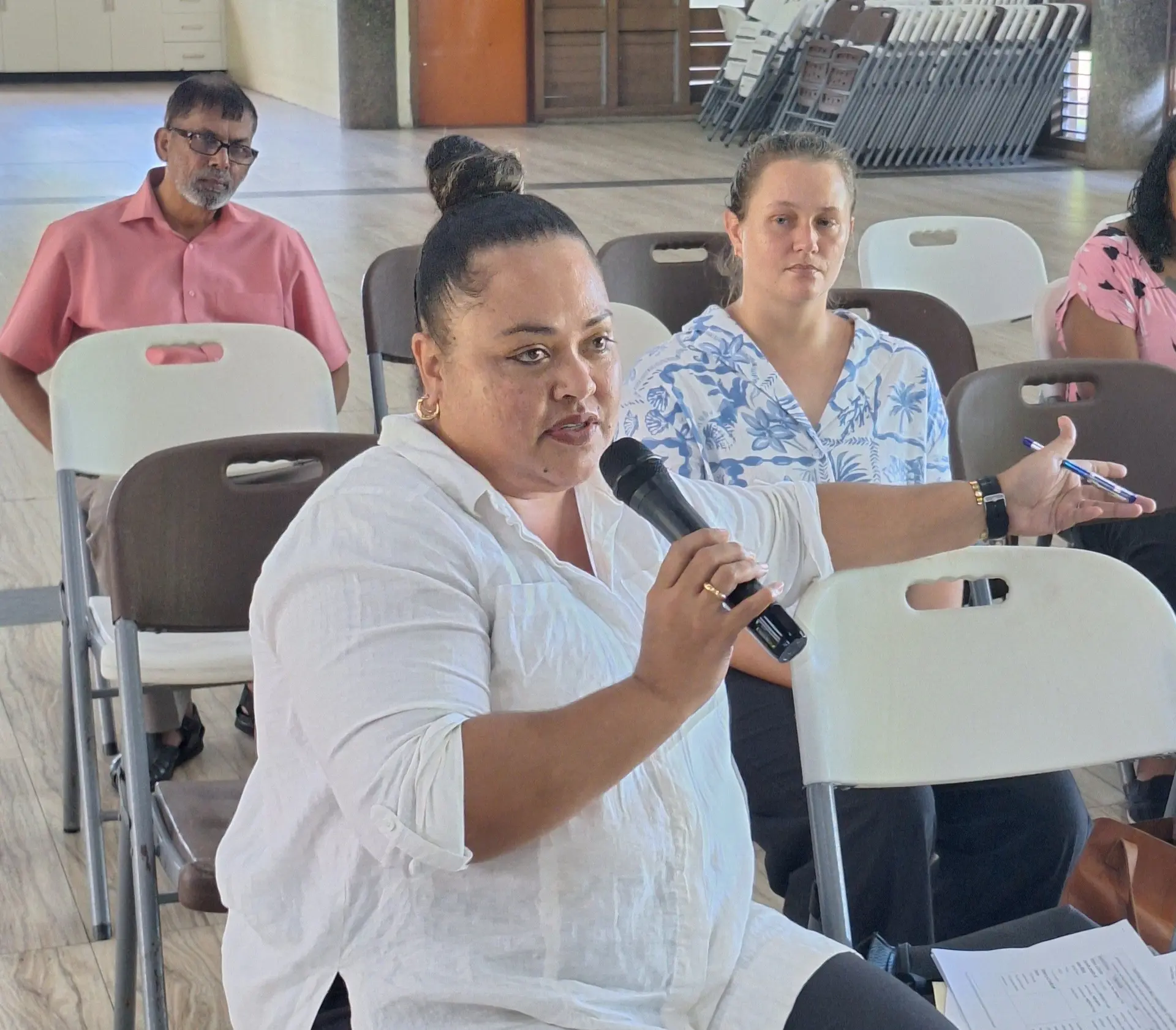
University of Fiji (UniFiji) legal officer Natalie Raikadroka at the Draft Counter-Narcotics Law consultation at the Lautoka.
Photo: Katherine Naidu
Fiji should establish a dedicated drug court and strengthen efforts to seize criminal assets to tackle narcotics-related crime, a public consultation has heard.
The recommendation was made during a consultation on the draft Counter-Narcotics Law at the Girmit Centre in Lautoka yesterday.
University of Fiji (UniFiji) legal officer Natalie Raikadroka said a specialised drug court would promote consistency in sentencing and improve rehabilitation oversight for offenders.
Related stories
“It is important to create a separate court to deal with drug offences in particular,” Ms Raikadroka said.
She suggested that the court could operate under clear sentencing guidelines, similar to the domestic violence framework, allowing judges to order rehabilitation alongside custodial sentences.
“The court can make specific orders for rehabilitation and obtain reports, whether clinical or community-based, to monitor progress. It would be beneficial, most definitely, for counter-narcotics efforts,” she said.
On asset forfeiture, Ms Raikadroka said criminal forfeiture based on conviction was legally sound.
“My bias, from a criminal defence perspective, would be to follow criminal forfeiture procedures based on conviction,” she said. “Once proven in court, it makes sense to confiscate property linked to drug dealing.”
She added that civil forfeiture and unexplained wealth models, as used in Australia, could also be considered.
Girmit Centre manager and former law enforcement officer Selwa Nandan also supported the creation of a special drug court, citing inconsistencies in sentencing for drug offenders.
“I have seen so much inconsistency in judgments for drug offenders. A special court would bring consistency,” he said.
Mr Nandan noted that proceeds-of-crime investigations were complex and required specialised expertise.
“It’s a very complicated investigation. Police officers have not been trained to handle that kind of high-level, sophisticated investigation. There should be a special unit within the Police Force, properly trained,” he said.