Fisheries research station earmarked on buyback land
Nasavanivonu landowners eye long‑term income as Government facility proposed for 10‑acre site.
Friday 27 February 2026 | 12:00
Updated 27 February 2026 | 15:48 FJT

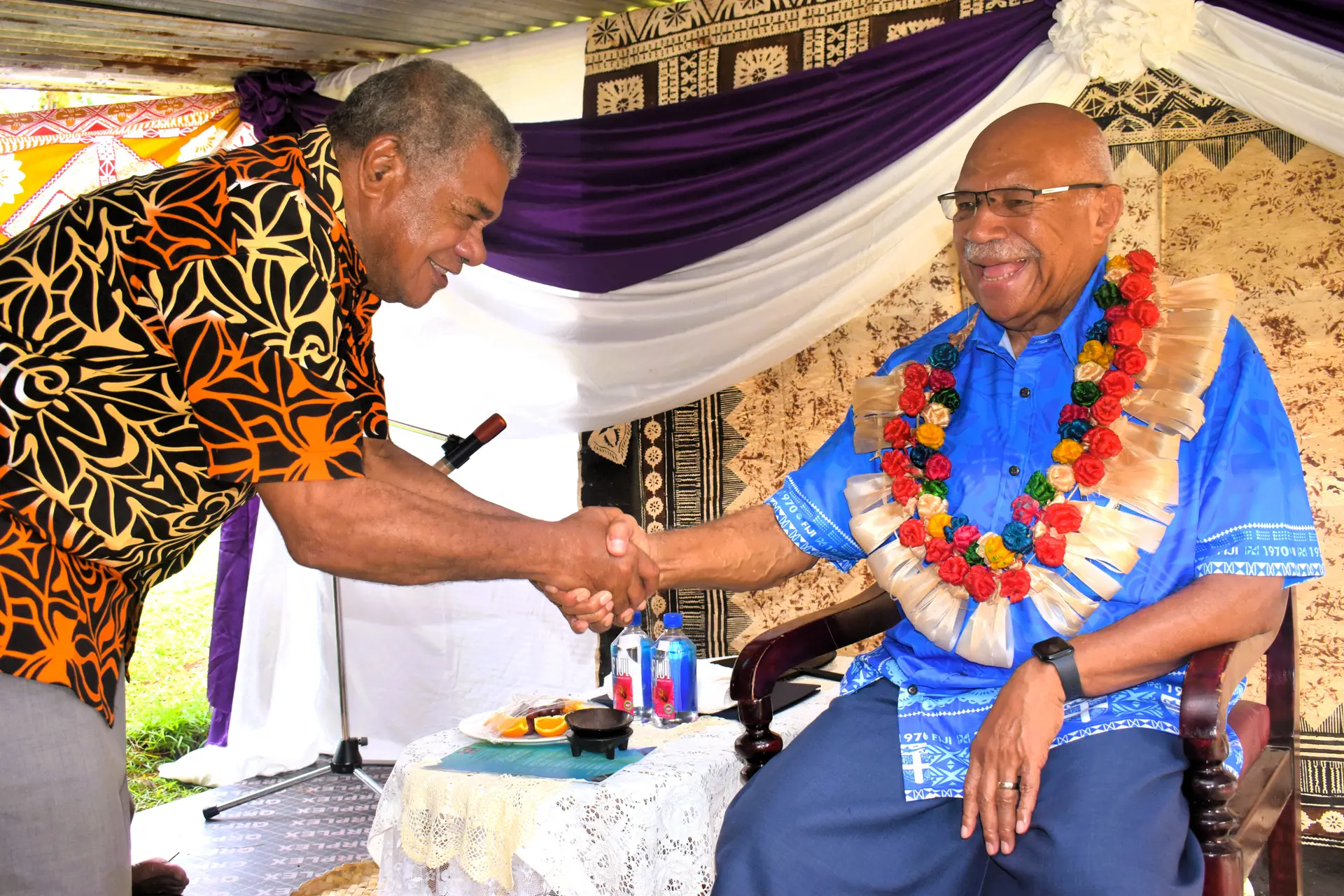
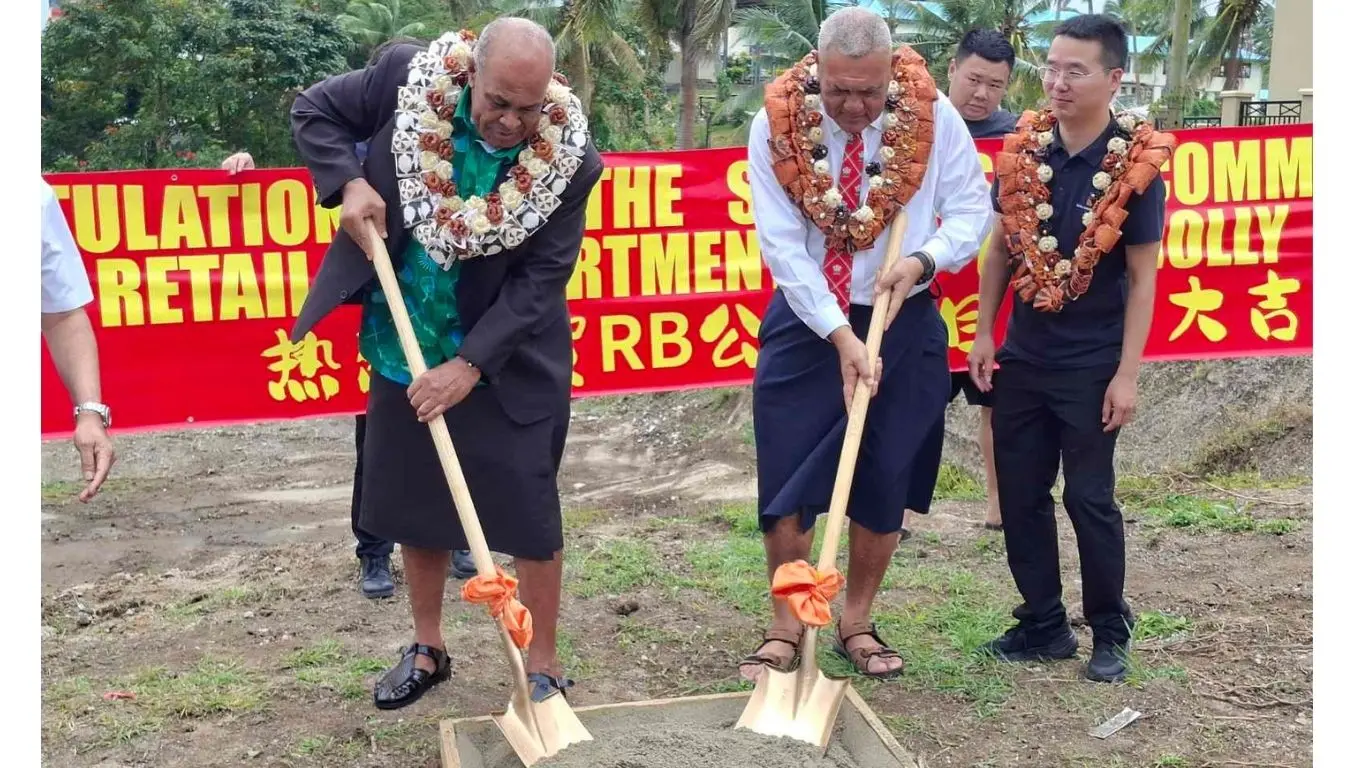
Prime Minister Sitiveni Rabuka greets a member of the Mataqali of Nasavanivonu in Matakunea, Cakaudrove on February 26, 2026.
Photo: Sampras Anand
The landowning unit (mataqali) of Nasavanivonu in Matakunea, Cakaudrove, plans to lease part of its newly acquired land to Government for the proposed construction of a fisheries research station.
The mataqali recently secured ownership of 56 acres of freehold land through the Government’s land buyback scheme, with the vision of using the property for income-generating opportunities.
Prime Minister Sitiveni Rabuka officially handed over the land title to the mataqali today, highlighting a strong collaboration between Government and the vanua.
Related stories
Head spokesperson of the landowning unit, Api Naitini, said the land was purchased for $140,000 — a sum the mataqali managed to repay over 28 years under a 30-year payment arrangement.
“I am delighted with this land acquisition because it gives us opportunities to grow, especially with more land now available,” he said.
Mr Naitini acknowledged Government’s interest in establishing a fisheries research station on the land, noting that this would provide a steady source of income through annual rent and premium payments.
He confirmed that 10 acres would be allocated for the proposed Government facility, while the remaining land would be used for other development and income-generating projects.
Minister for Lands and Mineral Resources Filimone Vosarogo commended the mataqali for its resilience and commitment in successfully clearing the payment.
He described the 56-acre property as a prime asset that would bring long-term economic benefits to the landowning unit.
“This acquisition opens up opportunities for resource development that the mataqali had been deprived of for many years,” Mr Vosarogo said.
The mataqali began repayments in 1998 after the land had been earlier purchased by Government from a private freehold title holder in 1991.
“The mataqali repaid the $140,000 without interest. Once payment was completed, we ensured a smooth transfer of ownership from the director of Lands to the mataqali,” he said.
Developers and investors are now being invited to share ideas on suitable business models or collaborative development plans for the land.
Mr Naitini said while the mataqali now owns the freehold property, consultations would be held among members to determine the best long-term and sustainable use of the land.
Struggles and perseverance
Perseverance remained the driving force behind the mataqali’s journey, Mr Naitini said.
For nearly three decades, every effort counted toward turning their dream of land ownership into reality.
“We brought our mataqali members together because we were determined to acquire this land,” he said.
Funds were raised through farming activities, including planting and harvesting dalo, copra, cassava and yaqona.
Each year was treated as crucial in meeting repayment commitments.
“We sacrificed many of our wants to ensure that future generations would have land to prosper and grow,” he added.