From war captivity to Rabi: A Banaban elder’s story
Banaban elder Tute Louis Tetiarahi, who arrived on Rabi Island as a nine-month-old in 1945, reflects on war, loss and survival as the community marks 80 years in Fiji.
Wednesday 17 December 2025 | 06:00

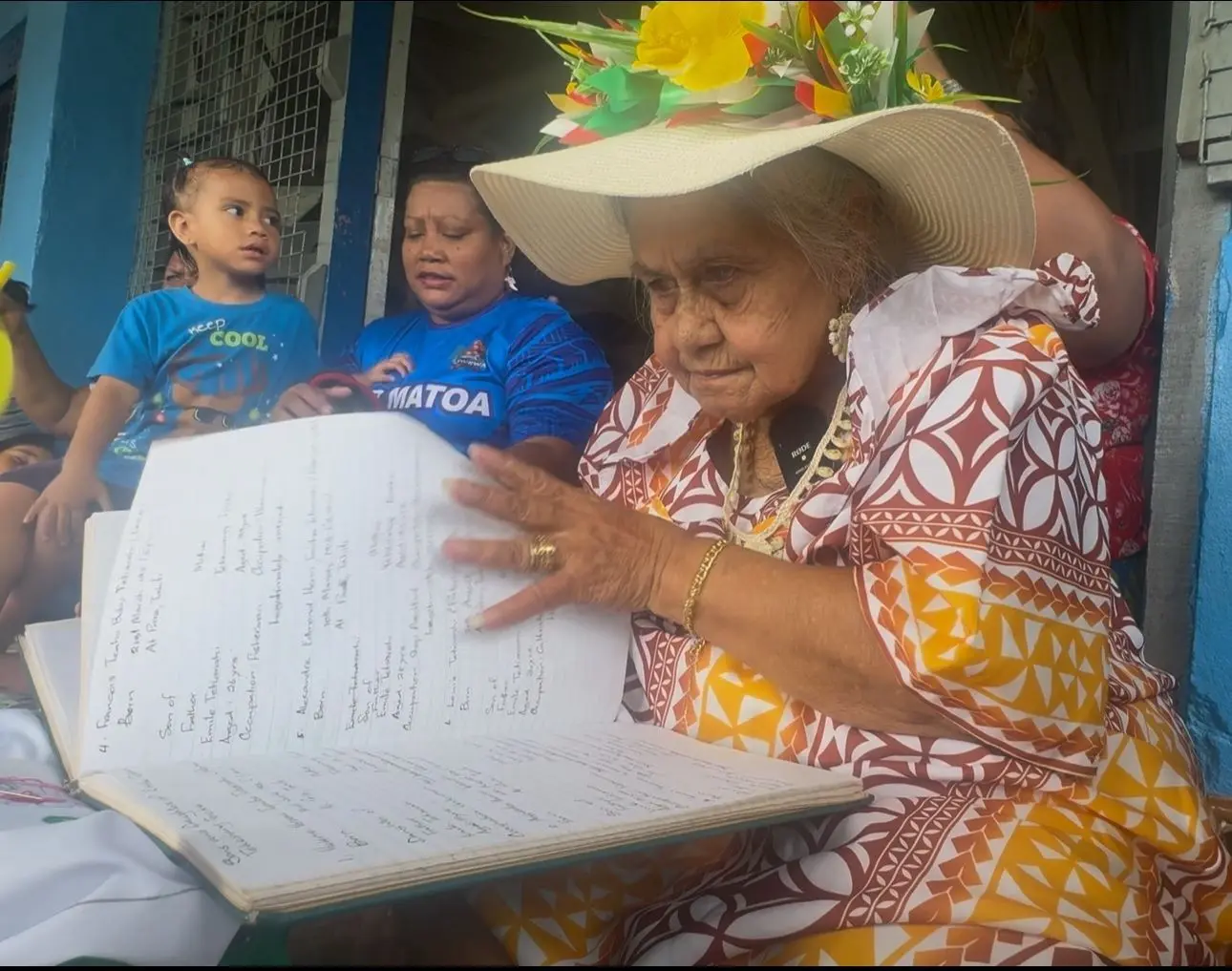
Banaban elder Tute Louis Tetiarahi goes through her family tree book during the 80th anniversary celebrations of the arrival of the Banaban on Rabi Island.
Photo: Kaneta Naimatau
Banaban elder Tute Louis Tetiarahi was only nine months old when she arrived on Rabi Island 80 years ago this week, but the stories her parents told shaped her life forever.
Born in March 1945 on Kosrae in the Caroline Islands where her parents were prisoners of war under Japanese occupation, Ms Tetiarahi was temporarily adopted by local Kosraeans and breastfed by another woman because her mother was too sickly and forced to work day and night.
"My mother was not healthy after giving birth, but she was forced to work," the 80-year-old retired teacher told the Fiji Sun during the community's 80th anniversary celebrations.
Related stories
"Because there was no one to look after me, I was adopted temporarily by people from Kosrae while my parents worked."
Her parents had been taken from Banaba (Ocean Island) by Japanese forces to Kosrae in 1942, where they became labourers working on potato farms.
"My father told me they worked day and night. The children picked worms from the potatoes and filled bottles with them," Ms Tetiarahi recalled.
The Banabans were relocated to Rabi Island on December 15, 1945, aboard the vessel Triona, arriving during cyclone season to find no houses waiting for them, despite British promises.
"It was cold and there were no houses. My father told me they built tents," she said.
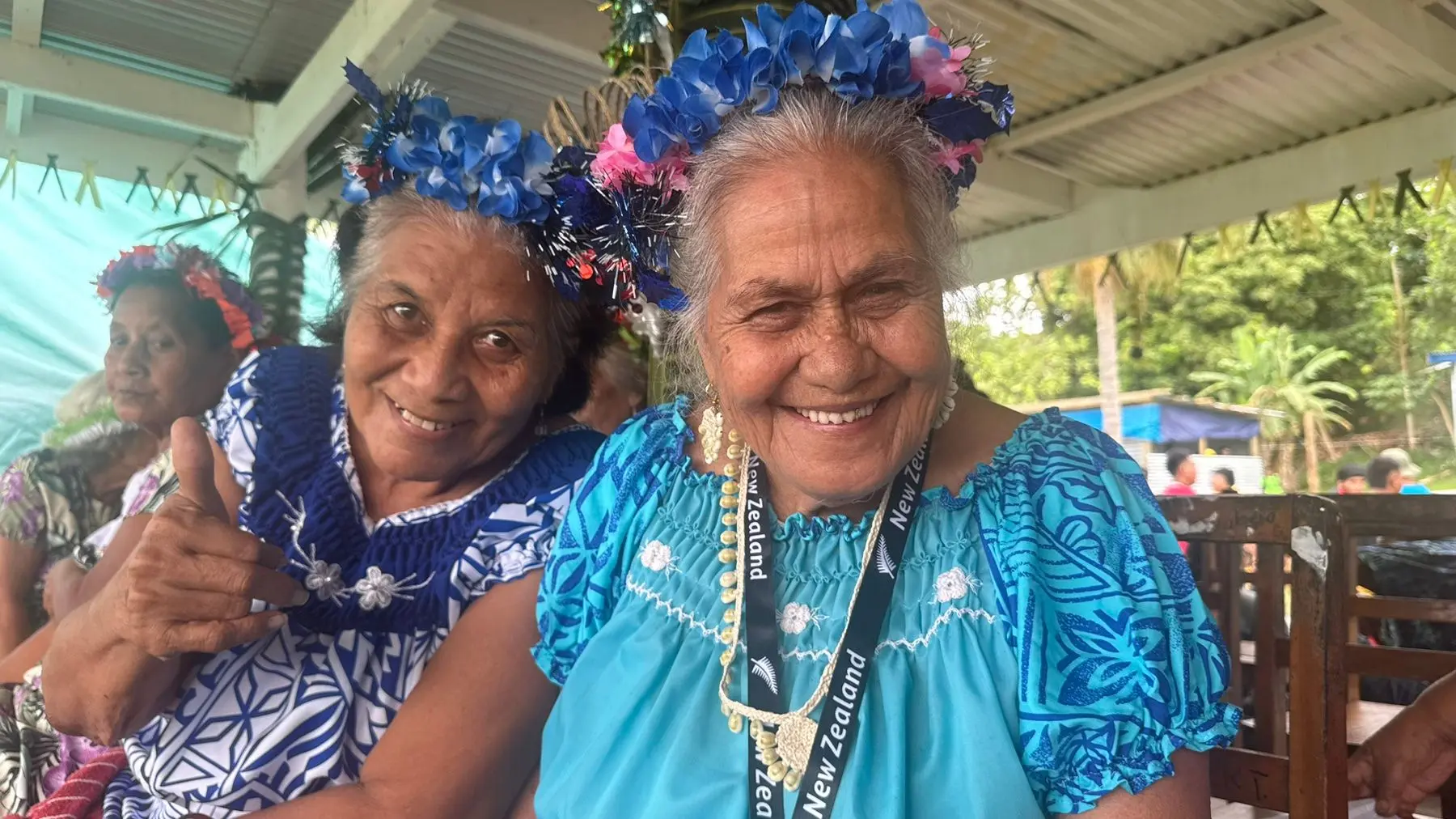
Tute Louis Tetiarahi (right) with her fellow Banaban elder during the 80th anniversary celebrations of the arrival of the Banabans on Rabi Island on December 15, 2025,
Photo: Kaneta Naimatau
"We babies slept on folded American war beds while our parents slept on mats and grass on the ground."
The ground had previously been used for cattle, with dried cow dung scattered throughout.
"Some people even pitched their tents and slept on it, not knowing what it was," Ms Tetiarahi said.
"My father cried whenever he told this story."
Tragedy struck when Ms Tetiarahi's mother passed away when she was about one year old.
"I do not remember her, and I do not have any pictures of her," she said.
Her father later remarried, and Ms Tetiarahi became the eldest of eight children.
In a forced marriage arrangement, her parents were told by Japanese soldiers to marry or be killed.
Ms Tetiarahi worked as a primary school teacher at Banaban Primary School from 1965 until her retirement in 2000, serving as headteacher from 1984.
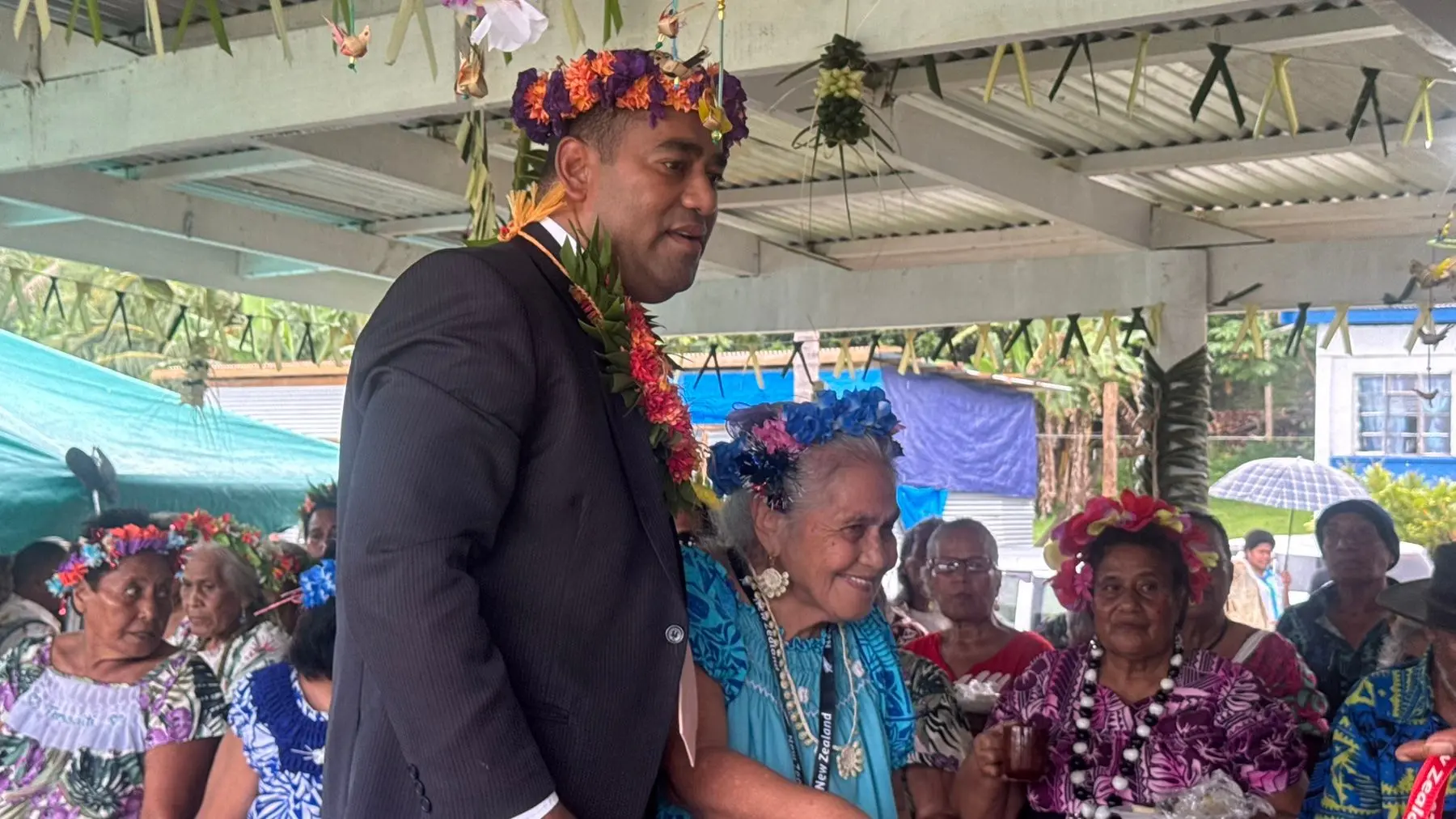
Tute Louis Tetiarahi with Minister for Lands and Mineral Resources Filimoni Vosarogo after receiving her 80th anniversary commemorative medal on December 15, 2025.
Photo: Kaneta Naimatau
Now with five children and 27 grandchildren, she received a commemorative medal during the 80th anniversary celebrations.
"I felt very happy but also sad," she said.
"I did not know if I would live to see this day."
Her message to Banaban youth focuses on obedience and preserving what their ancestors built.
"Our elders and ancestors built these things with love and suffering—churches, schools, hospitals, streetlights," Ms Tetiarahi said.
"Even if they are small, they must be taken care of so future generations can use them."
The Banabans were resettled from their phosphate-rich homeland after decades of British mining had devastated the island. They were later displaced by Japanese forces during World War II.
Some 703 Banabans, including 318 children, arrived on Rabi Island on December 15, 1945, after being collected from Japanese internment camps.
The island was purchased by the British government for £25,000 using the Banabans' own phosphate royalties.
"I am grateful for this interview and for the opportunity to share our story so that people from other nations can know what we went through," Ms Tetiarahi said.
"We are proud to call Fiji home. I am a naturalised citizen of Fiji."
Feedback: kaneta.naimatau@fijisun.com.fj