FRU tackles gender violence through new safeguarding drive
EU and UN Women urge sport organisations to create safer and more inclusive environments for women and girls.
Wednesday 25 November 2026 | 16:00

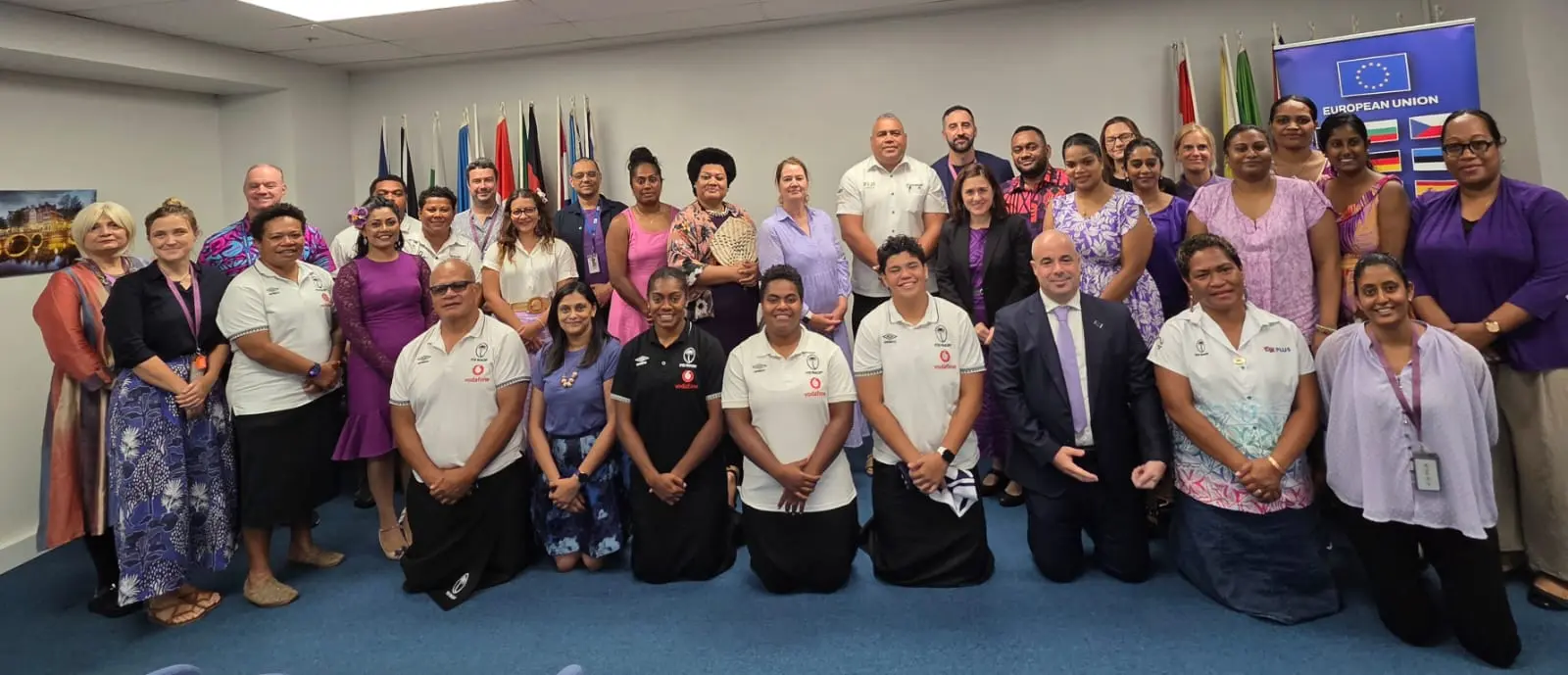
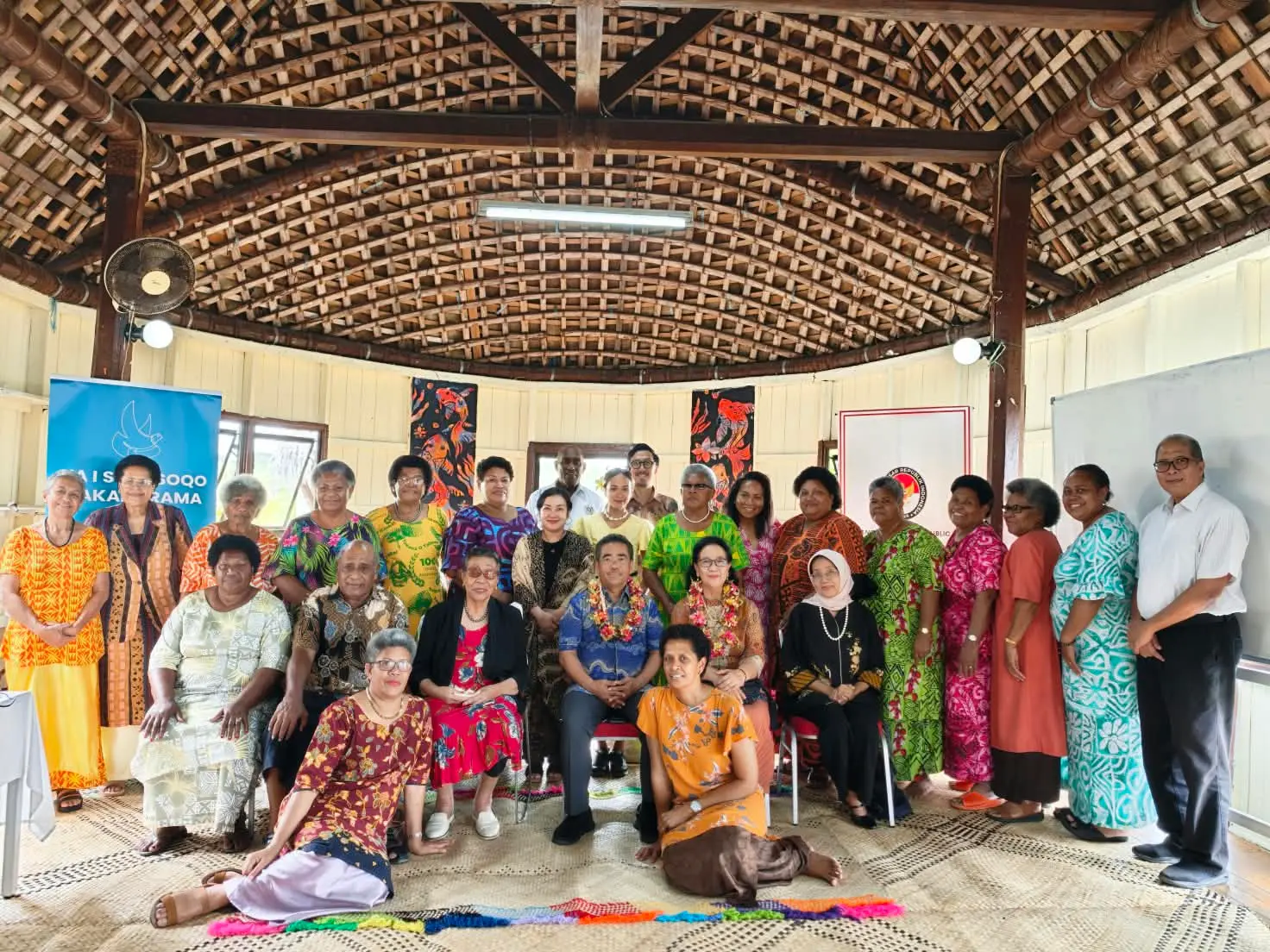
Representatives from the European Union and the Fiji Rugby Union.
Photo: Supplied
Sport, including rugby, is being used as a platform to challenge gender-based violence, shift attitudes and promote greater accountability, with Fiji Rugby strengthening its policies and structures to make the sport part of wider efforts to address violence against women and girls.
The European Union, in partnership with the Fiji Rugby Union (FRU), launched the 16 Days of Activism against Gender-Based Violence campaign with a special screening of the documentary Breaking Ground to mark the International Day for the Elimination of Violence against Women.
FRU chief executive officer Koli Sewabu said the sport had an important role to play beyond the field, with the organisation developing safeguarding, workplace harassment and gender-based violence policies as part of efforts to drive change.
Related stories
He said rugby was deeply rooted in communities across Fiji and could help address social challenges affecting young people and families.
“These are social issues affecting our youths, but rugby being in the centre of it, we felt like we can be a voice and a platform to address this,” Mr Sewabu said.
He said FRU had strengthened its policies to reflect the realities of the local environment, moving beyond measures designed simply to meet requirements.
Training would be mandatory for everyone involved in rugby, from board members to those working directly with women and children, as the organisation worked to strengthen awareness, safeguarding and accountability.
Mr Sewabu said FRU was also looking at increasing women’s representation in provincial structures, with plans for provincial executive committees to include at least one or two women to ensure women’s rugby had a voice in decision-making.
He said that while challenges remained, the organisation was committed to building structures that would support the growth of women’s rugby and help address barriers to participation.
Deputy Head of Delegation of the European Union to the Pacific Nereo Peñalver García said sport could help challenge stereotypes and create opportunities for women and girls, but addressing gender inequality required more than celebrating individual achievements.
“It requires creating an enabling environment in which women and girls can participate, progress and lead on equal terms,” he said.
Mr García said violence against women and girls remained a barrier to gender equality and participation in social, economic and public life.
UN Women Fiji Multi-Country Office representative Alison Davidian said sport could help challenge harmful messages about gender, power and authority, particularly among young people.
She said programmes that incorporated conversations about respect, power and accountability into sport were important in shaping attitudes and behaviour.
However, she cautioned that sport was not automatically a safe space for women, with discrimination and harassment still possible.
“So, we can’t celebrate women’s participation without also creating the conditions for them also to be safe,” Ms Davidian said.
The 16 Days of Activism campaign ends on December 10.