Gas valve repair suspected in Suva restaurant fire: Preliminary report
Investigation focuses on possible gas leak during maintenance as authorities warn of high-risk LPG hazards.
Wednesday 06 May 2026 | 15:00
Updated 06 May 2026 | 17:00 FJT

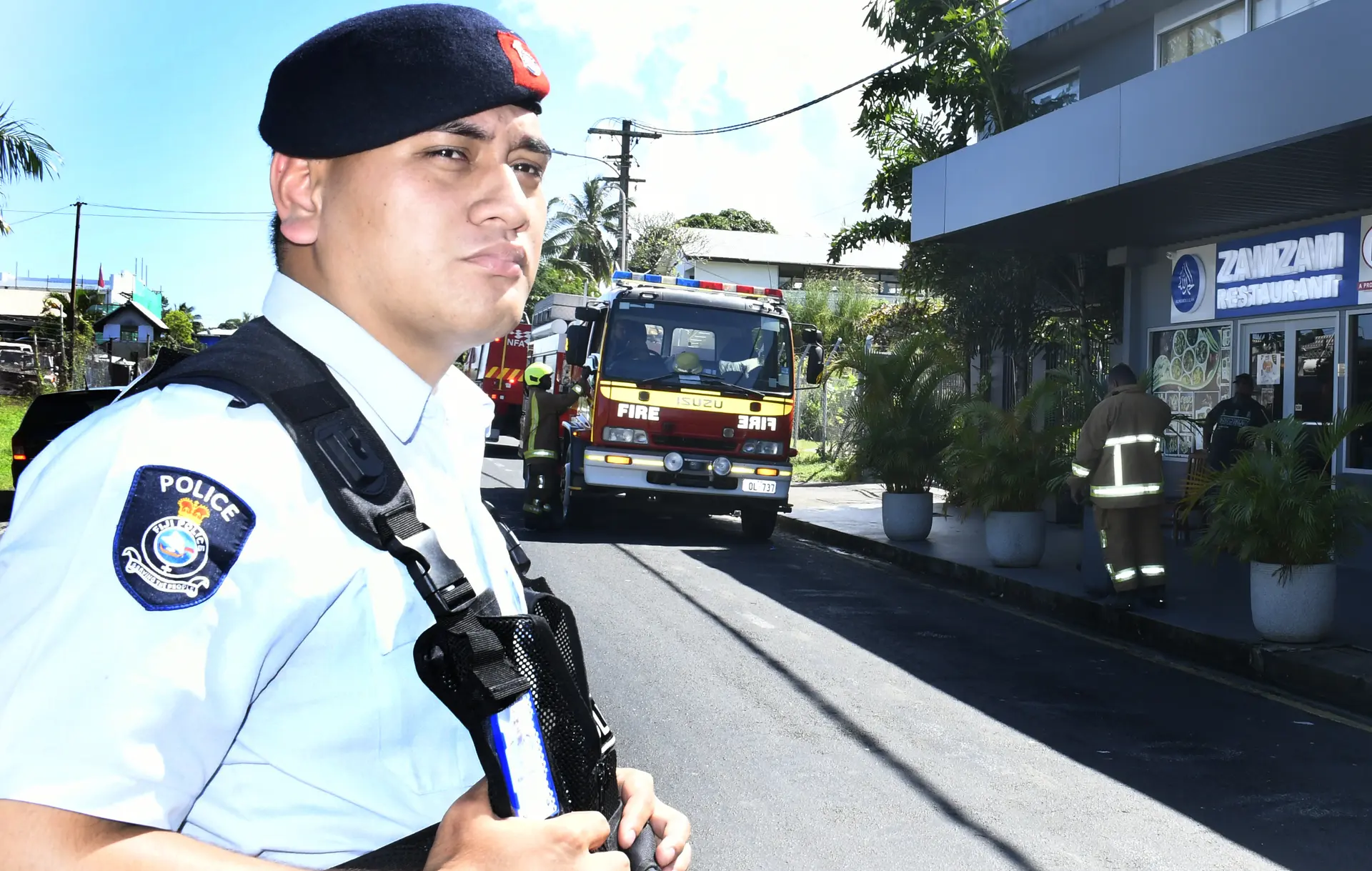
A police officer stands guard in Samabula on May 5, 2026, as National Fire Authority crews attend to a fire at the popular Zamzam Restaurant.
Photo: Ronald Kumar
Preliminary findings indicate a fire at Zam Zam Restaurant in Samabula, Suva, may have ignited while a technician was repairing a gas line valve.
This has raised concerns about safety practices during the maintenance of liquefied petroleum gas (LPG) systems.
The fast-moving fire yesterday left five people injured and prompted urgent safety warnings from National Fire Authority of Fiji (NFA) chief executive Puamau Sowane.
Related stories
Mr Sowane said the NFA received a distress call at 11:39am via the 910 emergency line, reporting a gas cylinder on fire at the restaurant.
Fire crews from Suva responded within one minute and arrived on the scene at 11:45am, just five minutes after dispatch.
Firefighters quickly deployed hose lines from the F77 appliance and extinguished the blaze by 11:52am, successfully shutting off the cylinder valve. The fire was contained in seven minutes.
Despite the swift response, five people, two women and three men, sustained injuries.
Several victims, including a 22-year-old man, suffered severe burns and were transported to hospital by NFA ambulance teams.
Mr Sowane warned that while gas-related fires were not the leading cause of incidents in Fiji, they remain among the most dangerous and destructive.
In 2025, Fiji recorded 186 property fires, with electrical faults, unattended cooking, and arson ranking as the top causes.
However, gas leaks often undetected continue to pose a “high-risk but preventable” threat, particularly when ignition occurs in enclosed or poorly ventilated spaces.
He pointed to past incidents, including a major 2020 blaze at Suva’s flea market linked to a leaking gas valve, and a 2022 house fire in Vatuwaqa that destroyed a three-bedroom home within minutes after a stove was lit in a gas-filled room.
Similar cases across the Suva corridor have involved faulty regulators and worn-out cylinder valves triggering flash fires during cooking.
In light of the latest incident, the NFA is urging both businesses and households to strengthen preventive measures.
Key recommendations include storing gas cylinders outdoors in well-ventilated areas, routinely checking for leaks using soapy water, and ensuring valves are turned off when not in use.
Regular replacement of hoses and regulators is also critical, particularly in Fiji’s humid climate where equipment can degrade quickly.
Mr Sowane stressed that panic during gas fires can worsen situations, advising that flames can often be controlled by safely shutting off the valve or smothering the fire to cut off oxygen—if it is safe to do so.
He reiterated that commercial kitchens must strictly comply with national fire safety laws, including proper LPG storage, certified installations, adequate ventilation, and accessible fire extinguishers.
Regular inspections and staff training are mandatory under Fiji’s fire safety regulations.
“This incident is a reminder that fire safety must be treated as a priority at all times—both at home and in the workplace,” Mr Sowane said.
“Following basic safety practices can save lives and prevent devastating losses.”
Meanwhile, police say a joint investigation into the cause of the fire is underway with the NFA.