Breaking barriers: Halofaki soars in aviation engineering
After attending Gospel Primary School and Alfriston College in Auckland, New Zealand, she returned to Fiji to study at the University of the South Pacific.
Sunday 12 July 2026 | 16:00

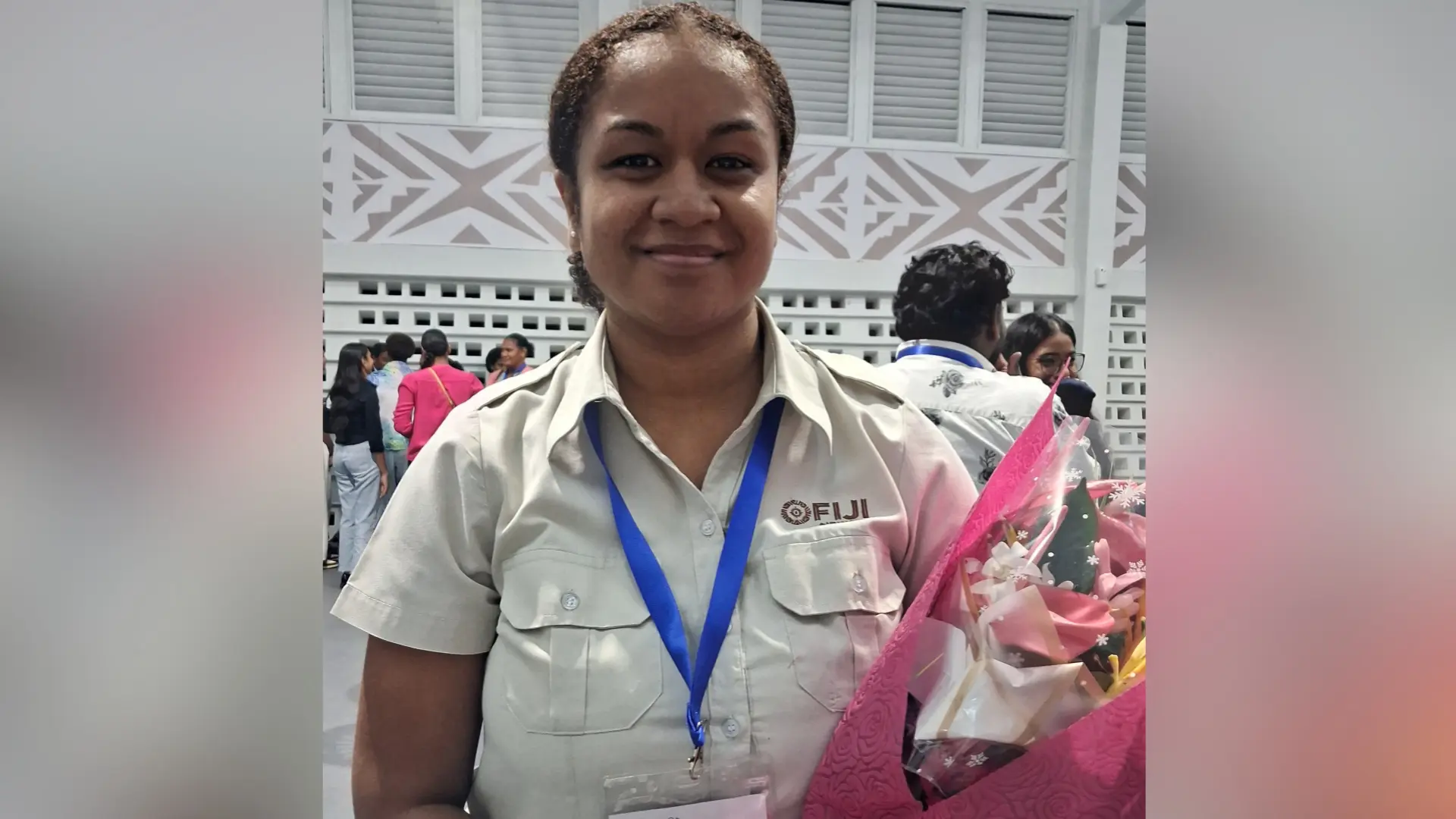
Silipa Halofaki has experience spanning aircraft reliability engineering, maintenance programme support, technical investigations, and fleet performance analysis across Airbus, Boeing, and ATR aircraft.
Every Fiji Airways flight begins long before passengers board. Behind the scenes, a team of engineers works quietly to ensure every aircraft is safe, reliable and ready to fly.
Among them is 27-year-old Silipa Halofaki, whose journey from engineering trainee to Aircraft Reliability Engineer has seen her become one of Fiji's emerging aviation professionals in just a few years.
Originally from Fulaga, Lau, with maternal links to Kadavu, Ms Halofaki now oversees fleet reliability activities for the Fiji Airways Group, helping keep aircraft operating safely and efficiently.
Related stories
Her role within the airline's Continuing Airworthiness Management Organisation (CAMO) involves monitoring aircraft performance, identifying reliability trends, investigating technical delays and supporting maintenance programmes across Fiji Airways' Airbus, Boeing, ATR and DHC6 fleets.
It is a position carrying significant responsibility, but one she has earned through determination, study and perseverance.
After attending Gospel Primary School and Alfriston College in Auckland, New Zealand, she returned to Fiji to study at the University of the South Pacific.
She first gained industry experience as an engineering intern with Pacific Engineering Projects before joining Fiji Airways as an engineer trainee in December 2023.
Since then, she has progressed rapidly through the airline's engineering programmes, contributing to aircraft maintenance planning, fleet reliability projects and technical investigations.
In 2024, she graduated with a Bachelor of Engineering (Mechanical) from the University of the South Pacific. Her degree is accredited under the Washington Accord, and during her studies she published a conference paper on agile manufacturing. She is also a Graduate Member of Engineers Australia.
In May this year, she was appointed to oversee fleet reliability activities across the Fiji Airways Group.
Despite her success, the journey has not always been easy.
You have recently graduated. Was it everything you expected?
"As a young graduate, one of the biggest warnings we received at university was about the gender imbalance in the industry. When I entered the workforce, that was the main issue on my mind. It was something I was constantly aware of.
"What I wasn't prepared for, however, was the age gap. You're not just working with young men. You're also working with older men who have spent years in the industry. They know the ropes; they've tied the ropes and, in some cases, they helped build the industry.
"As a young graduate, and especially as a young woman, it can be difficult to have fresh ideas heard and accepted by people who have been in the industry for so long."
Having entered the workforce, how is that transition going?
"I really struggled during my first few years as a trainee. But I'm grateful I had mentors, both men and women at Fiji Airways.
"I'm especially thankful to the managers and supervisors who were willing to support me and help me grow.
"At the moment, I'm the only woman in my department. I work in Technical Services, so I don't work directly on aircraft. I don't get my hands greasy or dirty.
"I graduated from the University of the South Pacific and my role is on the engineering support side. I focus on reliability monitoring, ensuring the aircraft are reliable and safe to fly.
"I'm grateful that the men I work with are supportive, encouraging and willing to share their knowledge. They've helped me grow in a field where there are very few women."
What are some of the skills that have been valuable to you so far as an engineer?
"Making informed decisions on the spot is one of the most important skills an engineer can have.
"Every decision you make has consequences. Whether the answer is yes or no, every choice comes with a cost. That's why every decision should be made with a clear understanding of whether you're prepared to accept the outcome.
"The only way to make an informed decision is to do your research, gather all the relevant data and fully understand the situation before taking the next step.
"For me, that's one of the most important qualities an engineer should have."
What's one piece of advice you would give to students who are currently studying engineering?
"There really shouldn't be a reason why you wouldn't at least give it a try.
"I originally studied physics and mathematics at the University of the South Pacific, where I completed a Bachelor of Physics and Mathematics.
"About two years into the programme, I realised it wasn't for me. That's when I decided to cross-credit into engineering.
"Engineering is essentially applied to physics. It is built on physics and mathematics, but it also allows you to apply those concepts to real-life problems."
Why engineering? Does it make a difference as a profession?
"One of the most rewarding parts of engineering is knowing that what you do has a real impact on people, communities, and everyday life.
"To have a career where you can make a difference in society and in your community is something you can't put a price on.
"It can be a daunting world, especially for women entering a traditionally male-dominated field. But if this is the path you've chosen, stay committed and see it through.
"I want to encourage young girls to give it a chance because, at the end of the day, no matter how small my role may seem, I know it makes a difference. Even a small contribution can go a long way.
"To all the girls considering a career in engineering, don't be afraid to reach out. I'd be more than happy to share my experience, offer guidance, and support you as you explore where the journey might take you."