Naitasiri communities warned of increased shark activity
Minister for Fisheries Alitia Bainivalu issued the public advisory following a recent shark incident in Naitasiri in which a man was injured.
Tuesday 24 November 2026 | 11:30
Updated 24 November 2026 | 13:54 FJT

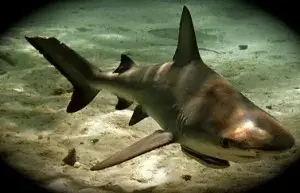
Bull Shark that has been identified by the Ministry of Fisheries that can go through freshwater river.
Photo: Supplied
Communities living along rivers in Naitasiri have been warned to exercise extra caution when swimming, fishing and bathing as bull sharks move into freshwater systems during their breeding season.
Minister for Fisheries Alitia Bainivalu issued the public advisory following a recent shark incident in Naitasiri in which a man was injured.
Adult female bull sharks typically move from coastal reefs into Fiji's river systems between December and February to give birth, with shark activity potentially increasing between November and March.
Related stories
Ms Bainivalu said communities along the Wainimala and Waidina rivers should remain particularly vigilant.
“This is a natural seasonal occurrence. Bull sharks are among the few shark species capable of surviving in both saltwater and freshwater. They can travel dozens of kilometres upstream, with verified captures recorded as far inland as Vunidawa in the Wainimala River.”
She said investigations into the recent incident in Naitasiri were continuing and urged members of the public not to speculate about the circumstances.
Rivers serve as shark nursery grounds
Research conducted by the University of the South Pacific (USP) between 2016 and 2018 recorded 172 sharks across the Rewa, Navua and Sigatoka rivers.
More than 74 per cent of the sharks recorded were newborn sharks with open umbilical scars, with most caught during the summer months.
Newborn bull sharks measured between 61 and 95 centimetres.
Research by the Fiji Shark Lab and USP also tracked pregnant female bull sharks travelling from the Shark Reef Marine Reserve in Beqa Lagoon to the Rewa River to give birth.
Ms Bainivalu said the research showed that the Rewa River system, including its tributaries in Naitasiri, provided important nursery grounds for young sharks.
Safety precautions
The Minister urged residents of Vunidawa and communities along the Wainimala, Waidina and other connected river systems to observe the following precautions:
- Avoid swimming or standing in muddy and low-visibility water.
- Exercise extra caution after heavy rainfall and flooding.
- Avoid wading waist-deep near river mouths and deep river bends.
- Do not swim near areas where fish are being cleaned or fish waste is discarded.
- Avoid swimming near fishing nets, as struggling fish and blood can attract sharks.
- Parents must closely supervise children near river mouths, estuaries and tidal sections of rivers.
- Report unusual shark sightings to the Ministry of Fisheries to assist with monitoring.
Ms Bainivalu also urged fishers to avoid setting gill nets across river channels because they could trap and kill newborn sharks.
Awareness, not fear
The Minister stressed that shark attacks remained extremely rare and that sharks played an important role in maintaining healthy river, estuarine and coastal ecosystems.
“Our message is not intended to create fear among communities. It is about awareness, precaution and protecting lives.”
Ms Bainivalu encouraged village leaders, Turaga-ni-Koro, provincial representatives and community organisations in Naitasiri to share the advisory widely.
The Ministry of Fisheries will continue monitoring shark reports and working with USP, the Fiji Shark Lab and other relevant partners to improve public awareness and understanding of shark behaviour.