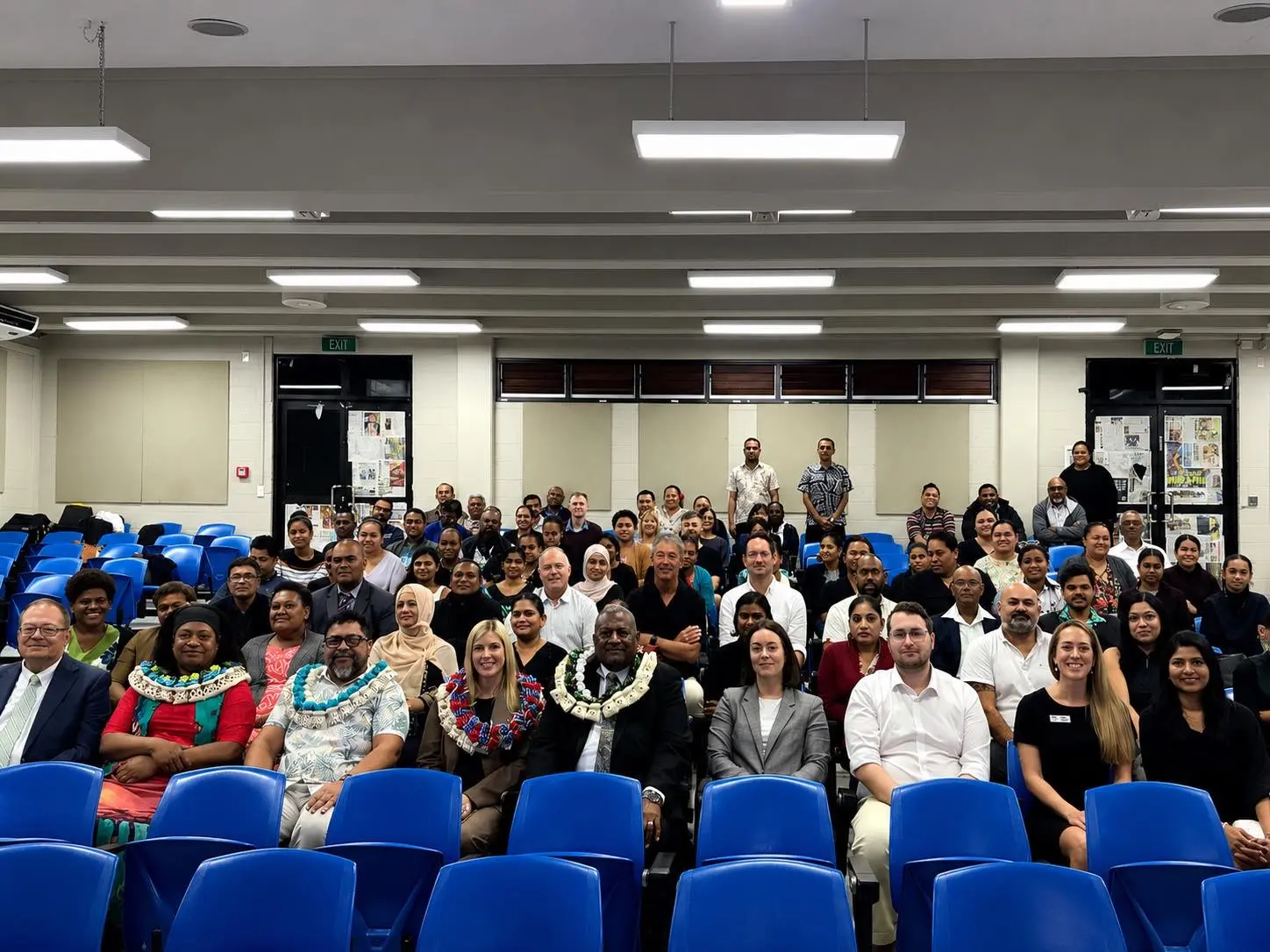
University of the South Pacific’s Response To COVID-19 Pandemic For Learning and Teaching
The University had to also take a decision to cancel the Medal and Prizes Ceremony as well as the March Graduation at Laucala campuses. While these two important events were cancelled students were given the certificates, diplomas and degree, with the option that they can formally take part in September 2020 graduation.
Monday 08 June 2020 | 14:33
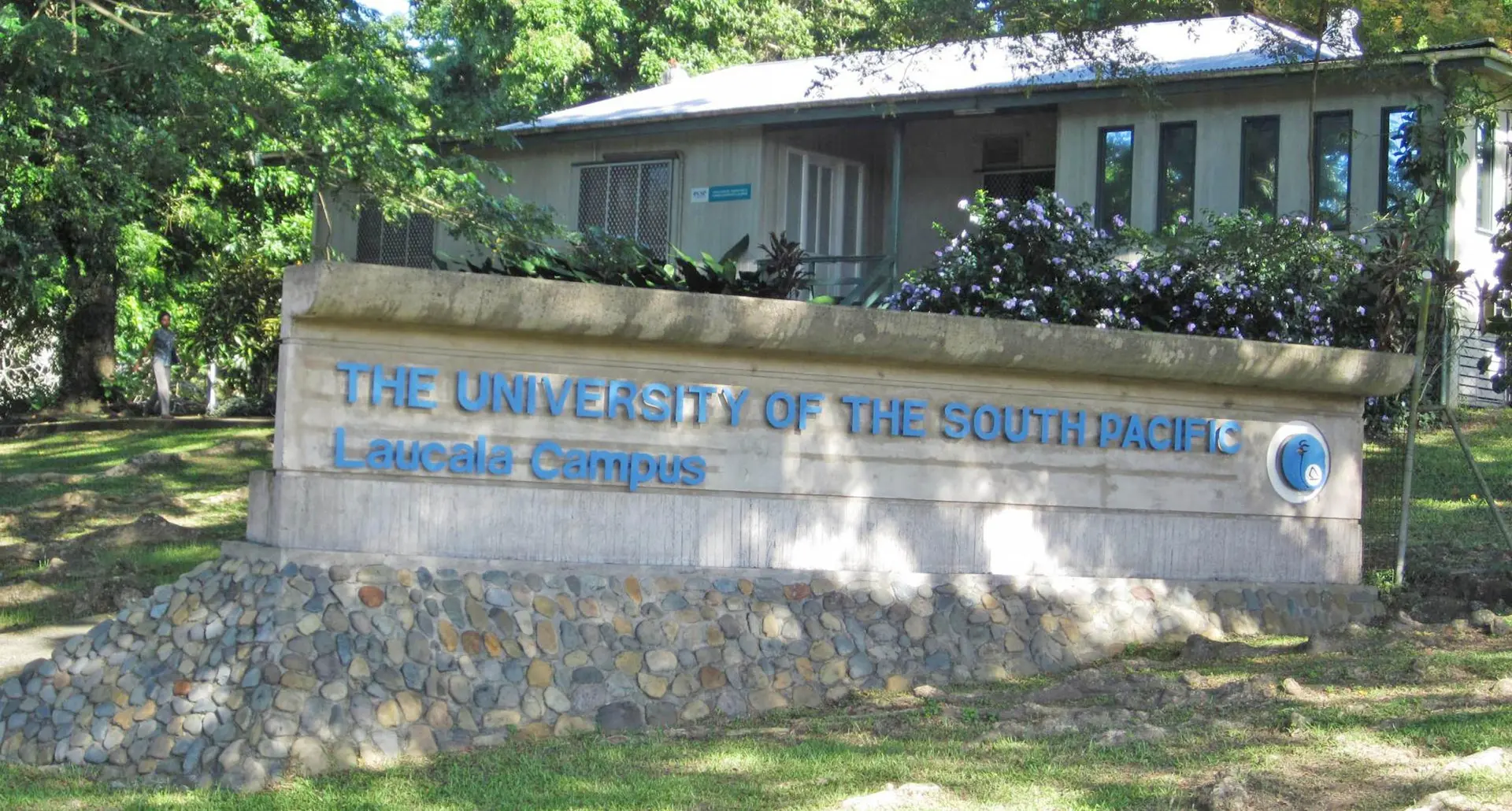
The University of the South Pacific (USP) resumed its classes remotely on April 20 due to COVID-19 Pandemic. From the time of remote teaching, USP has taken a number of effective actions to deliver students their education successfully. Nearly 95% of all USP’s Semester 1 courses are now being delivered remotely via the online Moodle learning and teaching platform.
Critical Actions taken by USP
Prior to the first case of COVID-19 announced in Fiji on 19 March, USP took precautions and released its COVID-19 Pandemic Management Plan 2020 on 12 March 2020. The same day WHO officially declared COVID-19 a global pandemic. The plan outlines the various response measures of the University based on prevailing conditions at the campuses and outlines the roles of those involved in implementing key response activities.
Related stories
The University had to also take a decision to cancel the Medal and Prizes Ceremony as well as the March Graduation at Laucala campuses. While these two important events were cancelled students were given the certificates, diplomas and degree, with the option that they can formally take part in September 2020 graduation.
The Mid Semester break was extended till April 20 due to lockdown and student were allowed to go back to their country. For the safety of the USP students, all recreational facilities including the gym, swimming pool and playgrounds at Laucala Campus are closed until further notice. All meetings for USP, comprising of more than twenty people is being conducted via Zoom. The security guards have been checking all incoming visitors at the end points in the campus with the Thermometer Guns.
Challenges for USP
A major challenge has been to ensure that the courses which are designed to be taught face-to-face are converted appropriately so that these can be delivered remotely. Fortunately, with USP’s time-tested experience in flexible learning and teaching since 1970, the University was able to convert, within a short period, 253 face-to-face courses, to online modes, whilst meeting the required minimal standard of online learning and teaching delivery.
USP has had a very long history in flexible learning and teaching, which include delivering purely online courses. The University’s Centre for Flexible Learning (CFL) is fully devoted to the professional development of online courses. CFL was even more engaged in supporting interactions between the teaching staff and the students and is monitoring daily student participation levels. Virtual tutorials and lab sessions are replacing face-to-face discussions including mentoring sessions and lab activities.
Actions undertaken for students’ education remotely
All faculties and Pacific TAFE have been disseminating key information regarding courses through social media, webpage, Tukutuku mail, and media outlets. The Vice Chancellor and President has also been disseminating important information to the students through his monthly and special vlogs. Course Coordinators are devoting additional time to answer students’ queries, whether by live chat, phone, or email. CFL ran a series of online workshops to give guidance to students on how to achieve highly in online learning and other sections of the University (such as the library, the Disability Resource Centre and the Counselling Centre) continued to offer their services.
Under the guidance of the Acting DVC Education, Professor Jito Vanualailai, the Learning and Teaching (L&T) Continuity Team monitors and reports on weekly online participation of students and staff, and intervene as needed. The team also worked towards students’ education engagement and the quality of USP’s studies transmitted remotely. The team has been working with the Course Coordinators whose courses were yet to reach 80% readiness; Re-installed the SMS capability in Moodle, so that the University can immediately have access to all the students via Moodle SMS. The team developed a short questionnaire on whether students have sufficient resources to access the online materials.
The University introduced a Call-free number, 1568 for all Fiji carriers from any Digicel, Vodafone or Telecom Fiji phone from 15 May, 2020. The students were made aware that they could re-join classes via Moodle, and were being provided help by our Call Centre team on the spot. The Call-free service has been solely developed for students to easily access information, including enquiries regarding Semester 2. The USP Call Centre is operational on Monday-Friday from 8am-8pm and on Saturday from 11am-4pm. Negotiations are ongoing to have the same initiative operational in other member countries.
USP has opened all the Campuses, region-wide, from 8am to at 8pm, Monday to Friday and 8am to 5pm on Saturday. Important facilities are open to facilitate online learning and teaching. These include the computer labs and the libraries. These facilities have incorporated appropriate COVID-19 restrictions such as social distancing and other requirements of member Governments.
Laucala Campus computer spaces are adapted to observe social distancing provisions. Computer labs that used to have forty computers were halved to observe COVID-19 protocols and to ensure students have adequate space to study and access their courses. All computer labs are dedicated to students and some include sitting space to accommodate students using Wi-Fi hotspots. Five (5) computer labs (ITS3, ITS4, ITS5, ITS8 and 9) are open until 8pm to cater for working students. Sixty computers (60) have been relocated to the USP gym due to available space and proximity of handwashing stations. These spaces and facilities are being widely used by students.
USP also took the initiative to make available 700 tablets to its students who do not have access to learning tools from home. From the initial set of data USP received, about 89% of the students have some electronic equipment or gadget such as Laptop/PC, Tablet, or Smart Phone. Approximately half of the tablets were distributed among the Fiji campuses (Laucala, Lautoka and Labasa). The distribution is managed by the USP Library at these campuses. The distribution ensures everyone has a fair chance to education and equal learning experience.
Accessing important USP internet sites and Moodle are free for students in Fiji, Samoa, Cook Islands, Niue and Vanuatu on either Digicel and/ or Vodafone network. USP is pursuing this initiative with internet providers in other member countries as well.
If students cannot submit assessment materials online, then they can submit hardcopies at their respective Campus or at a central repository if students cannot access their Campus. Lecturers and tutors have been flexible with due dates of assignments. The University has also extended the deadline for payment of fee to the end of the semester.
Number of Students Withdrawal due to challenges faced through Remote Teaching
Due to the current circumstances, as of Sunday 31st May 2020, 861 students have withdrawn from 1,332 courses. This is equivalent to 3.2% of Semester 1 students withdrew from 1.84% of course. There are also students who have not logged in Moodle from the time COVID-19 started due to various reasons. These number are still being finalised. The University is making every effort to encourage students to connect remotely. The course coordinators have reached out to these students as well.
Change of Grading System
Whilst the University is confident that our staff and students will be able to adapt to fully remote teaching, it is cognizant that some students will find such learning challenging. If a student fails a course in Semester 1 2020, neither the course nor the grade will appear on the student’s transcript, nor will the grade affect their GPA. To pass a course, students will need to demonstrate, via their performance, that they have met the learning outcomes of the course. This will differ for each course and students are requested to check with their respective Course Coordinators. A Fail grade means that you have not successfully completed a course. The failed course however:
Will not appear on student’s Official Academic Transcript;
Will not be used in any GPA calculations; and
Will not prevent students enrolling in any further courses this year for which the failed course is a prerequisite.
It should be noted that if a student fails a compulsory or prerequisite course in Semester 1 2020, the student will still be required to re-take the course in subsequent semesters. The 75% progression rule will not apply to progress to Semester 2, 2020. This change in grading system will apply only to students who registered in Semester 1 2020.
Courses with labs, fieldwork, practicums, projects, internships, attachments
Where the above elements are required for the successful completion of a course, and cannot be accommodated with alternative arrangements, those elements will be deferred to a later date. The Course Coordinators will provide further information when Campuses re-open as normal. Until these elements are completed the course will be recorded as an IP (In Progress) or I (Incomplete).
Revised Academic Calendar Year
The following should be noted for 2020 academic year
Semester 1, 2020
20 April – 05 June: Rest of Semester 1, 2020, dedicated to teaching & learning activities
08 June – 12 June: Study/Assessment Week
15 June – 26 June: Examination/ Assessment Weeks
29 June – 17 July: Grades submitted
Mid-Semester Break: 26 June – 02 August
Semester 2, 2020: commences 03 August
USP is hopeful to begin face-face classes from Semester 2. However, the University is all geared up for online teaching if the situation remains.
Feedback: rosi.doviverata@fijisun.com.fj