Kotobalavu submission to the constitution review committee
Proposals to amend Fiji’s 2013 Constitution call for stronger recognition of indigenous history, electoral reforms to improve representation, and the restoration of key institutions such as the Senate and the Great Council of Chiefs.
Monday 20 April 2026 | 12:30
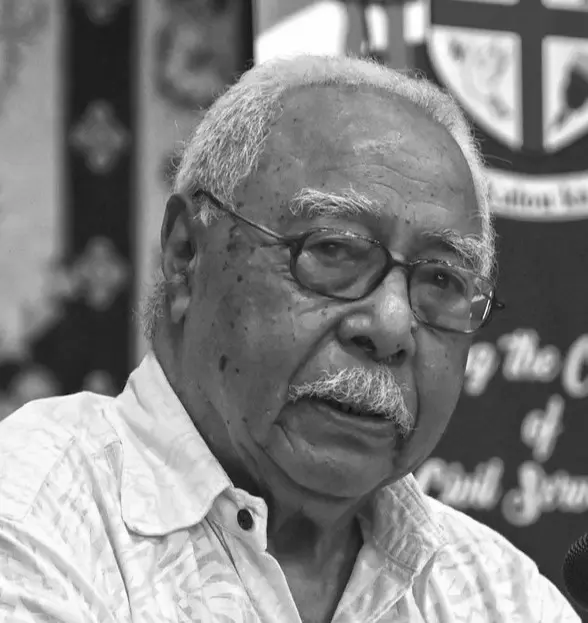
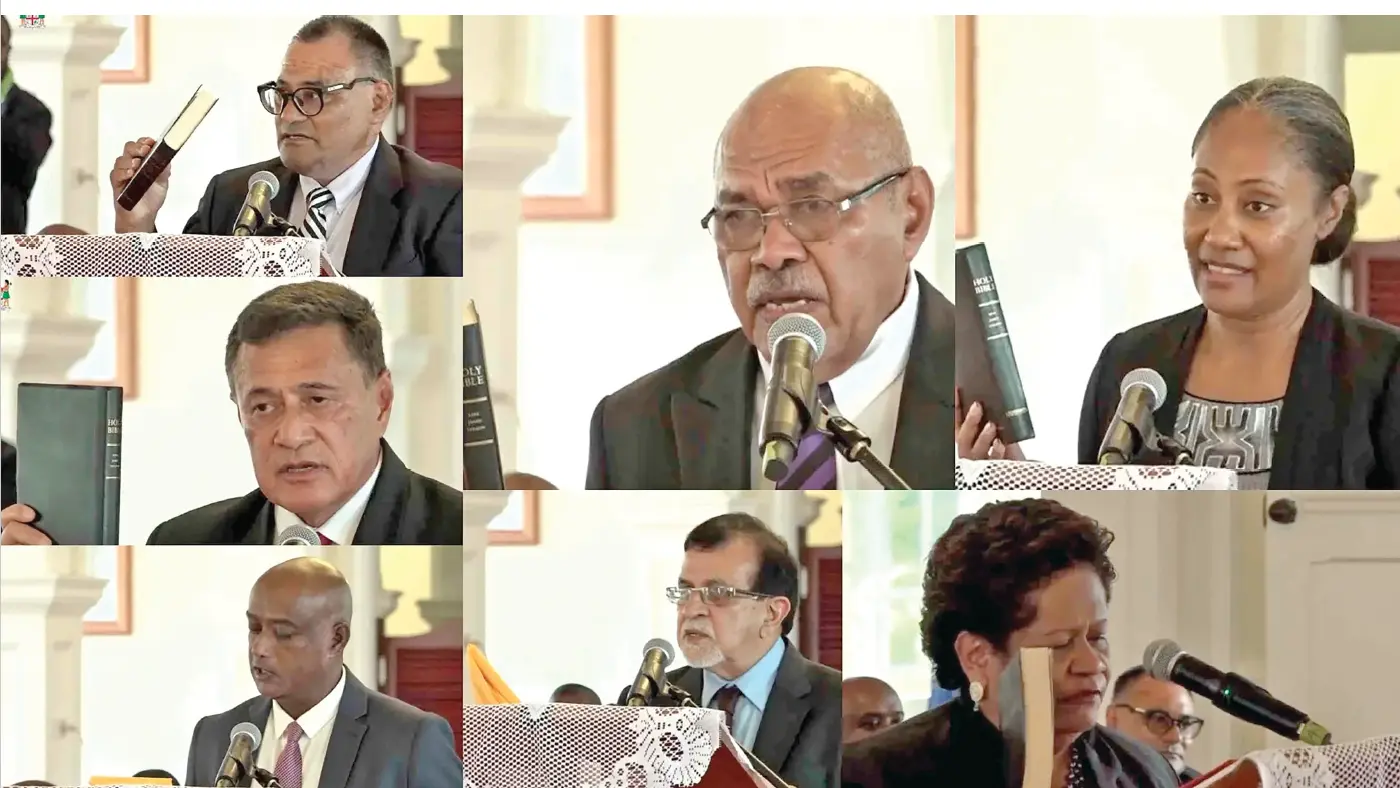
Members of the Constitution Review Committee (CRC) were sworn in by President Ratu Naiqama Lalabalavu at State House on March 13, 2026. Members of the committee include lawyer Sevuloni Valenitabua as chairman, Fiji National University Vice-Chancellor Professor Unaisi Nabobo-Baba, Public policy specialist Merewalesi Nailatikau, legal practitioner Ami Kohli, University of the South Pacific economist Dr Neelesh Gounder, Constitutional law practitioner Dr John Fatiaki and former Fiji Rugby Union chairman Conway Begg.
Photo: DEPTFO News
1. Improvements to the Preamble of the 2013 Constitution
Jioji Kotobalavu recommended to the Commission to improve the current Preamble by adding the following very important statements of recognition
[The Preamble is like the introduction. It is to explain who we are as the people of Fiji, and also significant events in our country’s history, and then to declare our common and collective aspirations]
Related stories
As paragraph 1, recognise that the iTaukei and Rotuman communities were the first to arrive and settle in Fiji, and thus entitling them to be Fiji’s indigenous communities and the rights conferred upon them in the Constitution.
As paragraph 2, recognise the arrival of Christianity in Fiji and its profound impact on the way of life of the people.
[Here, as background information, 3 Tahitian catechists, sent by the London Missionary Society, arrived and settled at Oneata in Lau in 1830. And then two Wesleyan (Methodist) missionaries, Reverend William Cross and Reverend David Cargill, arrived and settled at Lakeba in Lau in 1835.
I should mention that this recognition of the historical importance of the arrival and impact of Christianity does not affect the provision in section 4 of the 2013 Constitution on Fiji being a secular State. The foundation for this is the right to religious liberty guaranteed to every individual person in the Bill of Rights]
As paragraph 3, recognise the great significance to the iTaukei of the Deed of Cession on October 10, 1874, when in reciprocation to the High Chiefs of Fiji ceding sovereignty over their Islands to the British Crown, Great Britain recognised their rights under English common law to their ancestral tribal lands and associated natural resources, based on their custom, usage and tradition; their right of self-determination to administer their governance through their provinces; and the authority of their Chiefs or traditional leaders, both individually and collectively through their Council of Chiefs, to rule over their people according to law.
As paragraph 4, recognise the great significance to the Rotuman people of their Deed of Cession with the British Crown, through their Chiefs, in 1879, and the rights conferred upon them by Great Britain identical to those granted to the iTaukei and their traditional leaders. This included their right of self-determination to administer their governance under the Council of Rotuma.
As paragraphs 5 and 6, recognise, as currently provided, the descendants of indentured labourers from British India and Melanesia, and the descendants of settlers and immigrants who freely chose to come and live in Fiji
[2] On improvements to current laws on national elections, Kotobalavu recommended the following for the Commission to consider.
ELECTORAL ACT 2014
Re-design the format of the voting form. Remove the Sudoka-style numbering to identify election candidates, and replace it with individual candidate’s name, party affiliation and photograph. This will make it much easier for voters to identify their preferred candidate.
2013 CONSTITUTION
Change the current use of the whole of Fiji, as a single undivided constituency, for all seats in the House of Representatives, and replace it as follows [as recommended by the Professor Yash Ghai Commission whose report was trashed by the Bainimarama Military Government, the author of the unilaterally imposed 2013 Constitution]:
Create 3 regional multi-member constituencies based on Government’s administrative divisions: Central Division, Western Division and Northern Division
For the Eastern Division, because of the scattered and widespread nature of the islands, and their small resident population, create 5 single member geographical constituencies, comprising 2 for Lomaiviti and 1 each for Kadavu, Lau and Rotuma
Based on Fiji’s population as estimated by the National Bureau of Statistics since the 2007 National Population Census, set the total number of seats in the House of Representatives at 60, and this is to be distributed as follows: Central Division 24, Western Division 22, Northern Division 9, and Eastern Division 5 [with 2 for Lomaiviti and 1 each for Kadavu, Lau and Rotuma, based on their respective resident population]
The total number of seats in the House of Representatives and their distribution, are to be reviewed by the Electoral Commission after each national population census
For the three regional multi-member constituencies, MPs are to be elected by an open list system of proportional representation, and within each regional constituency, each voter has one vote with each vote being of equal value.
For the 5 single member constituencies in the Eastern Division, MPs are to be elected either by simple numerical majority, or alternatively, by a substantive majority of 50 per cent +1 vote.
In justifying his proposals for change as outlined above, Kotobalavu explained that the foundational basis of the system of elections in the 2013 Constitution was very good and should be retained. He summarized them as follows:
[1] it is based on a single national common roll of registered individual voters who are citizens of Fiji and are of the age of 18 years and above.
[2] The voting method of one person, one vote, and each vote is of equal value in electing an MP, is a standard universal requirement in all liberal parliamentary democracies.
[3] The use of an open party list of proportional representation which fairly rewards candidates who campaign hard both for themselves and their political party in the lead up to the election.
[4] From the general elections held in2014, 2018 and 2022, we have seen that this election system in the 2013 Constitution, has produced or yielded elected executive Governments, either with a clear numerical majority, or based on a voluntary coalition of willing political parties. This is critically important for facilitating both political stability and an effective Government in its administration of the country.
The proposals I have submitted take all these fundamental considerations into account.
However, there are two basic considerations in my proposal to replace the single and undivided multi-member national constituency based on the whole of Fiji, to the three regional multi-member constituencies.
The first is the need to ameliorate the severe impact of the 5 per cent requirement to qualify for seats in the House of Representatives on small parties and independent candidates.
The change from a single nationwide constituency to three regional
constituencies should reduce the voter-equivalent of the 5 per cent threshold from circa 23,000-25,000 votes to 14,000-16,000 votes.
This will be fairer and more reasonable to the smaller parties and independent candidates.
The other consideration is the hope that the use of three regional constituencies will lead to the election of candidates from Fiji’s minority communities.
Currently, all MPs in the House of Representatives have been elected from Fiji’s two major communities; the iTaukei and Indo-Fijians.
We cannot build a nation or successfully promote national unity in Fiji if our minority communities feel that they have no voice in Parliament, the representative House of the people in a parliamentary democracy.
[3] Restore the Senate in the 2013 Constitution
Kotobalavu recommends the restoration of the Senate as the Upper House of Parliament, and this is to be achieved by reinstating the following provisions in the 1997 Constitution.
“64-(1) The Senate shall consist of 32 members, of whom
(a) 14 are appointed by the President on the advice of the Bose Levu Vakaturaga [GCC]
(b) 9 are appointed by the President on the advice of the Prime Minister
(c) 8 are appointed by the President on the advice of the Leader of Opposition
dent on the advice of the Council of Rotuma.”
The main purpose/justification is to allow for wider participation in national decision-making in Parliament by members appointed by the President and drawn from the Great Council of Chiefs, the Council of Rotuma, and, in addition, by members drawn from ethnic minority communities, women’s organizations, civil society organizations, and the professions, through the 17 members to be appointed from nominations by the Prime Minister and by the Leader of the Opposition.
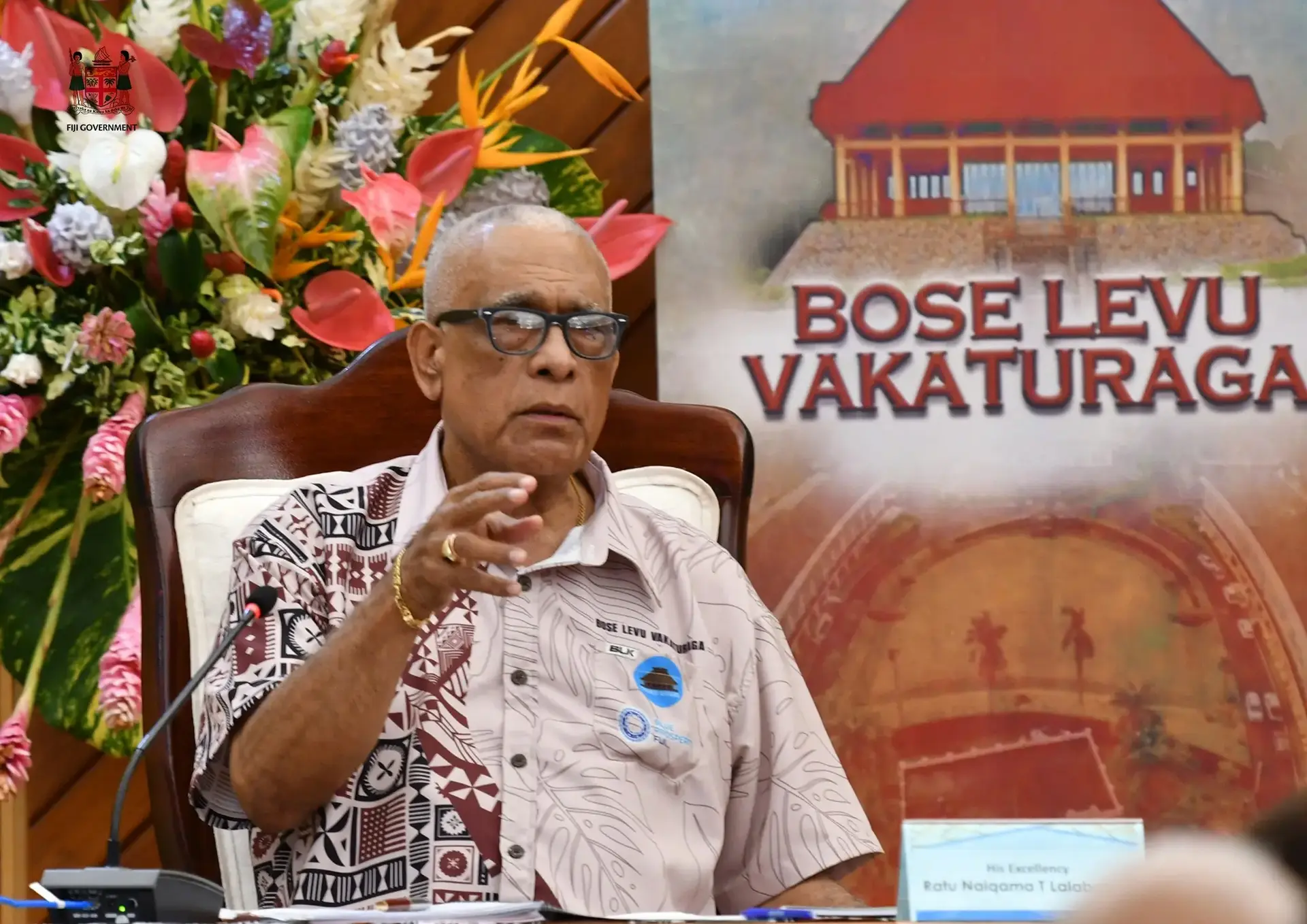
Jioji Kotobalavu strongly supports the restoration of the Bose Levu Vakaturaga [BLV] in the 2013 Constitution. Pictured: President Ratu Naiqama Lalabalavu at the Bose Levu Vakaturaga
Photo: Laiseana Nasiga
There is to be no stipulation in the Constitution for the representation of the Churches or any particular religion in the Senate. The right of every individual person to choose one’s religion is a fundamental human right, fully protected in the Bill of Rights. So, Fiji is to remain a secular State.
The right or entitlement of the BLV/GCC and the Council of Rotuma to nominate their Senate members derives from their right of special recognition conferred upon them by Great Britain in reciprocation of their cession to the British Crown of sovereignty over Fiji and Rotuma in 1874 and 1879 respectively. Their right to rule over their people was recognised provided they respected the laws of the British Colony.
This right of self-determination is institutionalized in two legislation.
The BLV/GCC is established under section 3 of the iTaukei Affairs Act [Cap 120] to serve as an advisory body to the central Government on the good government and well-being of the iTaukei people.
The Council of Rotuma is established under section 12 of the Rotuma Act [Cap 122] to safeguard and ensure the good governance and well-being of the Rotuman community.
Today, the GCC/BLV and the Council of Rotuma are the apex or peak body of the indigenous iTaukei and Rotuman communities in the administration of their provinces. They serve as advisory councils to the central Government on all matters affecting the natural resources rights, and the general well-being and welfare of their communities.
So, their constitutional right to nominate their representatives in the Senate derives from their communities’ right of self-determination, and their solemn duty to ensure that any legislation or policy passed by the House of Representative does not harm or prejudice the rights and interests of the indigenous iTaukei and Rotuman communities.
[4] Restore the GCC/BLV in the 2013 Constitution and also include the express recognition of the Council of Rotuma
Kotobalavu strongly supports the restoration of the Bose Levu Vakaturaga [BLV] in the 2013 Constitution in accordance with this provision in section 116 of the 1997 Constitution in relation to the BLV/GCC:
“(1) The BLV established under the Fijian Affairs Act continues and its membership, functions, operations and procedures are as prescribed in or under the Act.”
However, the functions of the GCC/BLV to be set out in the Constitution are the nomination of members of the BLV/GCC to be appointed to the Senate, and its responsibility through its members in the Senate to ensure that no legislation or policy passed in the House of Representatives prejudices the rights and well-being of the iTaukei.
Kotobalavu also strongly advocates the inclusion in the Constitution of express recognition of the Council of Rotuma as established under the Rotuma Act, and its responsibility to nominate a representative in the Senate to be appointed by the President, and to protect and safeguard the rights and interests of all Rotumans.
This recognition of the Council of Rotuma in Fiji’s Constitution is something new but the Rotuman people fully merits this. It derives from the reciprocal recognition given to them by Great Britain in return for the cession to it of sovereignty over Rotuma in 1879.
This is the origin of the right of self-determination of the Rotuman peoples to administer their island’s governance with the support of the central Government of the whole of Fiji.
[5] Appointment of the President of the Republic of Fiji
A crucially important question for the Commission to consider is: who is to appoint the President of the Republic of Fiji? The BLV/GCC [as provided under the 1997 Constitution], or Parliament [as provided under the 2013 Constitution]?
Under section 84 of the 2013 Constitution, the President is appointed through election by Parliament from competing candidates submitted by the Prime Minister and by the Leader of Opposition.
Kotobalavu strongly recommends the continuation of the appointment procedure under section 84 of the 2013 Constitution, and also the qualifications for appointment, as set out under section 83.
The qualifications for appointment of the President of the Republic of Fiji, as set out in section 83 in the 2013 Constitution, should be left as it is, unchanged, in the hope that one day a well-qualified non-iTaukei with an outstanding record of public service can be considered and appointed by Parliament.
For nation-building and national unity, it is so vitally important for all communities to feel firmly assured and secure that Fiji is home to us all. Common and equal citizenship as fellow Fijians is not enough. Fiji is not a single ethnic nation State such as Japan or other Pacific Island States like Tonga or Samoa. No community in Fiji should be denied a fair and equitable opportunity of representation and participation in national decision-making on matters/issues relating to our collective national and economic security and well-being.
So, given the overall significance of the role of the President as representing the unity of our State in embracing all its citizens and its communities [based on ethnicity, religion and culture], I strongly recommend that for the appointment and qualifications for appointment of the President of the Republic of Fiji, we should retain the current provisions under sections 83 and 84 of the 2013 Constitution, and not to return to the procedure under the 1997- Constitution.
What this means is that all the three national leadership positions of President, Prime Minister, and Leader of Opposition in Parliament, are to be appointed through competitive democratic election in the House Representatives of the people.
DISCLAIMER: The views expressed in the article are of the author alone and not of Fiji Sun and/or its employees.