Opinion: You can’t replace a working tool with a workshop
For years, corporal punishment, whether people like it or not was a shared system and supported by biblical value
Tuesday 05 May 2026 | 10:30
Updated 05 May 2026 | 12:26 FJT

Mahatma Gandhi Memorial School students and supporters cheer on their athletes during Day 3 of the Fiji Finals at the National Stadium, Suva on May 2, 2026.
Photo: Leon Lord.
Fiji has removed corporal punishment. That’s the headline. But here’s the reality, nothing equally effective has replaced it.
And the people dealing with the consequences are not policymakers.
They are teachers. They are parents. They are community leaders trying to manage the situation.
Related stories
If you walk into a classroom in a remote area perhaps in Ba where you have 35 students. It’s the middle of the morning and the noise in the classroom continues to build. One student refuses to sit down. Another answers back. A third starts laughing. The rest are watching.
The teacher pauses. Not because they don’t know what to do but because they’re no longer sure what they’re allowed to do.
That hesitation is all it takes. Control slips, not completely, not dramatically, but enough to create an environment of recalcitrance.
Given this scenario, multiply that across schools, across days, across the country and you basically have what I would coin as a pandemic of disobedience and rebelliousness.
Home scenario
Now let us look at a home in the greater Nasinu area. A parent comes back from work, tired and already under pressure. Their child ignores instructions, talks back, pushes limits.
The parent stops, not out of calm discipline, but uncertainty.
Where is the line now? What’s acceptable? What crosses into trouble?
So the response softens or becomes inconsistent. And the child learns something quickly: the boundaries are no longer clear.
Village setting
Now let us look at a village meeting. An elder speaks about respect, about how things used to be, how authority was understood, heads nod in agreement.
But later, the same concern comes up quietly:
“It’s not the same anymore.”
Not because values have disappeared, but because enforcement has become uneven. This is what change looks like on the ground.
Not policy.
Not principle.
Practice, and right now, practice is where this reform is weakest.
For years, corporal punishment, whether people like it or not was a shared system and supported by biblical values; “train a child in the way he should go and when he is old he will not depart from it” (Proverbs 22:6); “he who spares his rod hates his son, but he who loves him disciplines him promptly” (Proverbs 13;24)
Across matanitu (State), lotu (Church), and vanua (tradition), it had three things going for it:
It was understood. It was immediate. It was consistent. Now it’s gone. And in its place?
Posters. Guidelines. Training sessions which is not a fair trade.
So when you remove something practical and replace it with something abstract, you don’t create progress.
You create a gap. And gaps don’t stay empty.
They fill with confusion.
You can already see the pattern forming:
- Teachers hesitating instead of acting.
- Parents second-guessing instead of enforcing.
- Students testing instead of complying. Not because children are worse.
Because the system around them is less certain and inadequate.
Let’s be clear. Most teachers and parents are not arguing for harm. They are asking a simpler, more uncomfortable question:
Why remove something that worked before proving the replacement could work just as well?
That question has not been answered. It is evident that human rights advocated by the UN has had a big impact on this.
And until it is, this reform will feel less like progress and more like a risk taken too early.
Because discipline is not optional.
Every society has it.
The only question is whether it is clear and consistent or uncertain and uneven.
Right now, Fiji is drifting toward the second.
So what happens next?
More workshops? More awareness campaigns? More theory?
None of that will matter unless it translates into something people can actually use in real situations:
- A teacher regaining control of a noisy classroom
- A parent setting firm, respected boundaries at home
- A community leader reinforcing authority without confusion
Until those moments are fixed, the policy is incomplete.
Corporal punishment
Fiji didn’t just remove corporal punishment. It removed a system people understood.
Fiji didn’t just remove corporal punishment. It removed a system people understood.
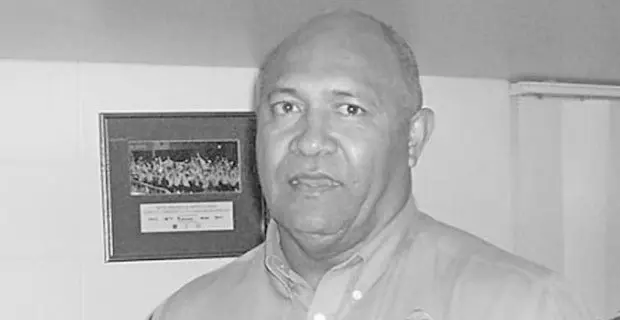
Ratu Timoci Tavanavanua, Turaga na Roko Tui Bau
Now it has to prove quickly that it can build one that works just as well or even better.
Because if it doesn’t, this won’t remain a debate among officials. It will become a reality felt everywhere, in fact it already has to our detriment.
In classrooms that are harder to manage.
In homes that feel less certain.
In communities where respect is no longer a way of life.
And when that happens, the conversation will change. It won’t be about human rights or policy alignment.
It will be about something much simpler:
Did we move too fast and take something away before we had built anything strong enough to replace it. According to the biblical principal we sow what we reap.