Fiji records some of its coldest nights on record
Meanwhile, Nadarivatu recorded the country's lowest temperature during the period at 9.7°C.
Friday 10 July 2026 | 14:30

The Fiji Meteorological Service said Matei Airfield, Vanuabalavu and Navua all recorded their lowest minimum temperatures since observations began, as persistent southeast trade winds, high-pressure systems and occasional cool air outbreaks brought unusually cold conditions across the country.
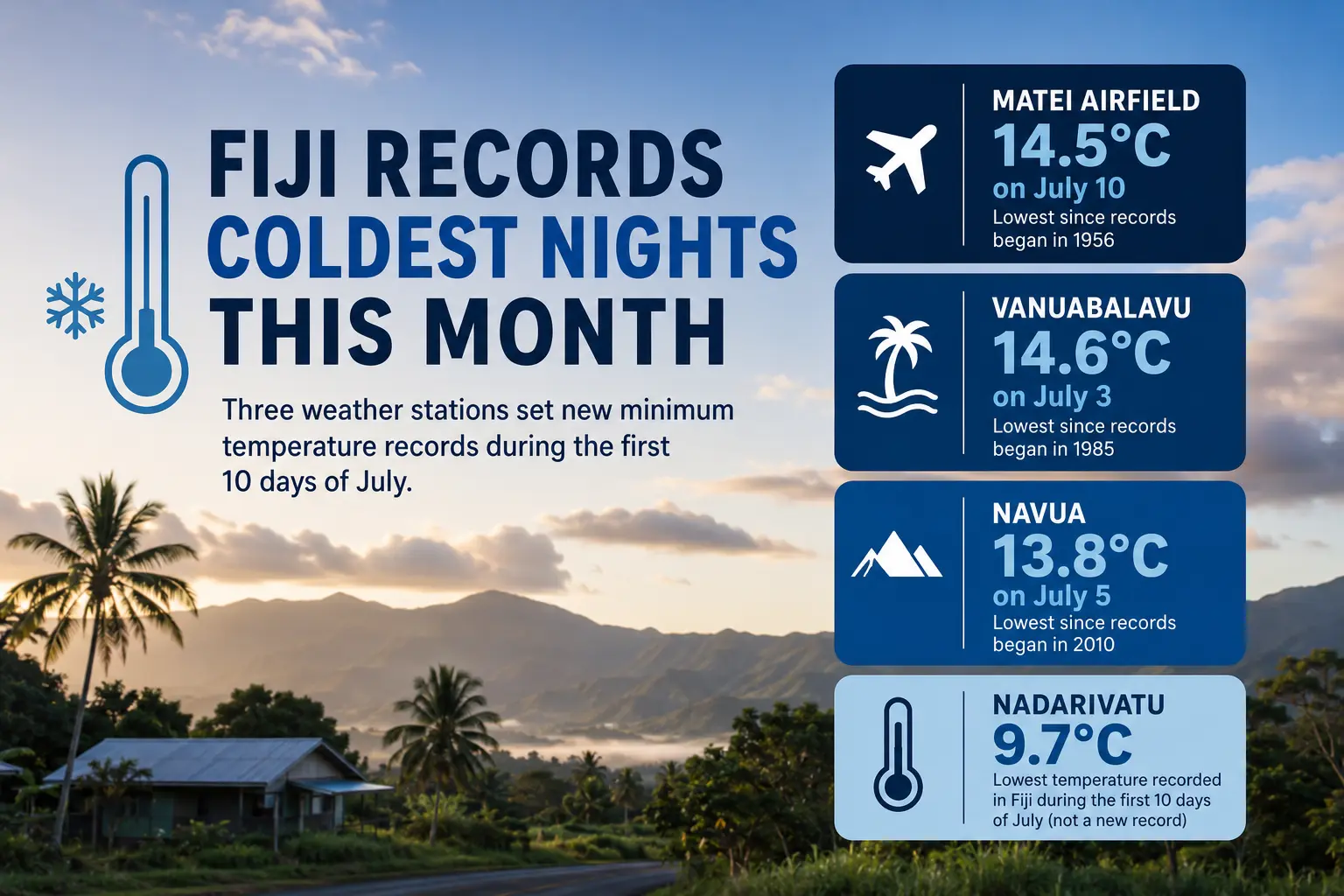
Fiji has recorded some of its coldest nights on record this month, with three weather stations setting new minimum temperature records during the first 10 days of July.
The Fiji Meteorological Service said Matei Airfield, Vanuabalavu and Navua all recorded their lowest minimum temperatures since observations began, as persistent southeast trade winds, high-pressure systems and occasional cool air outbreaks brought unusually cold conditions across the country.
Matei Airfield recorded 14.5°C on July 10, the lowest minimum temperature since records began in 1956, breaking the previous record of 15.5°C set on July 20, 1986.
Related stories
Vanuabalavu recorded 14.6°C on July 3, the lowest minimum temperature since observations began in 1985, surpassing the previous record of 14.8°C recorded on July 5, 2005.
Navua recorded 13.8°C on July 5, the lowest minimum temperature since observations began in 2010.
Meanwhile, Nadarivatu recorded the country's lowest temperature during the period at 9.7°C. While it was the coldest temperature recorded nationwide during the first 10 days of July, it did not set a new record. Nadarivatu remains Fiji's coldest location because of its high elevation, and such temperatures are typical during the cool season.
The Fiji Meteorological Service said the record-breaking temperatures occurred during Fiji's cool and dry season from June to August, when persistent southeast trade winds, high-pressure systems and occasional cool air outbreaks from higher latitudes bring cooler nights, lower humidity and generally drier conditions.
While cool mornings are normal at this time of year, the service said the new records highlighted just how cold conditions had become in parts of the country.
The Fiji Meteorological Service will continue monitoring conditions and issue forecasts and weather advisories as required.