Late diagnosis and herbal treatments fuel leptospirosis risks
Fiji Medical Association president Dr Apilate Vakamocea says combining symptoms with epidemiological data can improve early diagnosis and save lives.
Monday 20 April 2026 | 10:30
Updated 20 April 2026 | 11:32 FJT

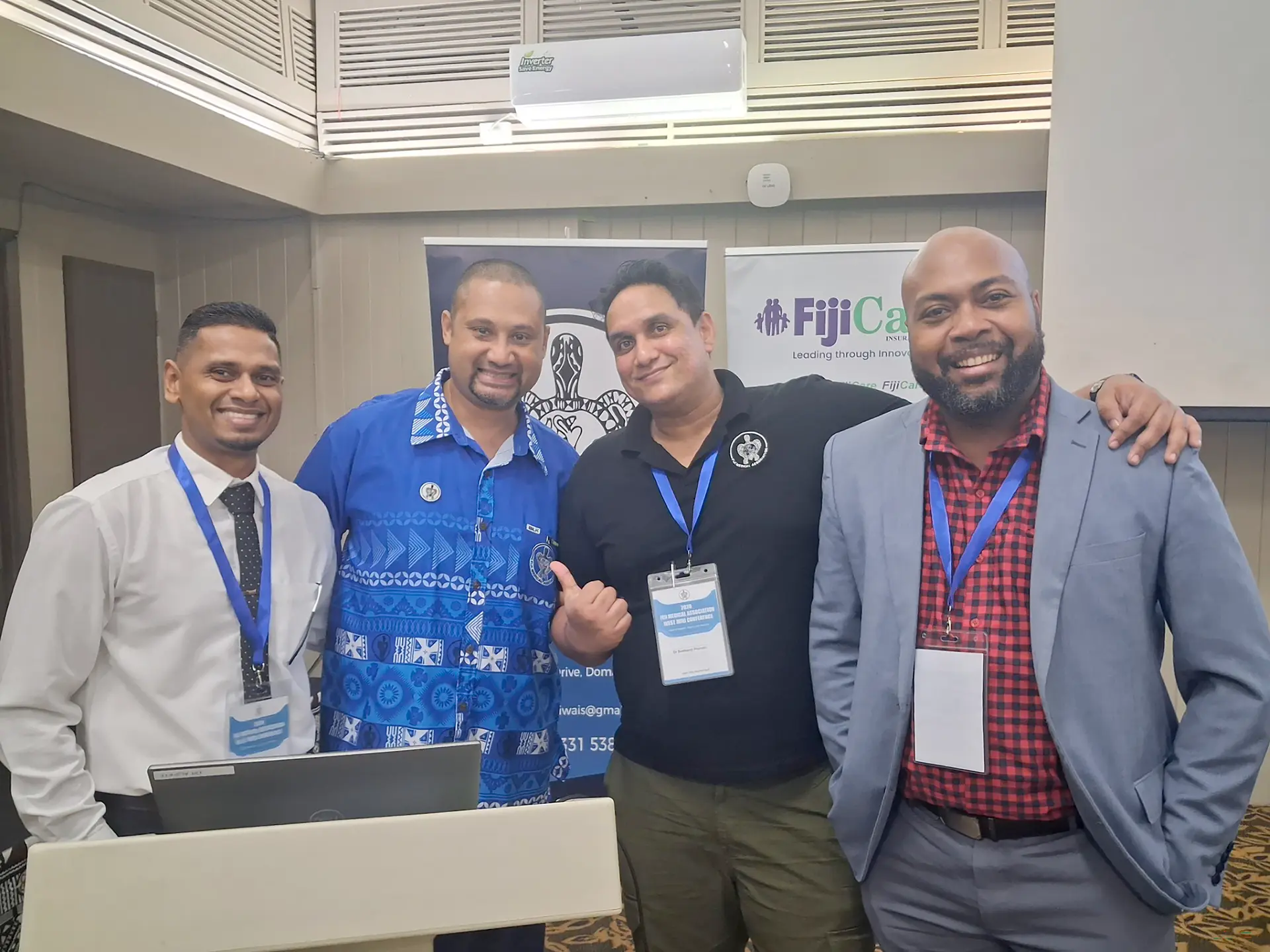
From left: Dr Ahmed Shariff, Fiji Medical Association president Dr Alipate Vakamocea, Dr Basharat Munshi, and Dr Sailosi Raumaitavuki.
Photo: Waisea Nasokia
Fiji Medical Association president Dr Apilate Vakamocea says medical practitioners should make better use of epidemiological data when diagnosing and managing leptospirosis.
He made the comments during the Fiji Medical Association West Mini Conference held at the Novotel Nadi last Saturday, themed “Make It Happen – Results over Rhetoric”.
Dr Vakamocea said early diagnosis depended on both clinical symptoms and epidemiological patterns.
Related stories
“They will present early in the diagnosis. The criteria there are two components, and one is epidemiological data,” he said.
He said recent cases at the Colonial War Memorial Hospital showed links to specific locations.
“When you look at epidemiological data, you might notice many patients coming from one particular area. They start presenting with leptospirosis‑like symptoms, and when you test one and it is positive, it signals a problem in that area,” he said.
Dr Vakamocea said doctors should consider a patient’s location alongside symptoms such as fever and jaundice.
“If someone presents with fever, jaundice, and is from that particular place, we should start considering leptospirosis,” he said.
He also raised concerns about patients turning to herbal treatments and only seeking medical care when their condition had deteriorated.
“Usually once they become very sick, that’s when they are brought in. If picked up early, leptospirosis is very treatable,” he said.
Dr Vakamocea said the disease was often misdiagnosed because it mimicked other illnesses.
“Leptospirosis can look like a viral infection, typhoid, or dengue. That’s why we often test for dengue and leptospirosis together,” he said.
He said delays in testing contributed to poor outcomes.
“The test is a blood test. Samples are taken at health centres and sent away, which takes time. By the time results return positive, the patient may have died,” he said.
Dr Vakamocea suggested the Ministry of Health review laboratory testing turnaround times to improve patient outcomes.
Feedback: waisean@fijisun.com.fj








