Surgery delays at CWM costing lives, Doctors warn
Years of underinvestment, rising surgical demand and mounting budget pressure have created a dangerous bottleneck.
Sunday 08 February 2026 | 11:30

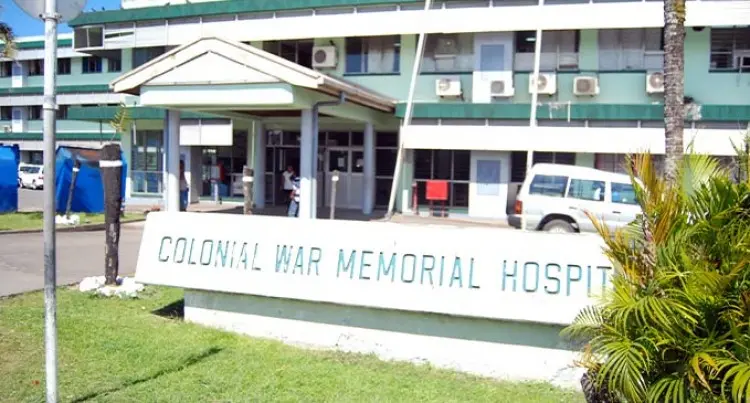
Colonial War Memorial Hospital Emergency Room main entrance.
Ronald Kumar
Patients are dying at Fiji’s main hospital while waiting for life-saving operations because operating theatres are unavailable, overbooked or no longer fit for use.
Senior surgeons at the Colonial War Memorial Hospital (CWM) say repeated delays have pushed the system to breaking point, with some patients deteriorating beyond recovery while waiting days, sometimes longer, for theatre space.
“Sometimes operations are cancelled today, then tomorrow, then the next day,” one surgeon said.
“Patients suffer. Some wait for so long, they die. Everyone in the system knows this.”
Related stories
Doctors say years of underinvestment, rising surgical demand and mounting budget pressure have created a dangerous bottleneck at the country’s largest referral hospital.
Clinicians describe a structural funding squeeze, with most of the Ministry of Health budget consumed by unavoidable operational costs before infrastructure upgrades are considered.
“After vendors, salaries, overtime, training, meetings and emergency medical retrievals, there’s almost nothing left,” a senior clinician said.
“A single helicopter transfer from Ono-i-Lau costs about $11,000. If six patients need evacuation in one month, that’s $66,000 gone — and you can’t predict when those emergencies will happen.”
Overseas medical referrals further drain resources, leaving hospitals struggling to maintain ageing facilities, including operating theatres that specialists say can no longer meet national demand.
Theatre bottleneck
At CWM, surgeons describe daily competition for limited theatre space, forcing operations to run late or be postponed.
Despite being Fiji’s top medical facility, the hospital operates with just four surgical theatres. Specialists say this is far below what is needed for the expanding range of complex services now provided locally, including neurosurgery, vascular surgery, plastics, urology and paediatric surgery — procedures that once required overseas referral.
“Four theatres are not enough. Even eight would struggle,” one source said.
Staffing stretched
General surgery operates with two consultants, three senior surgeons and five registrars.
Urology has one consultant and two registrars, while plastic surgery has one consultant, two senior surgeons and two registrars.
Orthopaedics has two consultants, one senior surgeon and two registrars.
Neurosurgery has one consultant, two senior surgeons and two registrars, while vascular surgery has one consultant, one senior surgeon and one registrar.
Paediatric surgery has two consultants and two registrars. Maxillofacial surgery has one consultant, two senior surgeons and two registrars, and ENT services have one consultant, one senior surgeon and one registrar.
Temporary outsourcing
The Government has begun outsourcing some surgeries to private hospitals — a temporary measure doctors say has improved scheduling and reduced waiting times but also highlights the strain on the public system.
“For surgeons, it becomes predictable — eight o’clock start, by afternoon you’re done,” a clinician said.
“In the public system, you don’t even know if you’ll operate that day.”
Doctors stress the move is not intended to benefit private providers but to prevent patients from dying while waiting for theatre access.
“This is temporary, so our people don’t die waiting for surgery while theatres fall apart,” a source said.
Growing demand
The country’s rising burden of non-communicable diseases is compounding pressure.
Surgeons estimate complications related to diabetes account for as much as 80 per cent of some operating lists.
Specialists warn that even new hospitals will not resolve the crisis without long-term planning, proper maintenance funding and clear accountability.
“How did it get this bad? Where were the checks and balances?” another clinician asked.
“If no one is responsible for long-term planning and maintenance, the same thing will happen again — patients will continue to pay the price.”
Inspection carried out
Assistant Minister for Health Penioni Ravunawa said an inspection was carried out on Monday.
He said Public Works Department officers inspected the vinyl works, identified defects and referred them to the divisional engineer.
Mr Ravunawa said the contractor must comply with hospital standards.
There was no confirmation on when the works would be completed.