RSMS joins national waste pilot
Students urged to take recycling and composting habits from school into their homes
Monday 13 April 2026 | 14:30
Updated 13 April 2026 | 16:02 FJT

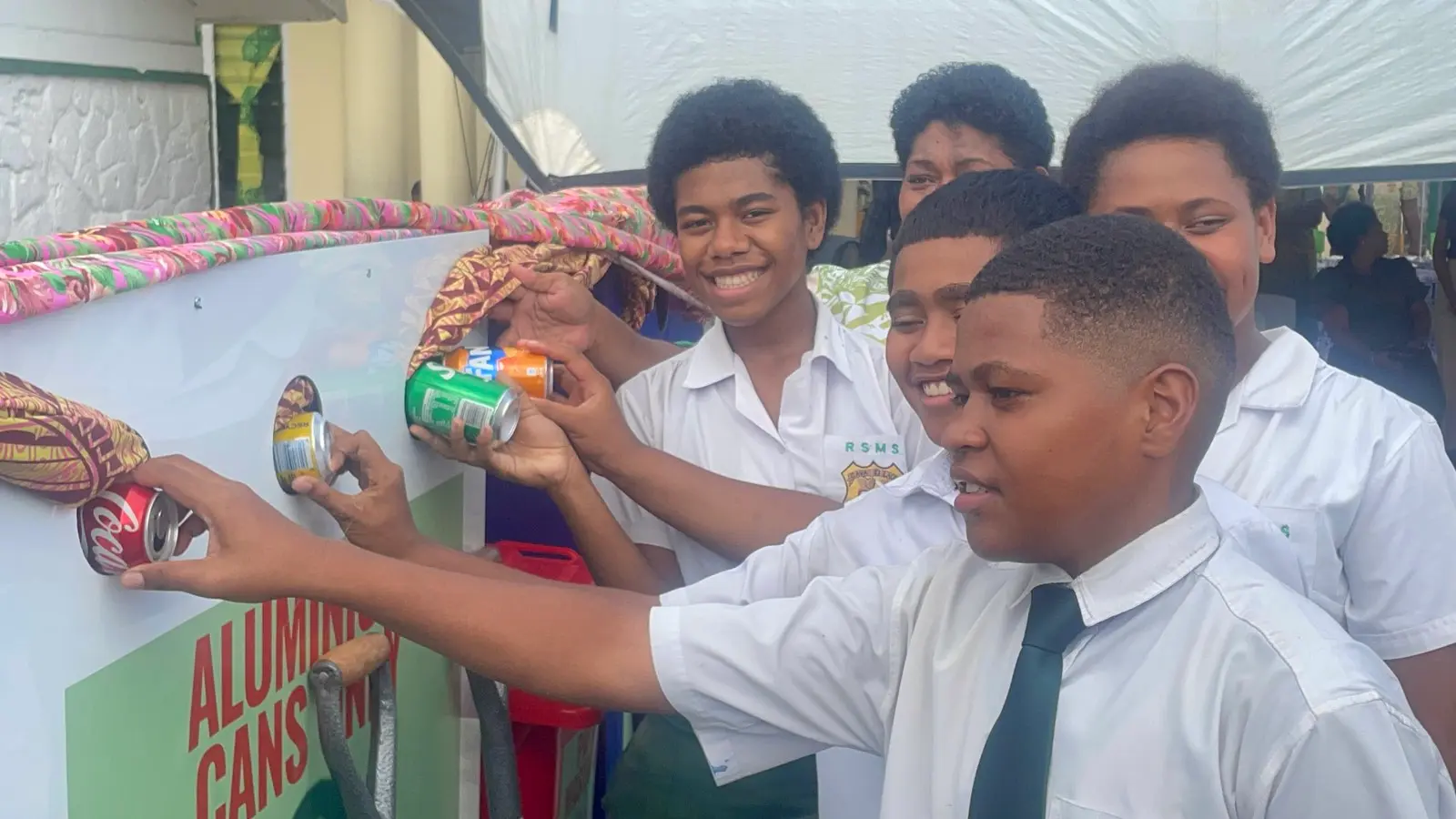
Ratu Sukuna Memorial School students inserting empty cans to the particular bins it belongs too.
Photo: Rariqi Turner
What began as a routine school handover became a strong call for change today, as Ratu Sukuna Memorial School (RSMS) in Nabua received a major waste‑management upgrade from the Ministry of Environment and Climate Change.
The initiative, led by Minister for Information, Environment and Climate Change Lynda Tabuya, saw the school handed a full set of waste and recycling systems.
These included four steel cage bins for PET bottles and aluminium cans, four wheelie bins for general waste, five compost bins and five small buckets for organic waste.
Related stories
But beyond the bins, the message was clear: Fiji’s waste problem starts and ends with behaviour.
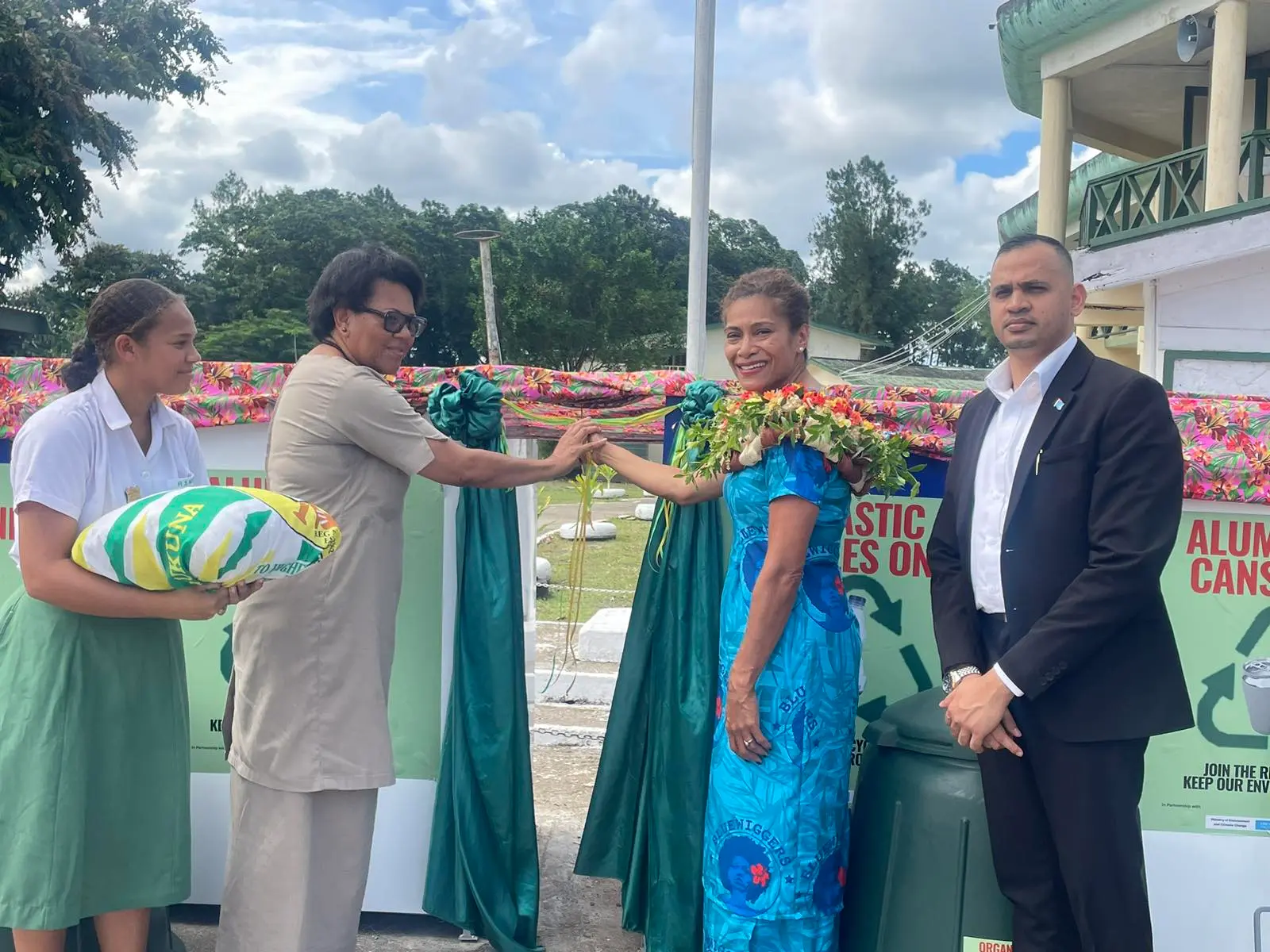
Minister for Information, Environment and Climate Change Lynda Tabuya (wearing a garland) with permanent secretary for Environment and Climate Change Sivendra Michael (right), alongside staff and students of Ratu Sukuna Memorial School.
Photo: Rariqi Turner
Speaking at the event, Ms Tabuya said RSMS was chosen because of its strong leadership and diverse student population.
She reminded students that they are not just learners, but future leaders who can influence their homes and communities.
“You will take this message home and teach others how to dispose of rubbish properly.”
Ms Tabuya also raised concern about flooding in communities, linking it directly to poor waste disposal.
“When it floods, it’s not only natural causes anymore. It’s also because drains are blocked with rubbish,” she said, urging students to rethink everyday littering habits.
Ms Tabuya also encouraged students to live the “three R’s”-reduce, reuse, and recycle, and to apply them beyond school walls.
Environment and Climate Change permanent secretary, Sivendra Michael, said the RSMS rollout is part of a wider national programme targeting schools near waste “hotspot” areas.
He said the ministry is not only providing bins but also training, policy support, and long-term systems to fix Fiji’s growing waste problem.
“This is a full package, infrastructure, training, and policy reform,” Mr Michael said.
He added that the programme links with national waste strategies, including recycling reforms and upcoming landfill reduction projects.
Mr Michael also stressed that students must take what they learn at school back home.
“If students can set up even small compost systems at home, it can make a real difference,” he said.
RSMS is the second school under the pilot programme, with more schools in Suva and later in the Northern Division expected to join.
For now, the message from both government leaders and educators was simple, the fight against waste does not start in policies or landfills, but in classrooms, homes, and everyday choices made by young Fijians.