Drawa forest project gains regional recognition
Sunday 18 October 2026 | 07:00
Launched in 2011, it is described as Fiji’s first verified community-owned REDD+ and carbon trading project.
The Drawa Block Forest Conservation Project in Cakaudrove, Vanua Levu, continues to receive recognition for its indigenous-led conservation efforts following a recent visit by Pre-COP31 delegates.
The community-led initiative involves eight mataqalis, or landowning units, and covers nearly 4,000 hectares of protected primary forest.
Launched in 2011, it is described as Fiji’s first verified community-owned REDD+ and carbon trading project.
Related stories
Rather than logging their forest, landowners sell carbon credits to generate sustainable income.
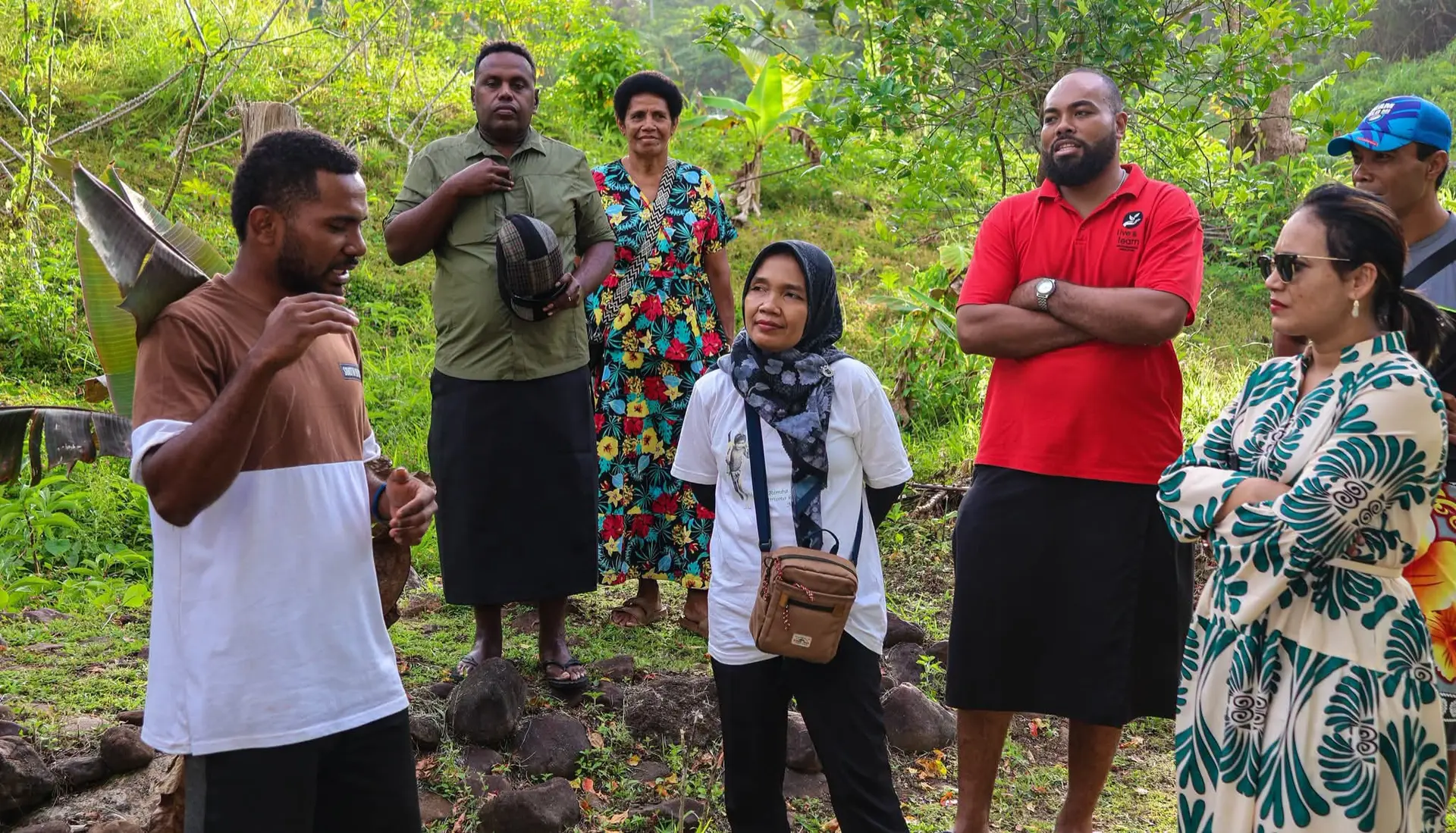
The visiting delegates included Live & Learn Solomon Islands carbon and conservation lead Bill Rerigeto Apusae; Solomon Islands Government chief climate change officer for mitigation David Tufi; and Sammy Airahui, national programmes coordinator and secretary for the Green Climate Fund (GCF) National Designated Authority within the Solomon Islands Ministry of Environment and Climate Change.
Also present were Indonesian Conservation Community (KKI WARSI) project and policy coordinator Emmy Primadona and Climate Change and Development Authority (CCDA) senior adaptation officer Albert Milala from Papua New Guinea.
They were joined by Live & Learn Papua New Guinea country manager Rosemary Isicar, along with Fiji-based Pacific climate and environmental specialists Dr Rakeshni Lata and Sherylin Hassan.
The delegates visited Drawa last Friday.
Representatives of the eight landowning units and members of the Drawa Block Forest Communities Cooperative (DBFCC) took part in the peer-to-peer exchange.
Live & Learn Fiji REDD+ coordinator Beato Dulunaqio and Nakau Programme chief executive officer Robbie Henderson also attended.
The delegates heard about the challenges faced by landowners and how the community had worked to overcome them.
Seven years of work
Drawa Block Forest Communities Cooperative business manager and committee member Waita Dikica said it took seven years of sustained awareness and consultation to secure the free, prior and informed consent of indigenous landowners before the project could proceed.
Her presentation also outlined the benefits the project had brought to different groups within the community.
“Live & Learn Fiji took seven years visiting the villages and landowning units, raising awareness on carbon trading and the importance of preserving our forests,” Ms Dikica said.
“We learnt a lot and for us, the project taught us a lot and empowered us to make decisions not only for us but our future generations.”
She said her involvement in the project had also helped her develop the confidence to represent the carbon business, DBFCC, at meetings with directors, executives and decision-makers, including the iTaukei Land Trust Board (iTLTB).
“At a personal level as a woman living in the village, my journey with the project has enabled me to now make presentations on behalf of the carbon business – DBFCC – to directors, executives and even decision makers like iTLTB,” Ms Dikica said.
She said carbon income had helped the organisation establish an education fund, open three village canteens run by women from the landowning units, and invest in community halls and footpaths to improve movement within the village, including for elderly people and people with disabilities.
“We have also supported the purchase of three brush cutters for each of the youth groups and their rugby jerseys,” she said.
“The carbon trading business has helped us preserve our forests and at the same time we are earning a living from it.”
The project has also employed young people as forest rangers, providing them with training in the use of specialised tools to monitor trees and the forest.
“All of this has been achieved through our forests,” Ms Dikica said.
Successful despite challenges
Asked why the Drawa project had succeeded despite its challenges, Live & Learn Fiji REDD+ coordinator Beato Dulunaqio, who has overseen the project for the past six years, said open dialogue had been a key factor.
“This is a big project and a new one when it was first introduced,” she said.
“For Live & Learn Fiji, we have adopted an approach where we believe that for any project to be successful, it needs to be community-led and that is why we work closely with the whole community.”
She said the approach centred on raising awareness and being honest with communities rather than making promises that might not be fulfilled, which could lead to distrust.
“For the Drawa project, we took seven years working closely with stakeholders and the Nakau Programme, ensuring that the landowners were included from the start to make decisions on managing their resources such as their forests,” she said.
“This is why we have been able to reach this far,” she said.
First-hand experience
Live & Learn Papua New Guinea country manager Rosemary Isicar said she had heard about the Drawa project for years, but visiting the forest for the first time had been an experience she would not forget.
She said seeing the benefits delivered to the landowning units had provided a pathway for similar work with communities in Papua New Guinea and advocacy for comparable projects there.
Ms Isicar said seeing the canteen in Drawa village and learning how women managed it had also provided useful insights into community projects that promote equitable participation.
Wrapping up the visit, Sherylin Hassan praised the commitment of the young forest rangers and the support of the landowning units.
She said their work was gaining national and international recognition, describing the project as a success story in nature-based solutions to climate change.
She also described Drawa Forest as one of Fiji’s largest nature-based solutions initiatives.
Live & Learn Environmental Education Fiji and the Nakau Programme have supported the Drawa Block Forest Communities Cooperative since the project’s early development.
Live & Learn Fiji co-ordinates the partnership in Fiji with DBFCC, while the Nakau Programme provides technical support for selling carbon credits on the international market.