WTO talks key for Fiji
Minister says global fisheries negotiations are critical for livelihoods and food security.
Friday 01 May 2026 | 12:00
Updated 01 May 2026 | 13:39 FJT

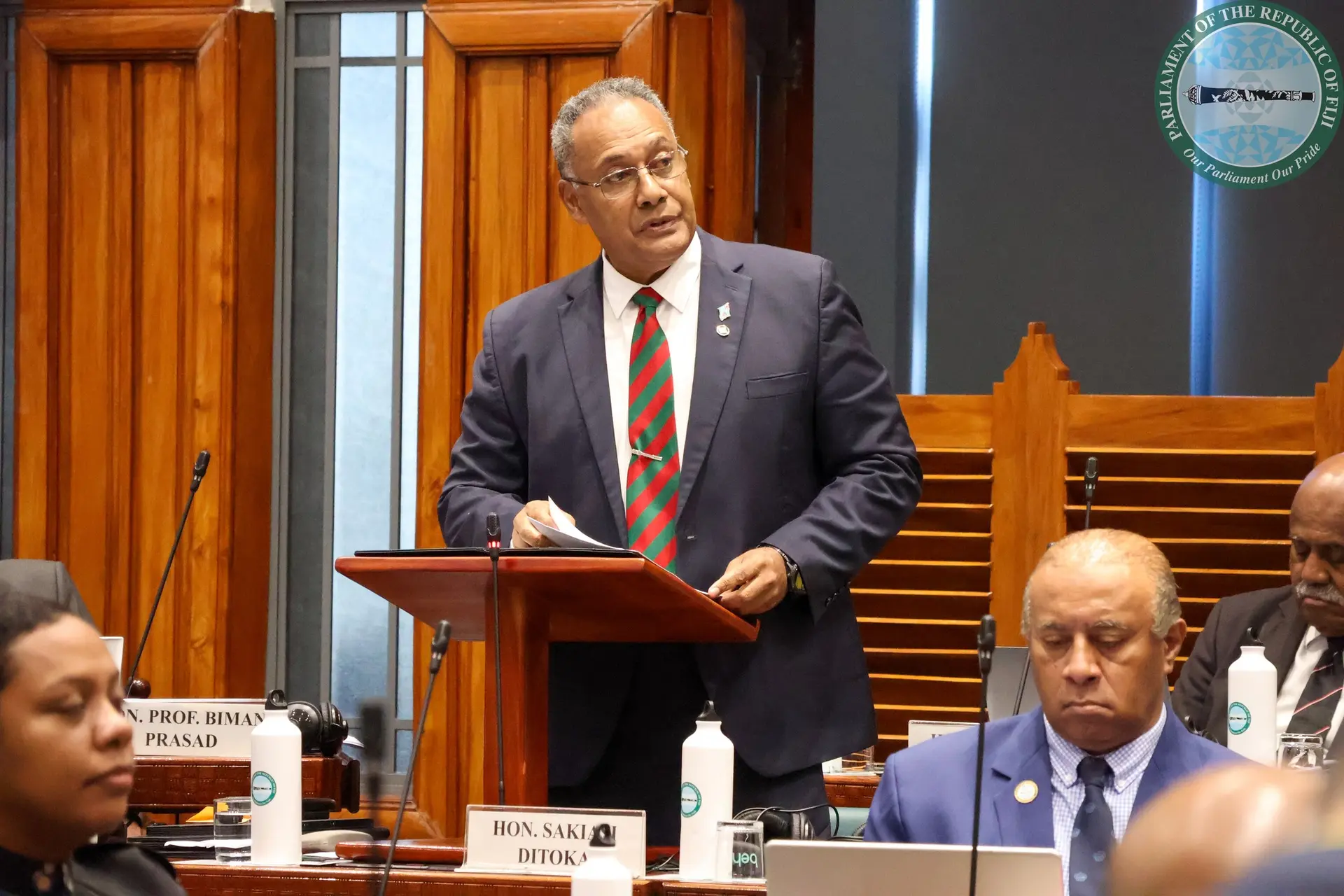
Minister for Foreign Affairs Sakiasi Ditoka in Parliament on April 30, 2026.
Photo: Parliament of Fiji
Decisions made during World Trade Organization (WTO) meetings could soon shape the future and livelihoods of thousands who depend on Fiji’s vast ocean resources.
Minister for Foreign Affairs Sakiasi Ditoka told Parliament that ongoing global talks on fisheries subsidies are critical to protecting Fiji’s fish stocks and coastal communities.
The discussions formed part of the 14th WTO Ministerial Conference in Yaoundé, Cameroon, on March 26.
Related stories
Mr Ditoka said countries have agreed to continue negotiations aimed at setting stronger global rules on fishing.
“These decisions may seem far away, but they affect our daily lives, from the food we eat to the jobs we rely on,” he said.
Fiji joined 166 countries at the talks, pushing for fair rules that reflect the realities of small island nations that depend heavily on the ocean.
A key outcome was the commitment to continue negotiating limits on harmful fisheries subsidies — support that can contribute to overfishing and threaten marine life.
For Fiji, Mr Ditoka said, this is not just policy but survival.
“Our fish stocks must be protected to support our coastal resources and future generations,” he said.
However, while there was progress on fisheries, several major issues, including agriculture and digital trade, failed to reach agreement.
Some global trade rules also expired, leaving uncertainty that will now be subject to further negotiations.
Mr Ditoka said slow progress is not always a bad thing.
“Sometimes no outcome is better than a bad outcome,” he said.
“Rushed decisions can harm Fiji’s ability to grow its economy and protect its interests.”
Opposition MP Faiyaz Koya supported the importance of the fisheries talks, saying Fiji has played a leading role in pushing these negotiations over the years.
“There is a lot at stake — our fish, our people and our future,” Mr Koya said.
“While progress has been made, much work remains to ensure strong rules are put in place and properly enforced.”
Both sides of the House agreed on one point: global trade talks are tough, demanding and far from glamorous. But for a small island nation like Fiji, being at the table is not a choice — it is a necessity.








