Judge questions forensic evidence in rape, murder case
The High Court has sought clarification on whether sexual intercourse occurred before or after the death of 18-year-old Venina Cirikeba Cava.
Wednesday 04 November 2026 | 08:00
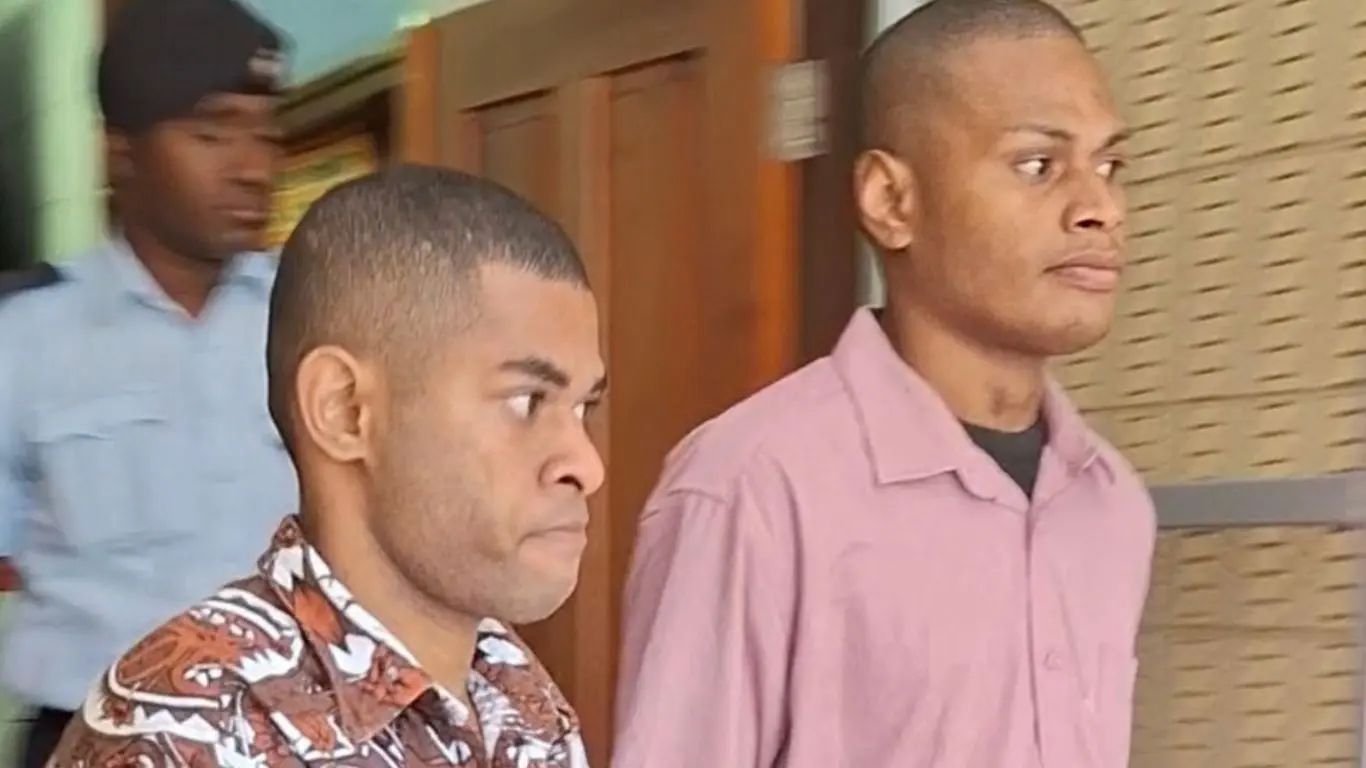
Accused Tevita Tora and Leveni Vuetibau at the High Court in Lautoka.
Photo: Mereleki Nai
Questions over the timing of sexual intercourse and the interpretation of forensic evidence have emerged in the rape and murder case involving two men accused of killing 18-year-old Venina Cirikeba Cava.
Tevita Tora and Leveni Vuetibau appeared before Justice Lee James Burney at the High Court in Lautoka yesterday.
Both men face one count each of rape and murder.
Related stories
The prosecution alleges that the two men raped Cava before causing her death on December 4, 2025.
Police received a report on December 5 of a woman lying motionless at a park near Lautoka Hospital, which is managed by Aspen Medical.
The woman was later identified as Cava, of Rifle Range.
A post-mortem examination was conducted, and police classified the case as murder.
The court heard that Cava died from strangulation.
Forensic evidence questioned
During pre-trial discussions, the court examined forensic evidence, the timeline of events and inconsistencies in the accounts given by the accused.
State prosecutor Laisiasa Baleilevuka told the court that Vuetibau, the second accused, initially denied knowing Cava.
However, during a caution interview, Vuetibau later said he had met her earlier that day and had sexual intercourse with her.
The court heard that semen evidence linked both accused to sexual activity involving Cava.
However, questions remained over when the intercourse occurred and whether the evidence supported the rape allegations.
Justice Burney questioned the circumstances surrounding the forensic findings, including the possibility that intercourse occurred after Cava's death.
The judge referred to an interviewing officer's apparent conclusion that intercourse had occurred after death and sought clarification on the basis for that assessment.
The defence disputed the interpretation, arguing that the post-mortem report did not support such a conclusion.
Justice Burney stressed that any evidence relevant to the possibility of intercourse after death must be disclosed to the defence before trial.
The interviewing officer's reasoning would also need to be explained.
The judge emphasised that both the prosecution and defence must clarify their respective cases and ensure all relevant evidence is disclosed before the trial begins.
The trial is scheduled to begin on March 15 and is expected to run for one week.
A final pre-trial conference has been set for March 5.