At 78, potter keeps ancient Rewa tradition alive
Amelia Yalosavu turns riverbank clay into pottery, jewellery and income while passing on traditional skills to future generations.
Thursday 19 November 2026 | 14:00
Updated 19 November 2026 | 15:35 FJT

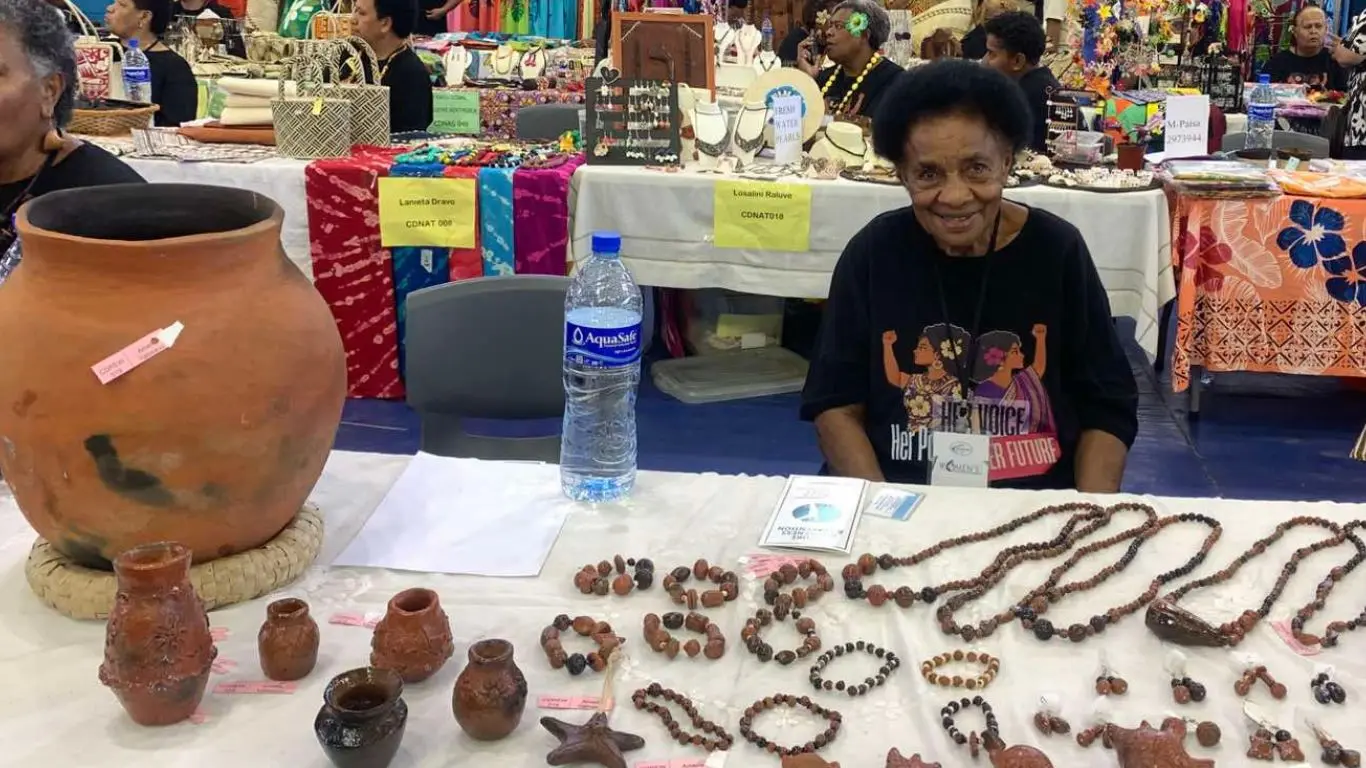
78-year-old Amelia Yalosavu at the 8th National Women's Expo in Suva on November 19, 2026.
Photo: Lavenia Waqanivanua
At 78, Amelia Yalosavu is still shaping clay with her hands, turning soil from riverbanks into traditional Fijian pottery, jewellery and decorative pieces that help support her household.
Originally from Drekena Village, Rewa, and married into Nasilai Village, Ms Yalosavu learned the art of tuli kuro (traditional clay pottery) from her mother-in-law after marriage. At first, she thought she would never master the skill.
“I told her I could not do it because I did not know how to make pots, but she told me not to worry and that she would teach me,” she said.
Related stories
What began as a lesson from her mother-in-law has since become a source of livelihood and a way for Ms Yalosavu to preserve traditional knowledge passed down through generations.
Her pottery is made from specially sourced clay dug from pits along riverbanks. The clay is collected, cleaned by hand to remove stones, roots and other unwanted material, then prepared and left to settle before it is ready for shaping.
Ms Yalosavu makes traditional Fijian pots, drinking jars, saqamoli, flower vases, earrings, starfish and bracelets, using the same natural material to create products that attract both locals and tourists visiting the village.
“I make big pots, drinking jars and other things from the soil. This is one of the ways I earn money for my family,” she said.
Her work has also provided opportunities to earn an income at exhibitions. She said she could make about $400 a day in sales at the 8th Fiji National Women's Expo held at Vodafone Arena in Suva.
Despite the income opportunities, Ms Yalosavu said the work was not without challenges, particularly the need for a boat to transport materials and collect bamboo used as firewood for pottery-making.
Beyond selling her work, she also visits schools to teach children how to make pottery, hoping to keep the traditional craft alive among younger generations.
Her message to young iTaukei women is to embrace the skills inherited from their elders and turn them into opportunities for financial independence.
“I want young iTaukei girls to make use of our traditional skills and knowledge and turn them into a business because it is a good way to earn money,” she said.
For Ms Yalosavu, tuli kuro is more than clay shaped into pots. It is a skill learned through family, a source of income and a tradition she hopes will continue long after her hands stop working the soil.