CSOs warn against rushed Constitution reform
Parliament will sit on Tuesday, September 22, to consider the report and its recommendations.
Saturday 19 September 2026 | 11:00

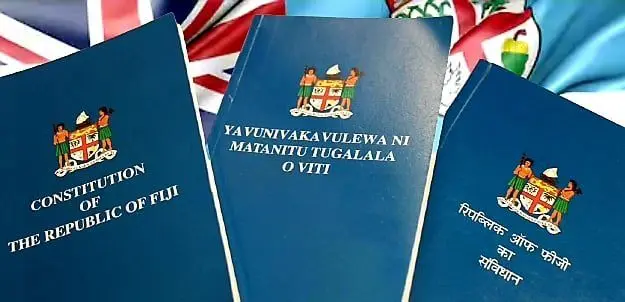
As Government prepares to table the Constitution Review Commission’s (CRC) report on proposed changes to the 2013 Constitution, political parties and civil society groups are raising concerns about the timeline for reform ahead of the next general election.
Parliament will sit on Tuesday, September 22, to consider the report and its recommendations.
Government wants a new Constitution in force by December 24, which is also the earliest date the 2026/2027 General Election can legally be called.
Related stories
"There's no need at all to rush," Unity Fiji leader Savenaca Narube said, while civil society groups have warned that the timeline could risk what they describe as a “self-coup”.
The immunity clause shielding those behind the 2000 and 2006 coups has been among the most fiercely debated issues during CRC consultations nationwide, with villagers, the Republic of Fiji Military Forces, the Fiji Law Society and economists calling for its removal.
Other key submissions have called for the restoration of indigenous rights, a reduction in Cabinet size, a review of military powers and a review of the role of the Fiji Independent Commission Against Corruption.
Government says the constitutional review and election preparations are proceeding separately, with Prime Minister Sitiveni Rabuka maintaining that the election will go ahead "whether the electoral provisions are in place or not."
Civil society warning
Five civil society groups have warned that Government risks what they describe as a “self-coup” if constitutional reform results in the next general election being delayed.
The Centre for Democracy and Dialogue, Fiji Women’s Rights Movement, Fiji Council of Social Services, Pacific Centre for Peacebuilding and femLINK Pacific issued a joint statement on Friday.
They said a “self-coup”, or autogolpe, happens when a government uses legal and institutional processes to stay in power without a fresh mandate from voters.
“No Government has the moral, legal or democratic authority to use constitutional reform to create uncertainty around an election that is constitutionally due,” the groups said.
They pointed to the Constitution Review Commission’s own figures, saying less than one per cent of Fijians took part in consultations.
The groups also warned that switching to open constituencies — a major change from the current system — would require new electoral boundaries and machinery that may not be ready in time.
They are calling on Government to guarantee six things, including that the election will not be delayed “by even a single day,” and that the current Parliament’s term will not be extended.
The next general election is legally due between December 24, 2026, and early February 2027, four years after the last Parliament first sat.
The groups also urged MPs across all parties, and diplomatic missions, to hold Government to account.
“Fiji’s Constitution belongs to the people. It must not be rewritten in a manner that compromises the people’s right to choose their government on time,” they said.
Mr Rabuka has previously maintained that elections will proceed “whether the electoral provisions are in place or not.”
Political views
Unity Fiji Party leader Savenaca Narube said there was no reason to rush the process.
“There’s no need, no need at all, to rush through the amendments of the constitution,” he said.
“That is irresponsible Government.”
He questioned why the issue was being tackled now, “just at the eve of the election”.
Lawyer and former SODELPA MP Niko Nawaikula raised concerns about whether Fijians would have enough time to understand what they were voting for.
“I’m worried that people might be disinterested in all this,” Mr Nawaikula said.
He said he wanted indigenous rights restored and the document aligned with international indigenous rights standards.
He urged Government to consult former Chief Justice Daniel Fatiaki before proceeding.
Opposition Leader Inia Seruiratu said switching to open constituencies so close to the election raised risks.
He also challenged the Prime Minister to explain what “transitional arrangements” after December 24 would mean for Parliament and the election date.
The National Federation Party said it “will not be party to any attempt to rush constitutional reform.”
The Fiji Labour Party accused Mr Rabuka of sitting on key reports for more than a year.
“Serious questions are now being asked about the Prime Minister’s ability to lead the government,” the party said.