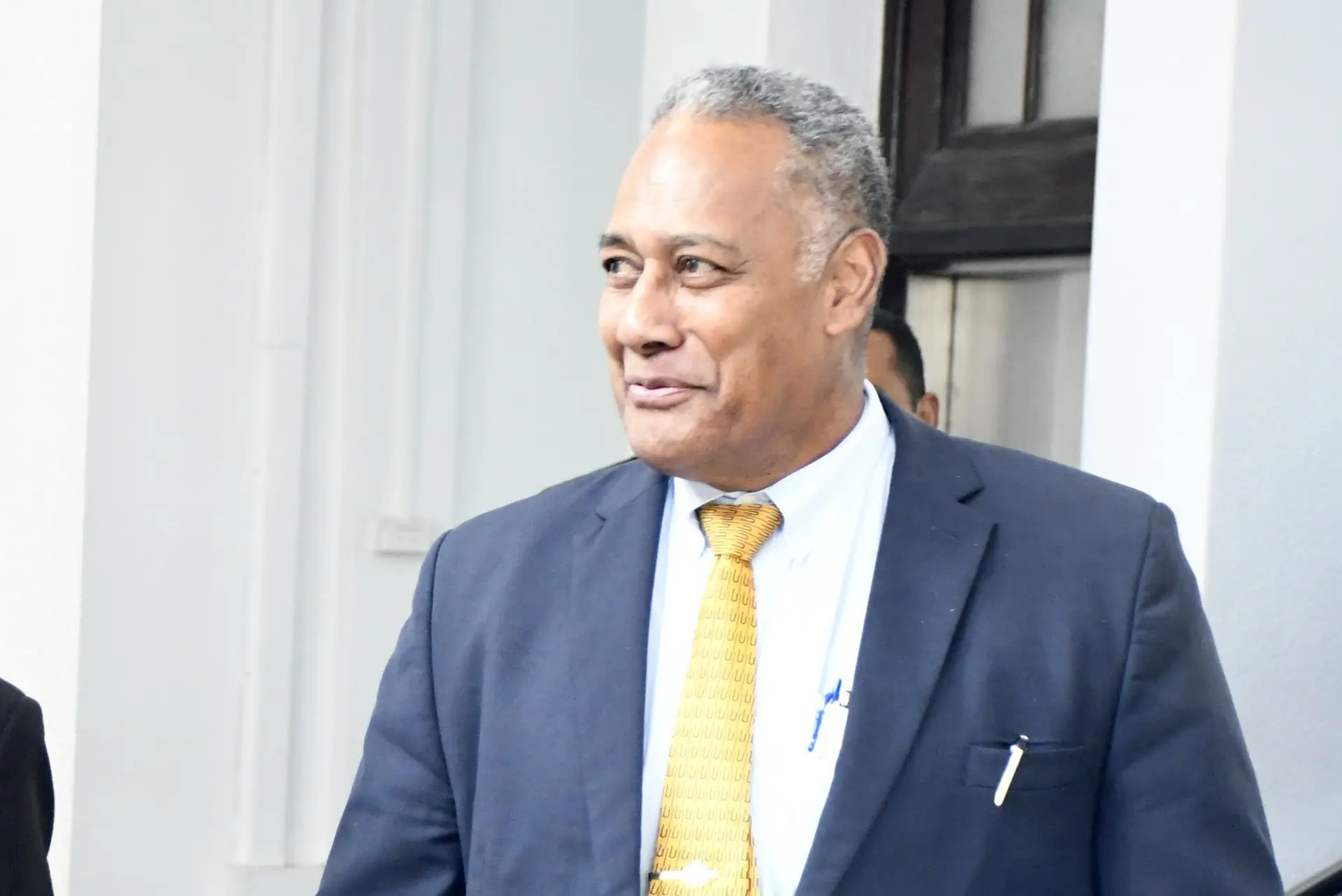
GCC can appoint President under proposed Constitution Amendment Bill
The proposed Bill would remove Parliament’s role in choosing the President
Wednesday 14 October 2026 | 11:00


Members of the Special Committee on the Constitution Amendment Bill discussing the proposed amendments of the Constitution on October 13, 2026 on October 13, 2026.
Photo: Parliament of Fiji
The Bose Levu Vakaturaga (Great Council of Chiefs), not Parliament, would appoint Fiji’s President and a new Vice-President under the proposed Constitution Amendment Bill 2026.
This would end the parliamentary vote between nominees of the Prime Minister and the Leader of the Opposition under the 2013 Constitution.
The Bill is yet to be passed. It requires a two-thirds majority at its third reading before a referendum, which the Government has set for December 9.
Related stories
Section 84 of the 2013 Constitution states that the Prime Minister and the Leader of the Opposition “shall nominate one name each”, with Parliament voting on the nominees.
Section 103 of the Bill states that the President is appointed “by the Bose Levu Vakaturaga after consultation with the Prime Minister”.
The Leader of the Opposition is not mentioned. The President’s term would increase from three to four years.
The process for removing the President would also change.
Under the 2013 Constitution, “Parliament must act in accordance with the advice given by the tribunal or the medical board” (Section 89).
Under the Bill, removal would be “by the Bose Levu Vakaturaga” (Section 107). The Prime Minister would decide whether to refer the report and could determine that the matter “should not be considered”.
The President’s duty to follow advice would also be strengthened.
Under Section 82 of the 2013 Constitution, the President “acts only on the advice of Cabinet or a Minister”.
Section 100 of the Bill states that the President “must act in accordance with that advice”, including advice from the Prime Minister.
Section 99 of the Bill states that the President “must assent to and sign each Act of Parliament”.
The Bill would also change who acts as President in the event of the President’s absence. Under the current Constitution, the Chief Justice performs this role. The Bill provides for the Vice-President, described as “the deputy head of state”, to act first, followed by the Speaker.
The Bill also introduces a caretaker period during which the Government “must avoid making major policy decisions”.
Feedback: kaneta.naimatau@fijisun.com.fj