Law Society calls for clear civilian control of military
It called for Section 131 to be amended to affirm unequivocally the primacy of civilian authority over the military.
Friday 23 October 2026 | 12:00
Updated 23 October 2026 | 13:37 FJT

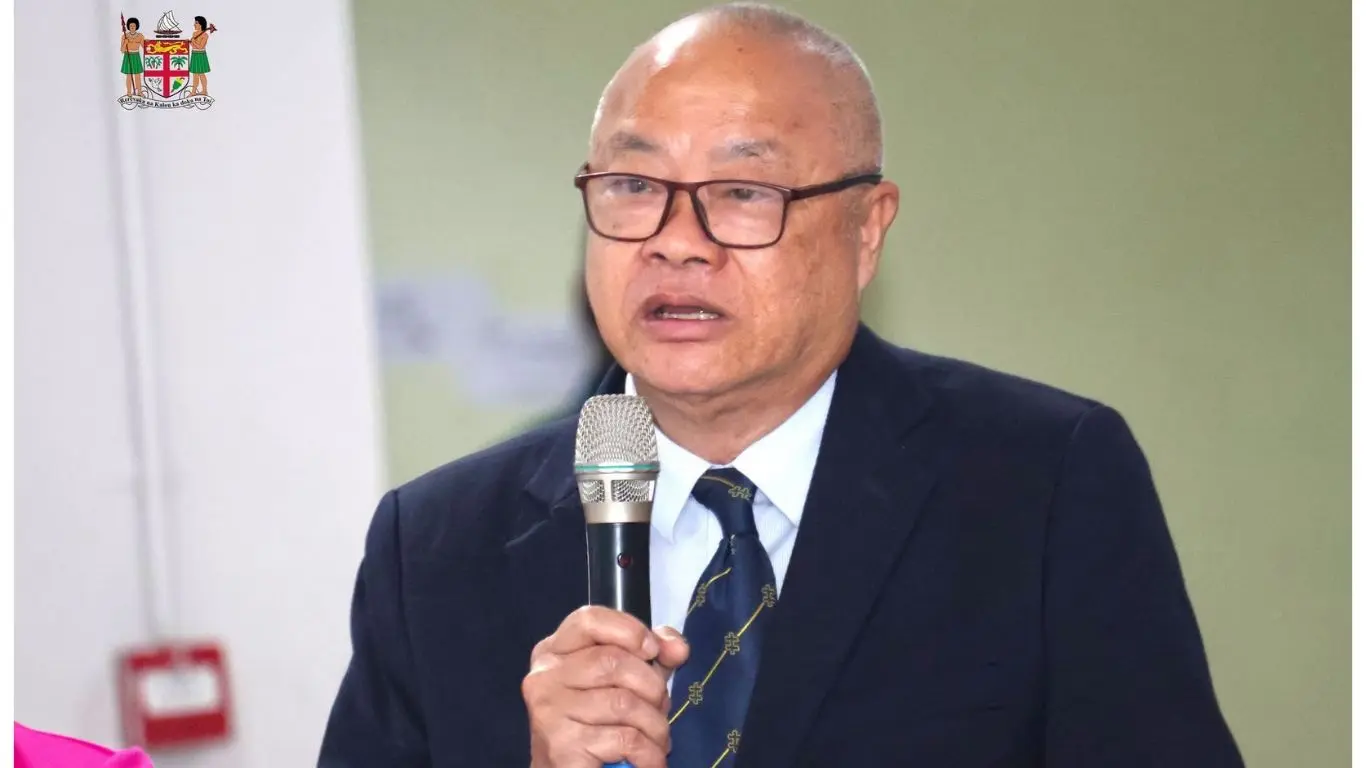
Former Attorney-General and Fiji Law Society president Graham Leung giving his submission to Parliament’s special committee examining the proposed Constitution amendment Bill 32 of 2026.
Photo: DEPTFO News
The Fiji Law Society wants the proposed Constitution to make clear that the military is subordinate to civilian democratic authority, with its principal constitutional role focused on defending Fiji against external threats.
The Society made the recommendation in submissions to Parliament’s special committee examining the proposed Constitution amendment Bill 32 of 2026.
It called for Section 131 to be amended to affirm unequivocally the primacy of civilian authority over the military.
Related stories
“The military serves the constitutional order and remains subordinate to democratically constituted civilian authority,” the Society said in its submission.
The Society considers the relationship between civilian government and the military a matter of fundamental constitutional importance.
It argues that the Constitution should leave no ambiguity about the military’s position within the country’s democratic system, with the armed forces serving the constitutional order rather than exercising authority independently of elected civilian institutions.
The submission places civilian supremacy among the principles that should guide constitutional reform, alongside constitutional supremacy, the rule of law, democratic accountability and institutional independence.
The Society broadly supports constitutional reform that strengthens democracy and the rule of law, but says provisions with significant implications for the country’s institutions require careful scrutiny.
It also argues that constitutional changes should protect fundamental rights and promote national unity while respecting Fiji’s cultural and historical foundations.
The Society’s recommendations form part of its wider review of Bill 32, which also addresses immunity provisions, the composition of the Senate, presidential appointments, judicial independence and the separation of investigative and prosecutorial functions within the Fiji Independent Commission Against Corruption.