Naidiri youths refuse to give up on marine conservation
He added that storm surges have destroyed coral planting frames and clam cages, forcing the community to rebuild and continue its conservation work.
Thursday 08 October 2026 | 10:30
Updated 08 October 2026 | 12:21 FJT

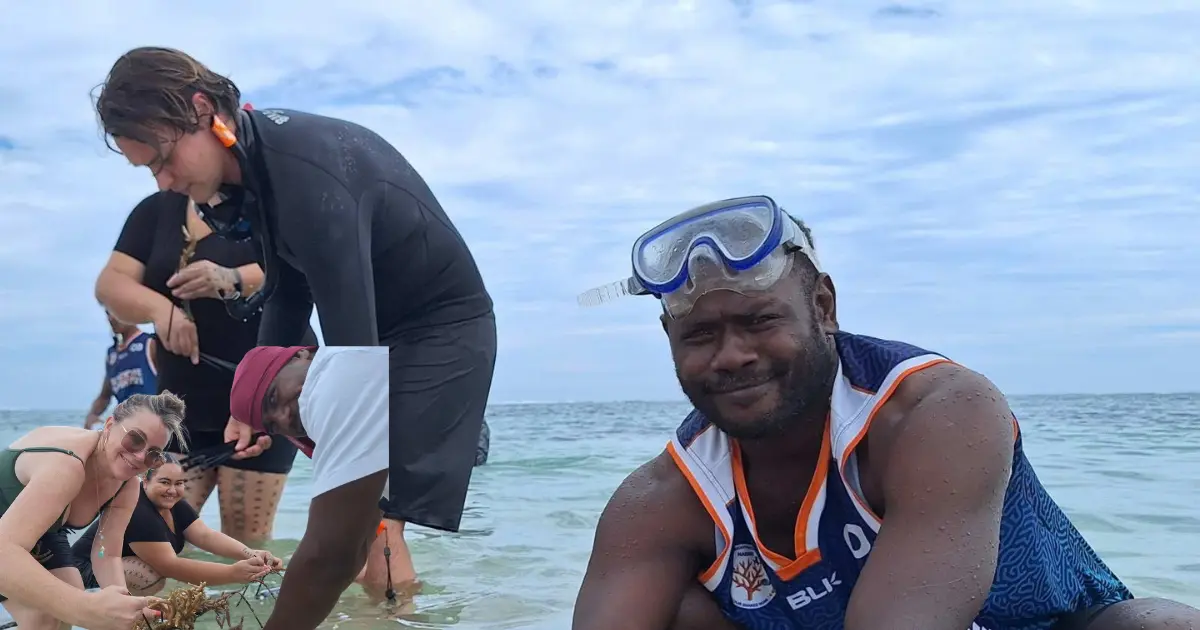
Youth member Jone Naloga (right) planting coral and Some of the many international journalists at Naidiri Village, Nadroga.
Photos: Waisea Nasokia
They have seen their coral frames smashed by storm surges, clam cages destroyed and their coastline threatened, but Naidiri youths are refusing to give up.
Instead, they are extending their conservation boundaries and strengthening a marine protection effort they hope will secure food and a healthier environment for generations to come.
Naidiri Village youth leader Joseva Kunagado said the community's conservation taboo must continue, and its boundaries must be extended to protect what remains of their marine resources.
Related stories
"We don't want our future generation to say our parents and our forefathers did not give something to us. We want to leave something for them," Mr Kunagado said.
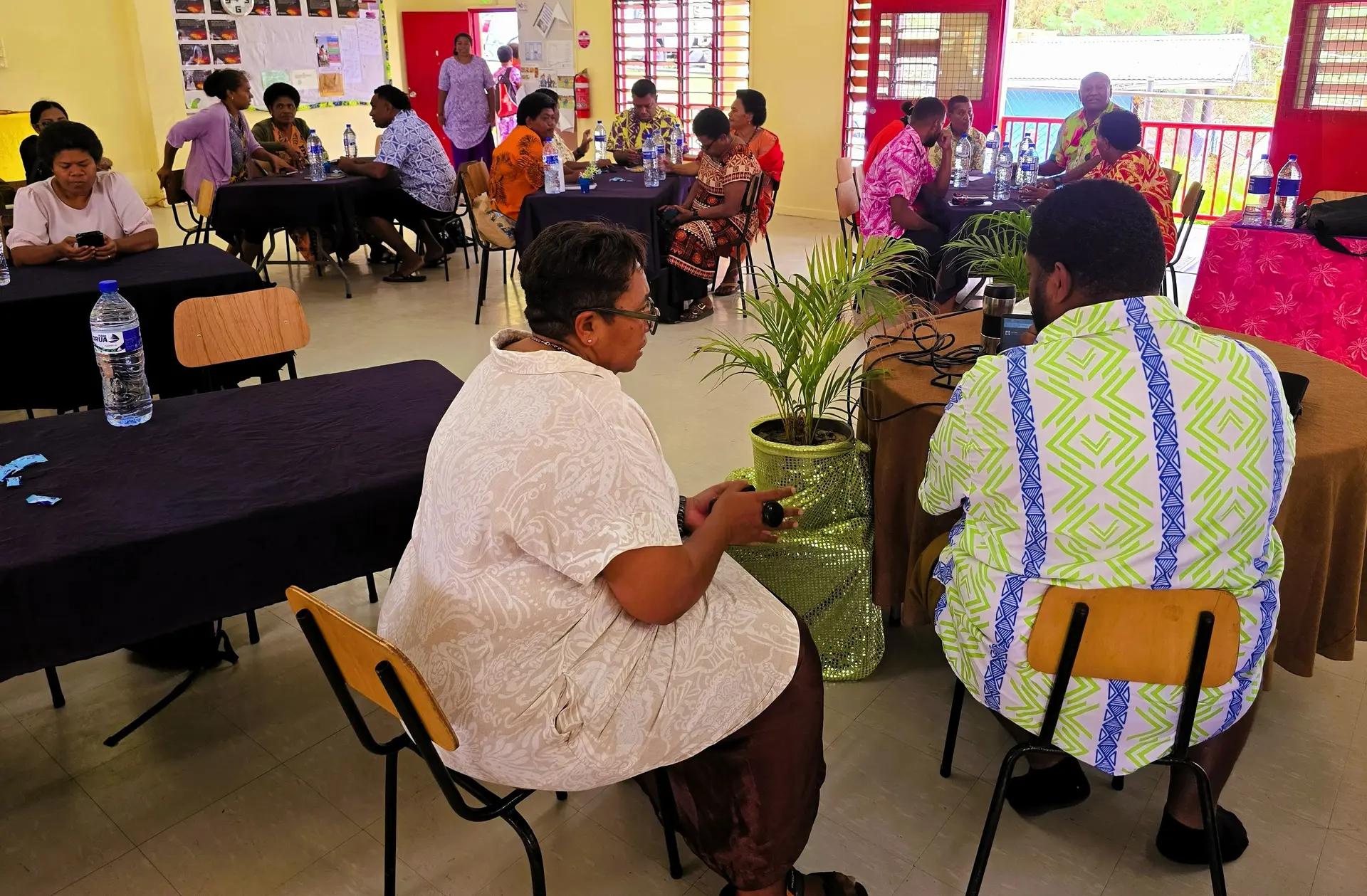
He was speaking during a media site visit to Naidiri Village and the award-winning Naidiri Biodiversity Park in Nadroga earlier this week. The visit brought international journalists face-to-face with the community's coral restoration work and the environmental challenges forcing some villagers to relocate.
Mr Kunagado said extreme weather remained one of the biggest challenges confronting the project.
He added that storm surges have destroyed coral planting frames and clam cages, forcing the community to rebuild and continue its conservation work.
N aidiri Biodiversity Park co-founder Manoa Duwai said the initiative began in 2009 after the community witnessed the effects of overfishing first-hand.
"We have been conserving this for the past 16 to 17 years," Mr Duwai said.
The community comprises 32 households, with fewer than 150 people, and relies heavily on the sea for food and livelihoods.
The marine protected area covers about 3.6 kilometres along the shoreline.
Mr Duwai said the community found a worrying lack of coral and juvenile fish when it began its conservation journey.
"We saw overfishing, and we were restoring fish. Simply to preserve, as there was no coral and no juvenile fish," he said.
The project was born from a sobering dinner shared by Duwai and his best friend.
They had only tea and rice, despite having gone fishing and catchingjust eight small fish.
"We thought, if this is the case, what will our children ever have?" Mr Duwai said.
"That was when we came up with the idea of a marine protected area."
In 2011, a youth group was established to take charge of the initiative, becoming the first youth group of its kind among the 22 villages in Nadroga. The community has since turned conservation into action.
In 2023, it planted 18,000 corals and 10,000 mangroves. Mr Duwai said an important part of the programme was also reconnecting young people with the ocean and developing the next generation of environmental guardians.
One of Australia's leading youth ocean and climate champions, Kal Glanznig, praised the youths for their efforts.
"It is fascinating to see such incredible work by the youths ofNaidiri. Well done. We are all pleased to be here," he said.
The media group also visited Yavusania Village in Nadi, near the Pre-COP31 venue, where substantial coastal erosion has affected the coastline.