Court to rule on disputed evidence in Prasad trial
Defence challenges search warrant and FICAC’s jurisdiction as prosecution seeks to admit FEO document.
Thursday 08 October 2026 | 07:00

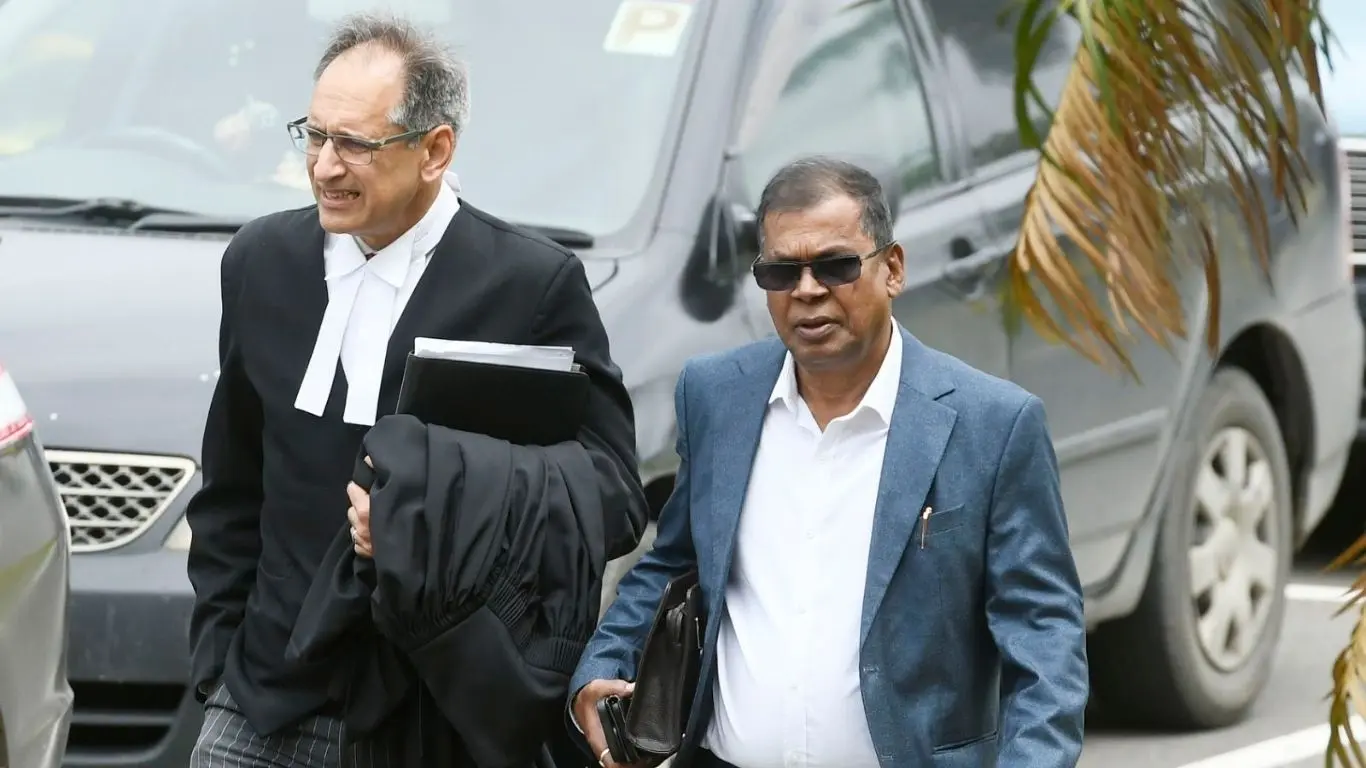
Lawyer Richard Naidu and former Deputy Prime Minister Biman Prasad outside the High Court in Suva on September 21, 2026.
Photo: Ronald Kumar
The Suva Magistrate Court is set to deliver its ruling today on the one-week voir dire hearing into an objected document in the case against former Deputy Prime Minister Biman Prasad.
Prasad is on trial for allegedly failing to comply with statutory disclosure requirements by not declaring Platinum Hotels & Resorts as an asset with the Fijian Elections Office.
All parties appeared before Resident Magistrate Yogesh Prasad for the matter.
Related stories
Yesterday afternoon, both parties made their final submissions after four prosecution witnesses gave evidence on the execution of a search warrant at the Fijian Elections Office to retrieve the original and a photocopy of the National Federation Party’s letter appointing its office holders.
Defence lawyer Richard Naidu argued that the search warrant used to obtain the document was defective and that FICAC did not have jurisdiction to investigate the alleged non-disclosure offence.
Mr Naidu also challenged the admissibility of the document on hearsay grounds, arguing that FICAC was seeking to rely on its contents without calling its maker.
The disputed evidence includes what Mr Naidu “claimed” was the original letter held in the Fijian Elections Office records and a colour copy bearing an official stamp.
FICAC Manager Legal Joseph Work maintained that the document was lawfully seized under a magistrate-endorsed warrant and formed part of the statutory records of the Fijian Elections Office, making it the best available evidence.
He argued that formatting flaws or hearsay concerns went to the weight of the evidence rather than its admissibility.
He submitted that FICAC had the necessary investigative powers and that the document should be admitted.