Northern communities to hold government agencies accountable
The initiative follows a refresher session on the Kacivaka tool held at the Fiji Council of Social Services (FCOSS) premises in Labasa last Friday.
Thursday 08 October 2026 | 07:30
Updated 08 October 2026 | 11:42 FJT

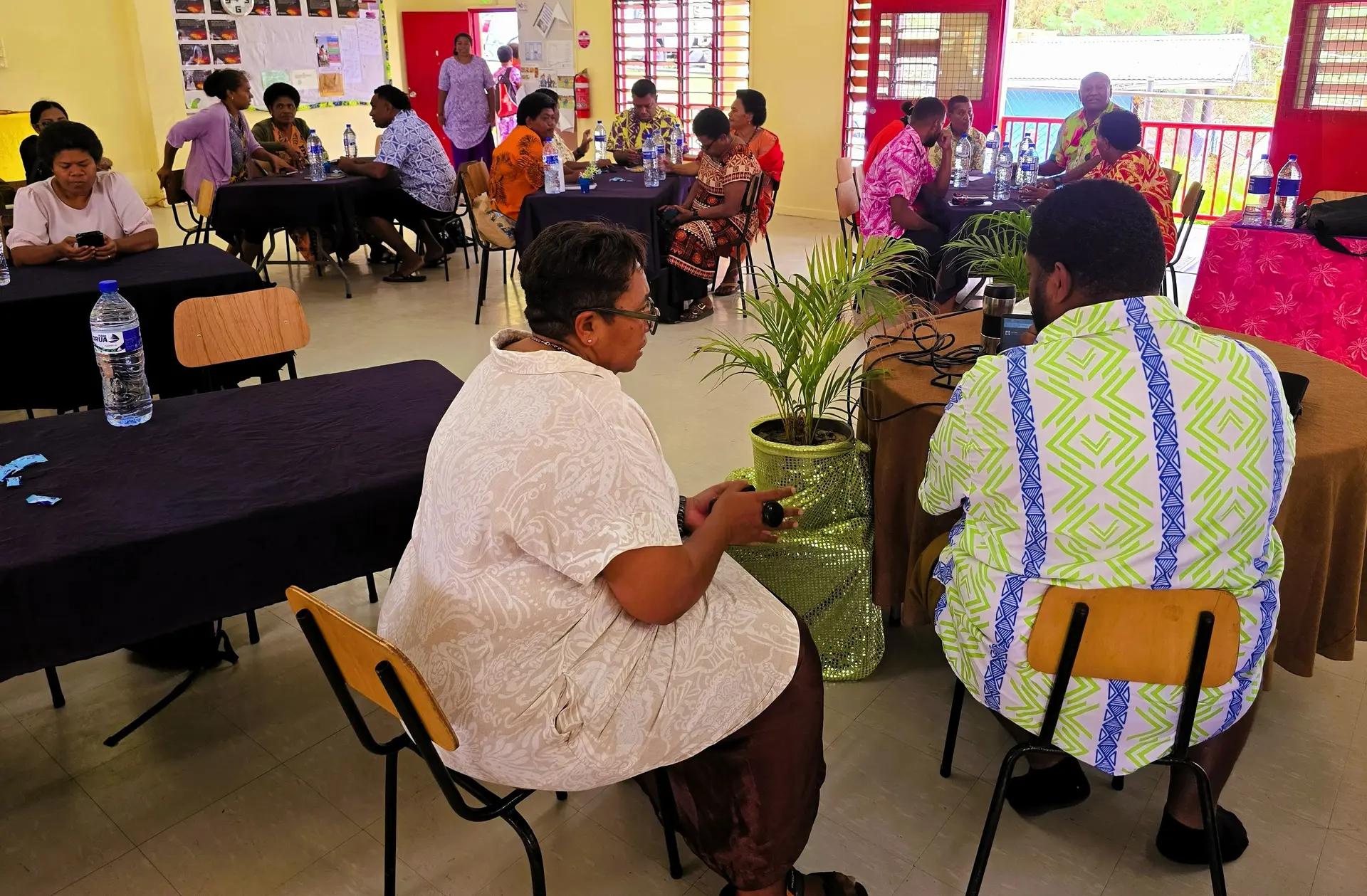
District Council of Social Services (DCOSS) participants during a Women's Auditors training on the Kacivaka Tool recently
Sampras Anand
Northern communities will use a new accountability tool to scrutinise government agencies over unresolved water, road, health and education problems, including delays in responding to public complaints.
District Council of Social Services (DCOSS) members are preparing to assess how effectively government ministries and departments respond to concerns raised by their communities.
The initiative follows a refresher session on the Kacivaka tool held at the Fiji Council of Social Services (FCOSS) premises in Labasa last Friday.
Related stories
The community-led tool allows participants to assess government agencies' responsiveness and identify shortcomings in service delivery.
Among the major concerns raised were water disruptions, poor road conditions, shortages of medication at health centres, limited access to quality educational resources and delays in fire and Police responses.
FCOSS Bua South president Timoci Wainiqolo said the tool helped communities assess how effectively government agencies addressed their concerns.
He said its 27 questions provided evidence to support complaints and requests for action.
"The 27 questions we have to answer helps to provide analysis of how government agencies approached community when dealing with issue solving, sometimes their (government) efforts are slow or unresponsive," he explained.
The Northern DCOSS members attended the refresher session after participating in the FCOSS and Women in Media (WIM) Women's Auditors meeting on the Kacivaka tool in Savusavu.
The session helped community leaders and representatives identify which government agencies were responsive and which were slow to address concerns.
Mr Wainiqolo said the tool would allow communities to support their assessments with evidence when questioning ministries and departments.
Northern DCOSS members are scheduled to reconvene on October 21 to review and justify their assessments of the agencies concerned.
Vesi Village Women's Club president Temalesi Buivakawalu, of Mali Island in Macuata, said the training had given participants a better understanding of how to assess government performance.
"We now know which agency performed and which showed negligence and turned a blind eye to community-based issues," she said.
Ms Buivakawalu said the tool also gave community members a way to express their concerns when requests for assistance went unanswered.
She said she intended to use Kacivaka beyond government services to strengthen accountability within her women's club and church.
"I am using this tool also to make a difference in my community such as women's club and church accountability to ensure every villager's opinion was heard," she added.