Untapped farming potential identified on Rabi Island
Rabi Island has strong potential for commercial agriculture if Banaban youth invest in agricultural education, an FNU agriculture educator says.
Thursday 18 December 2025 | 05:00

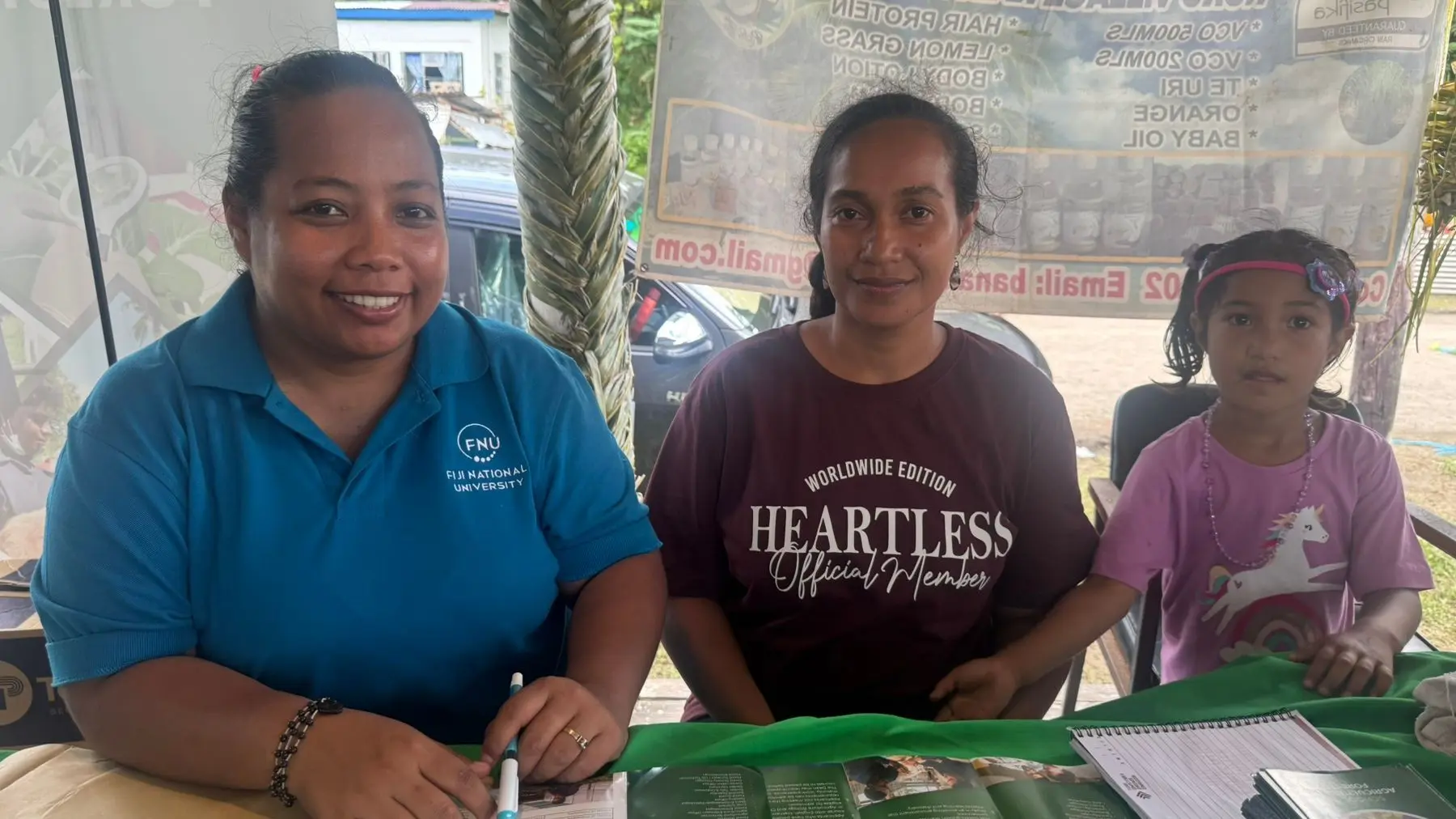
From left - Birianna Ioata, Assistant Instructor from Fiji National University’s (FNU) College of Agriculture, Fisheries and Forestry, and staff from the Ministry of Agriculture and Waterways Beren Teresia and daughter, Serenia Mark, 4, at Tabwewa village on December 17, 2025.
Photo: Kaneta Naimatau
agriculture educator says Rabi Island has significant untapped potential for commercial farming, if Banaban youth invest in agricultural education and skills development.
Birianna Ioata, an assistant instructor from Fiji National University’s College of Agriculture, Fisheries and Forestry, said the island has the natural resources needed to support successful agricultural ventures.
She made the comments during celebrations marking the 80th anniversary of the Banabans’ arrival on Rabi Island.
Related stories
“There is a lot of potential for the people of Rabi if they invest their knowledge in agriculture,” Ms Ioata said.
She said large areas of fertile land on the island remain unused.
“We have big lands that are vacant. No one is planting on them, yet these are viable soils that can produce,” she said.
Ms Ioata, who travelled from FNU’s Koronivia campus in Viti Levu to conduct outreach programmes on the island, highlighted Rabi’s favourable farming conditions.
“We have the land, quality soil, reliable water sources from springs and rivers, and favourable weather,” she said.
“Why not invest in commercial activities such as crop farming or animal farming?”
She said students who complete agricultural studies at FNU could return to Rabi and establish commercial farming enterprises, creating employment and boosting local food production.
The week-long awareness programme targets students who have completed Forms 5, 6 and 7, promoting certificate, diploma and degree programmes in agriculture, fisheries and forestry.
Ms Ioata said certificate-level programmes are sponsored by the Tertiary Scholarships and Loans Service (TSLS).
However, she said financial constraints remain the biggest challenge for Banaban youth, with many unable to afford relocation to Viti Levu for further studies.








